The Art Of Lisbon
Musings
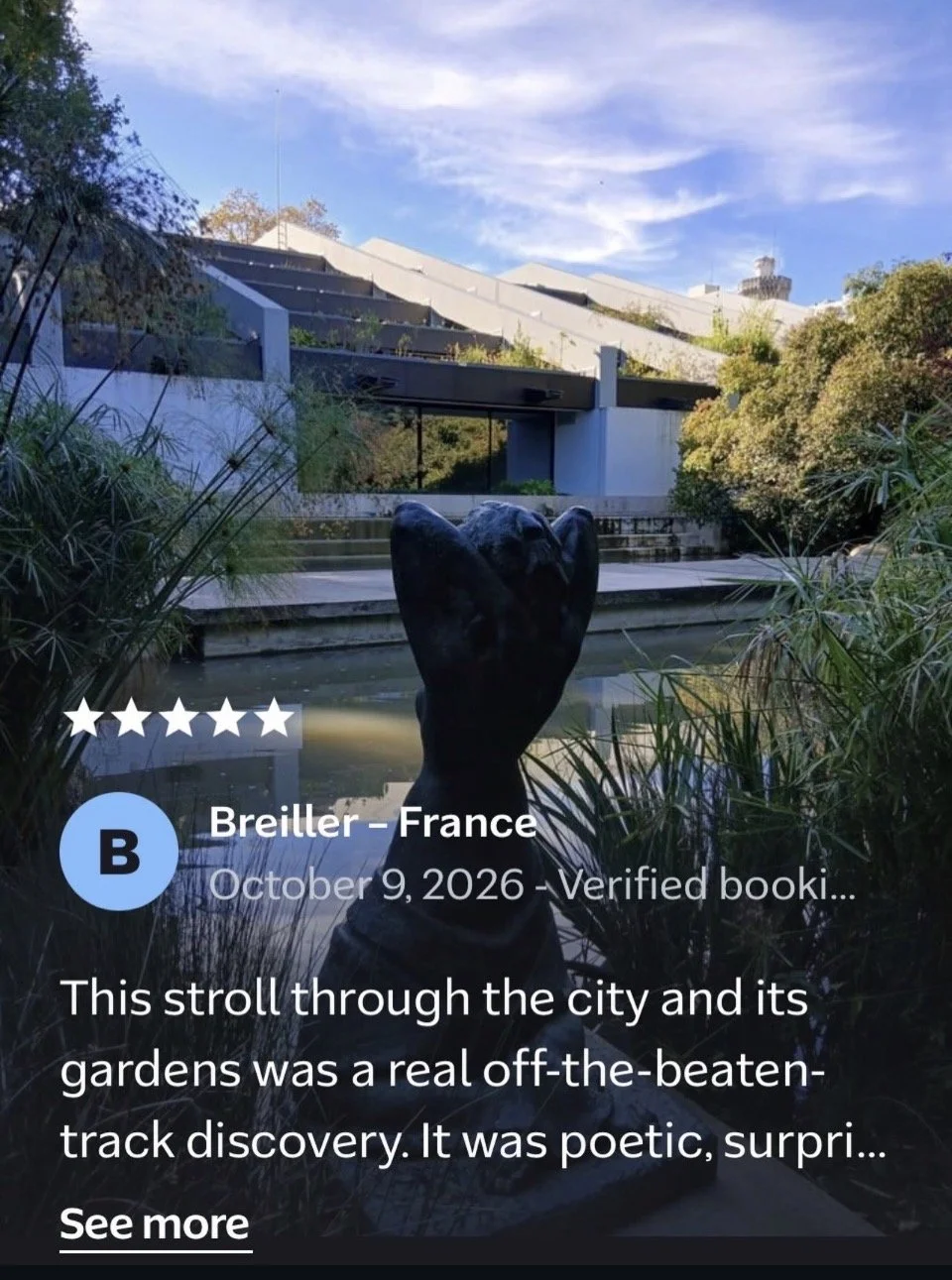
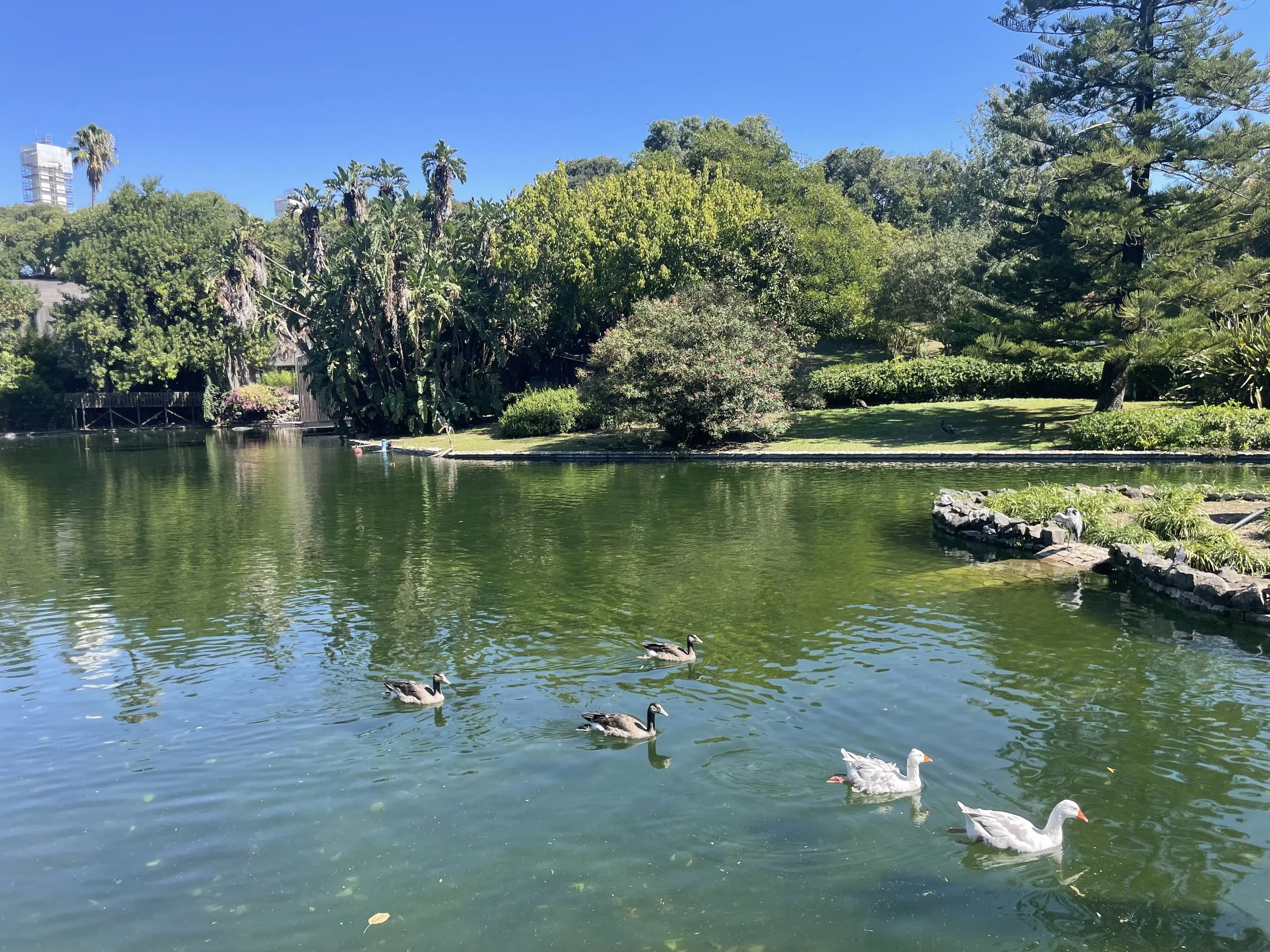
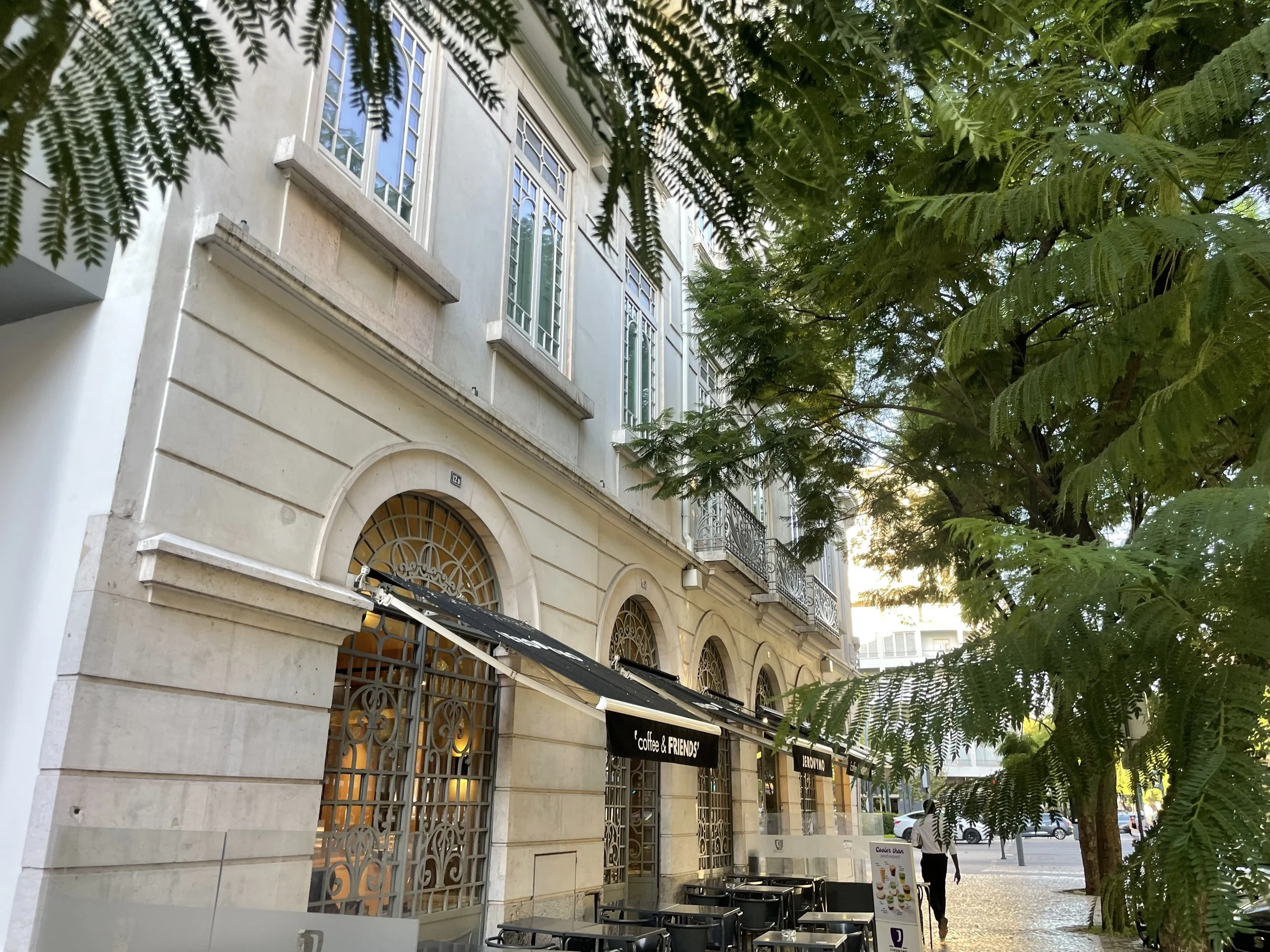


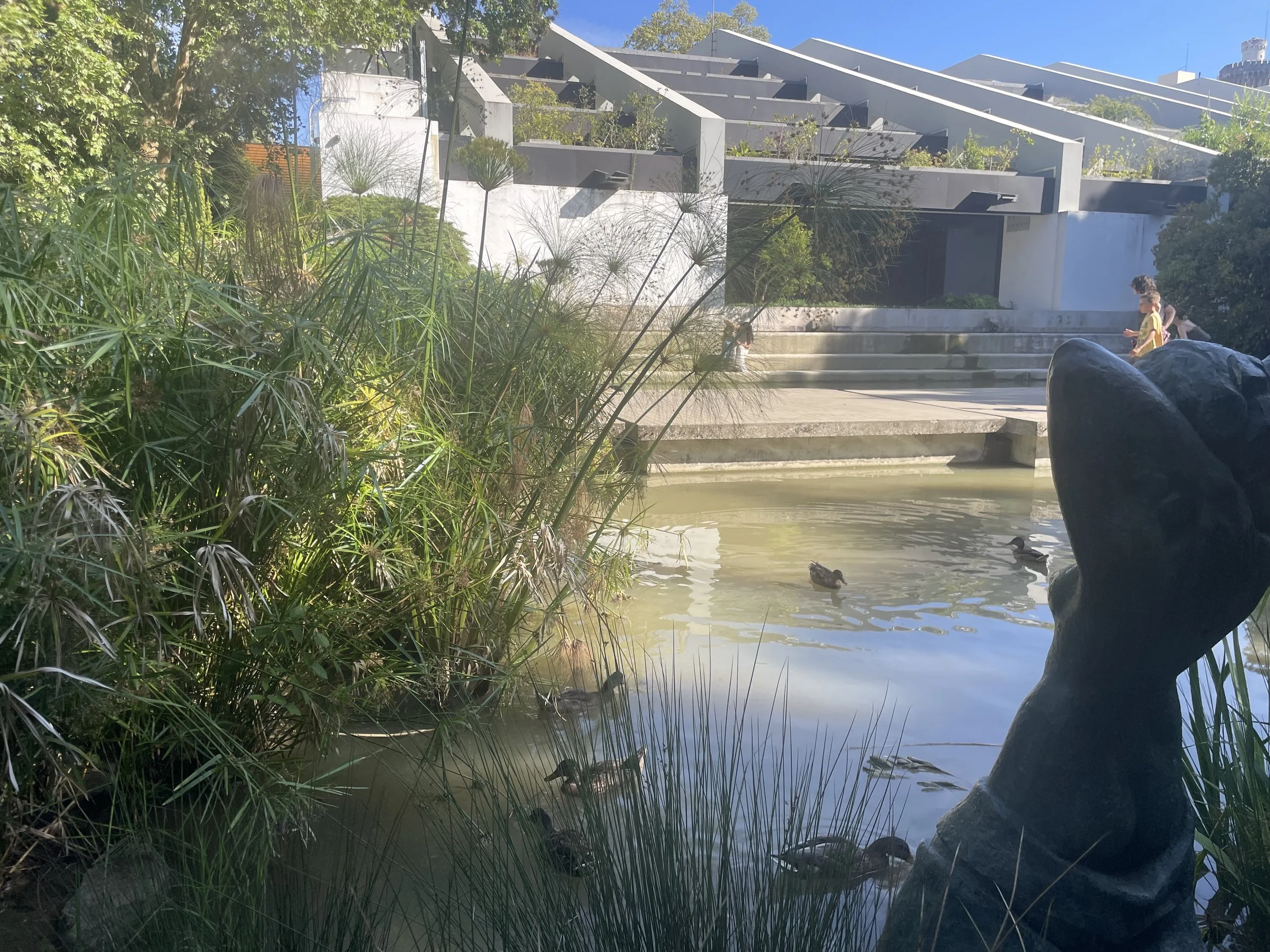
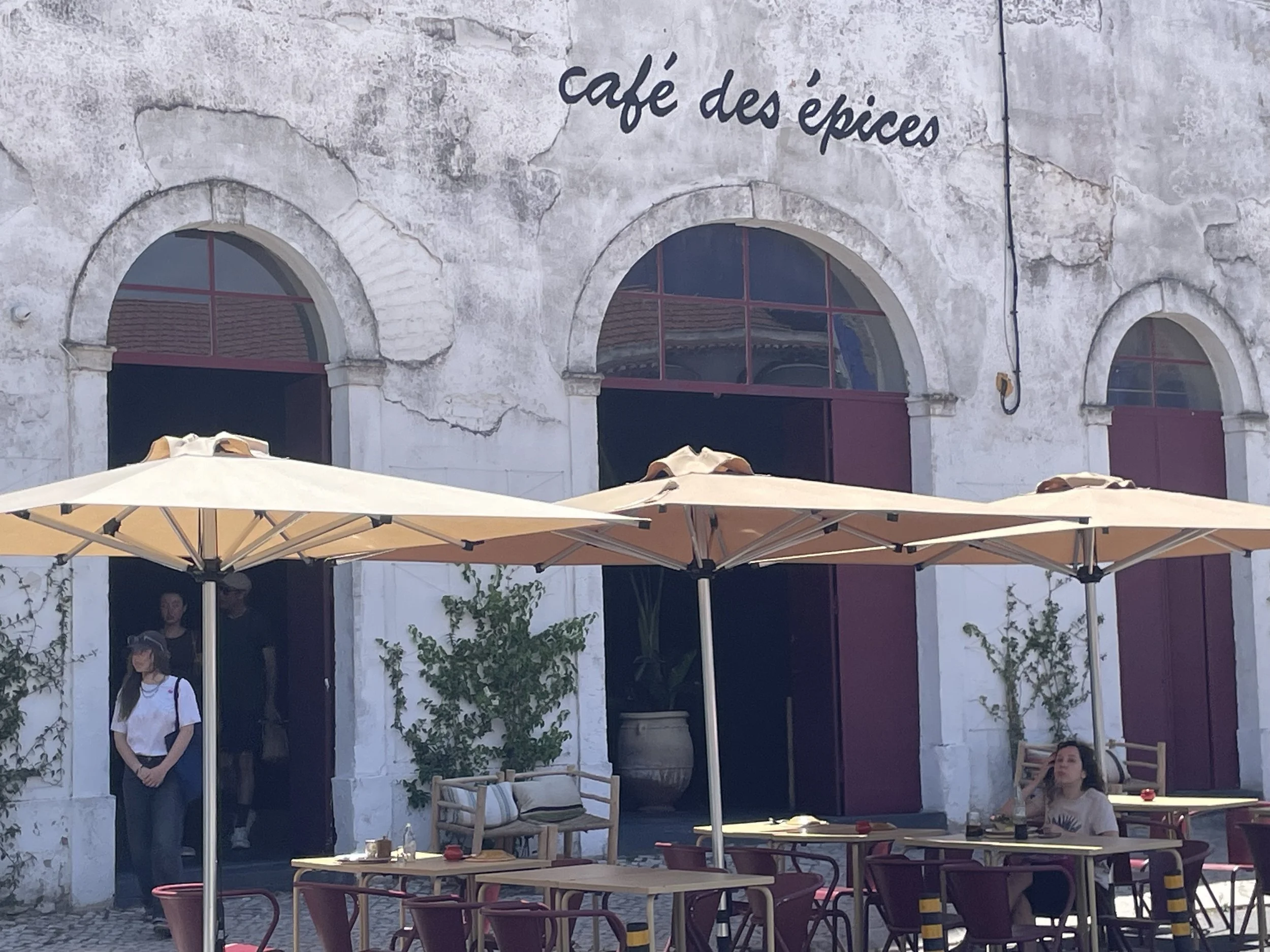
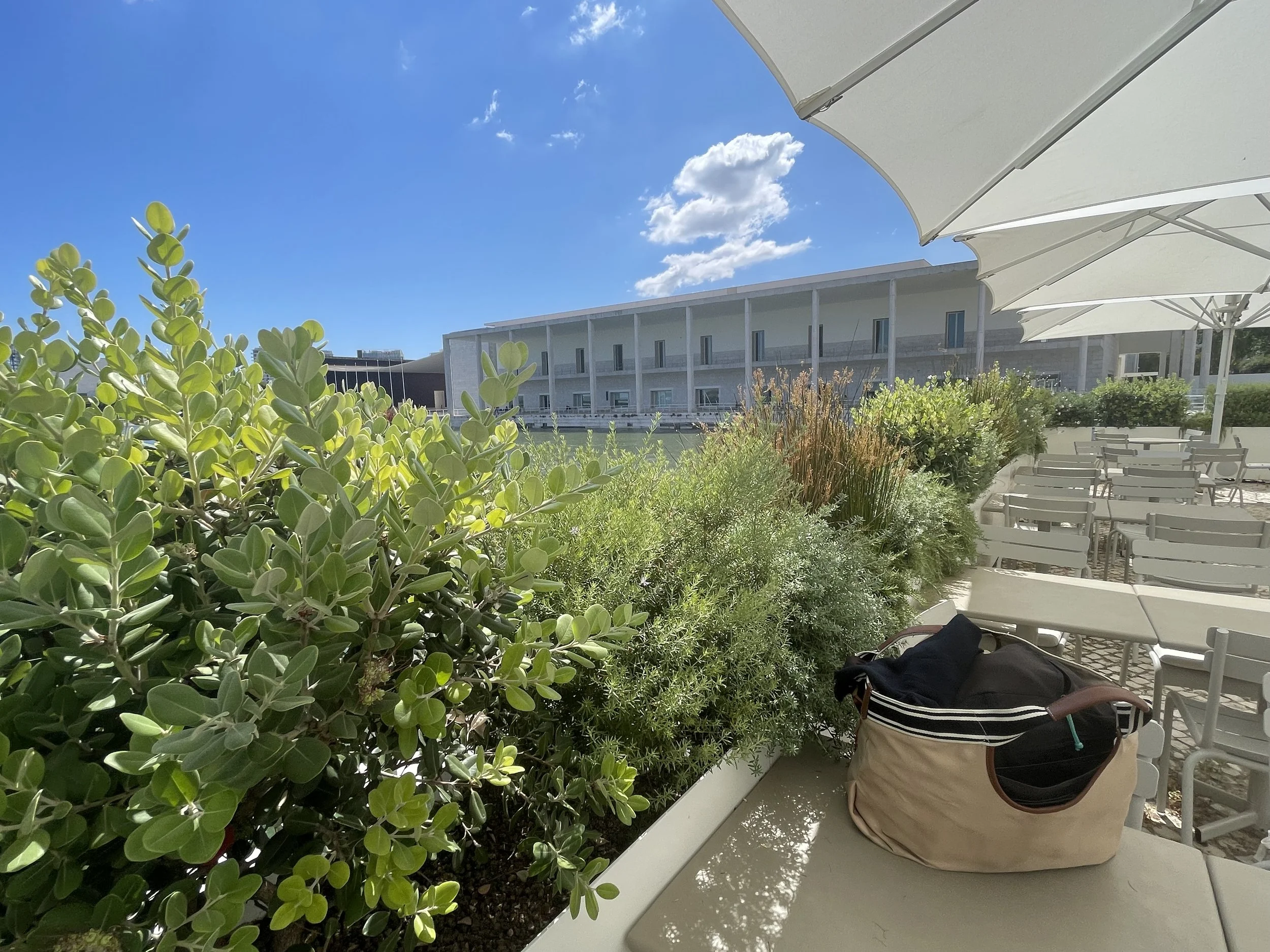
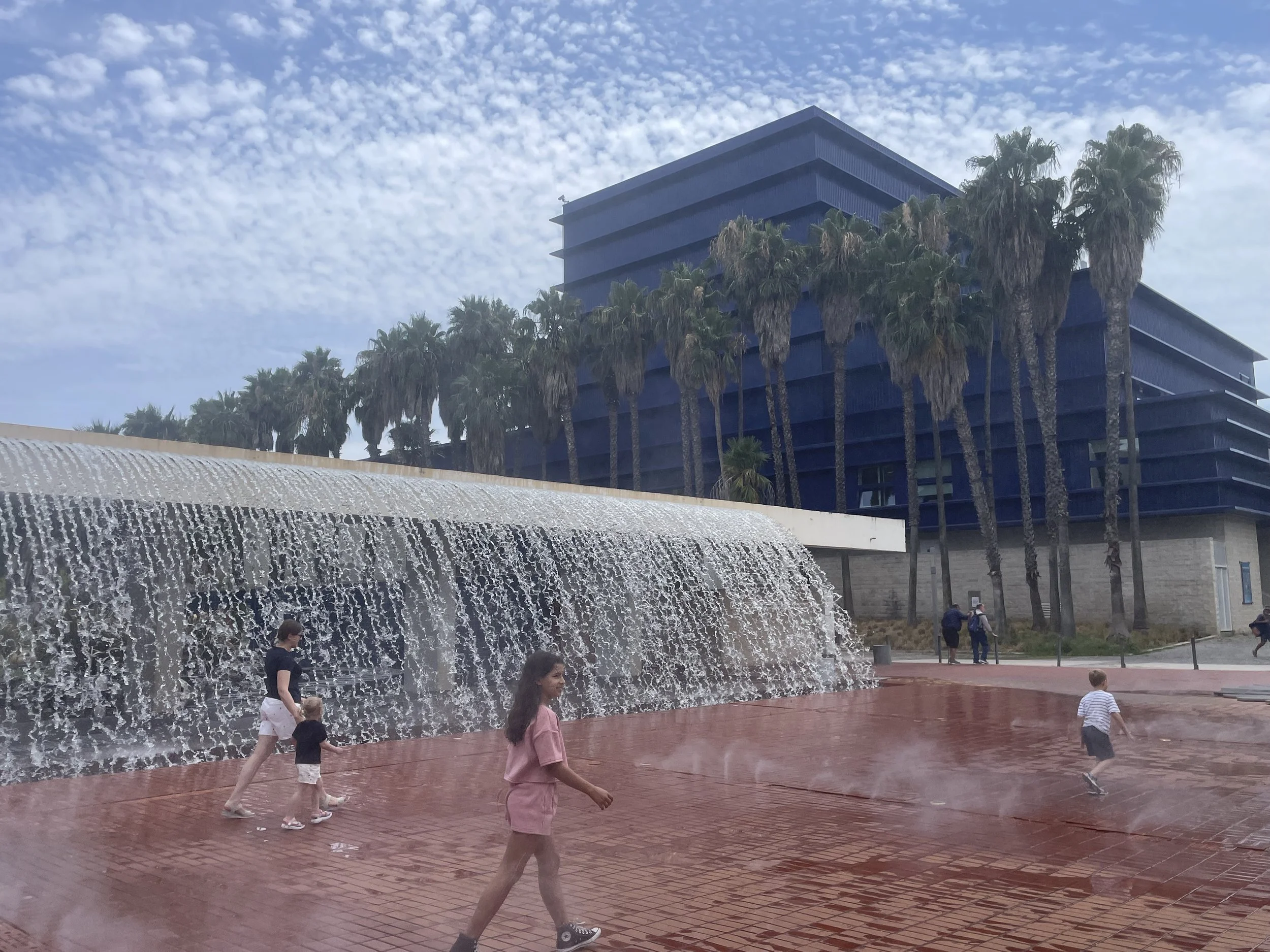
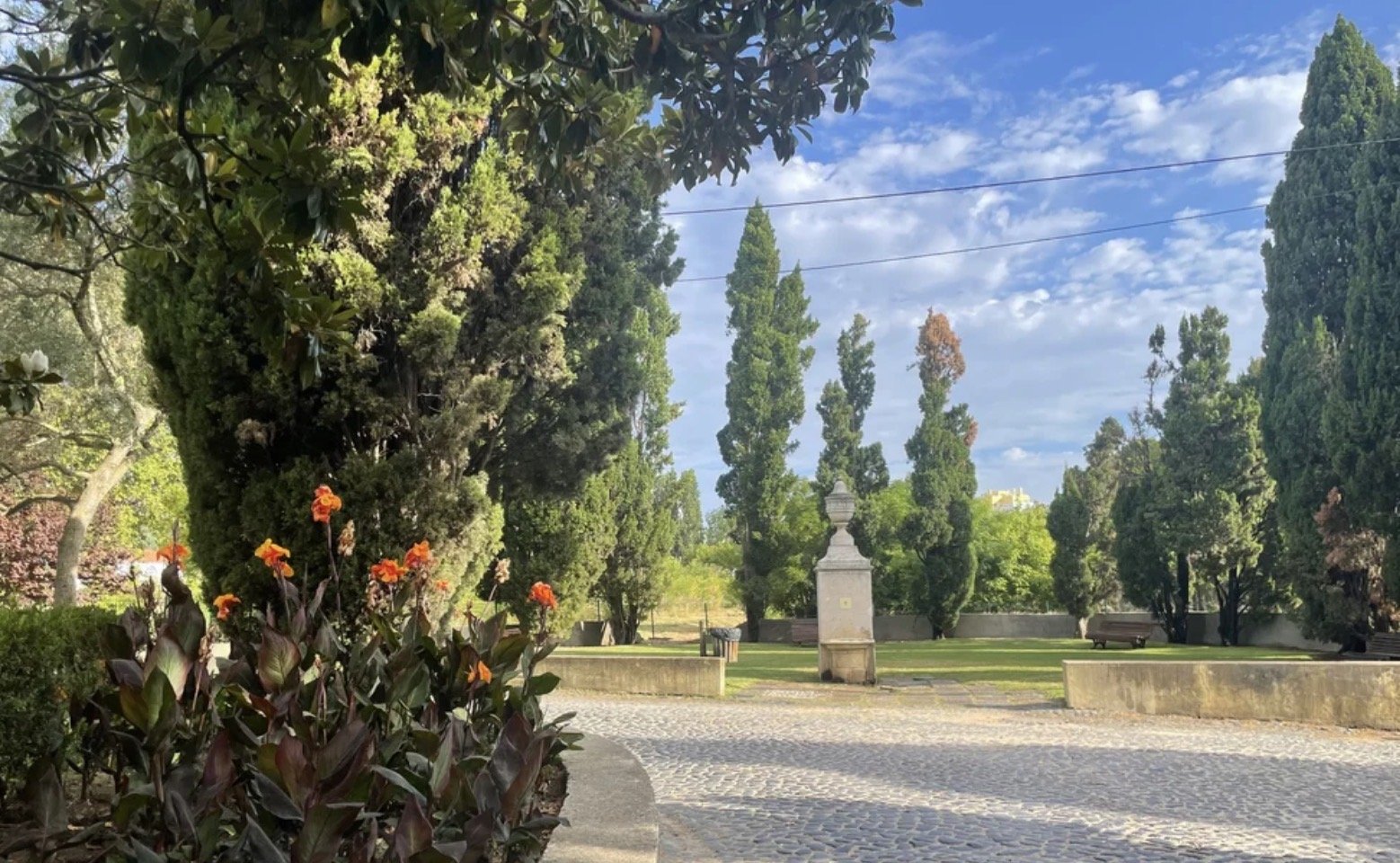

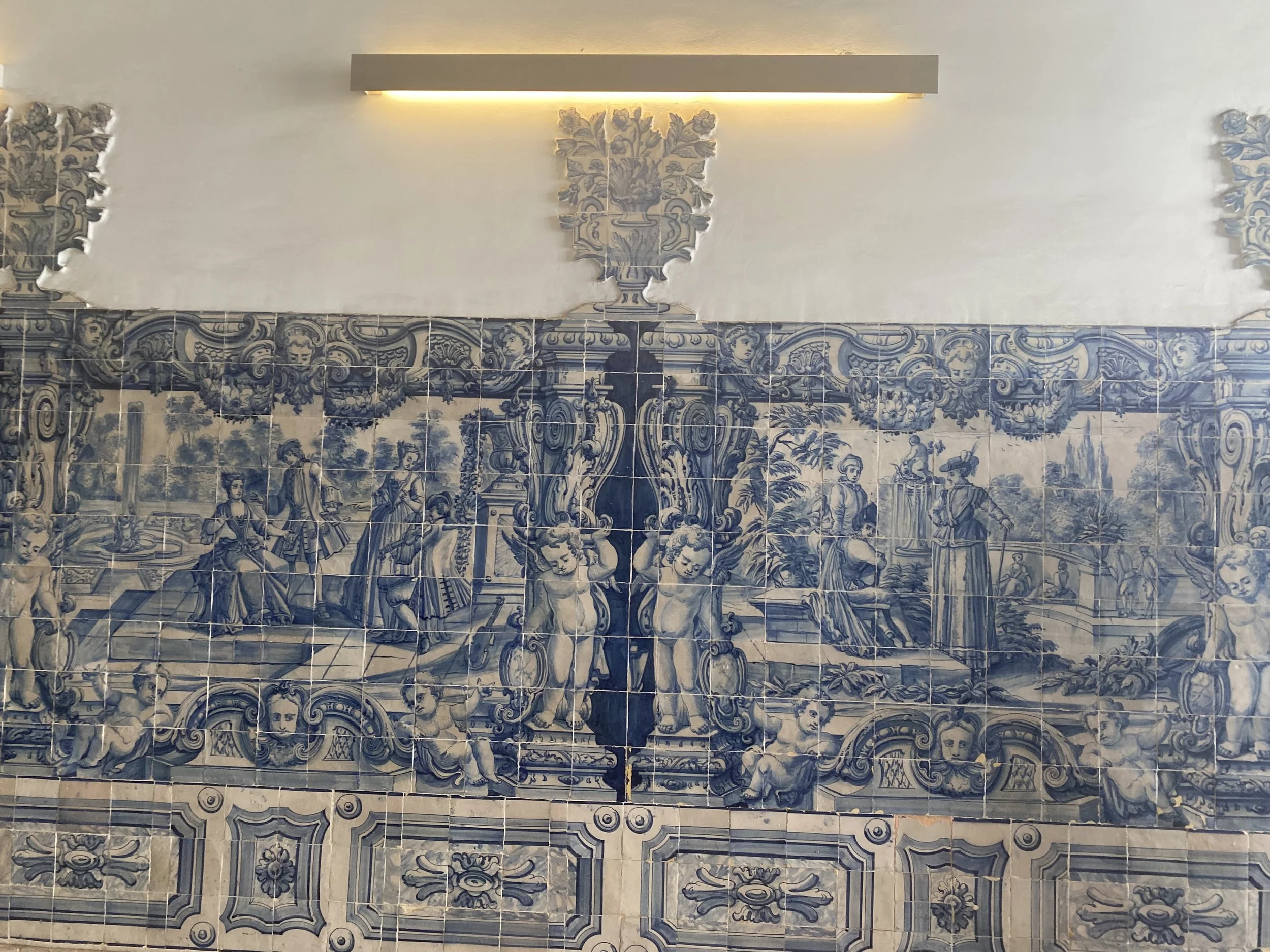
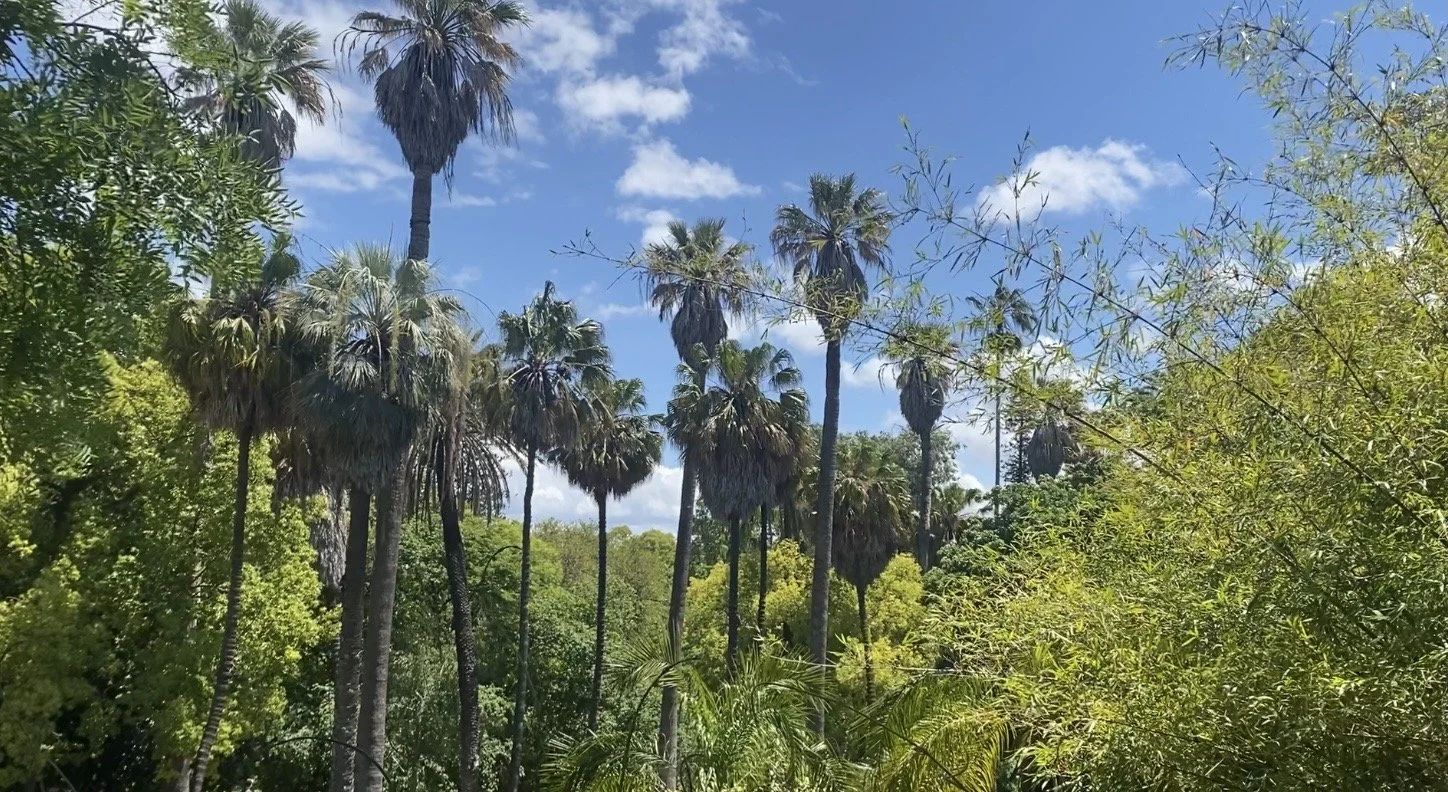
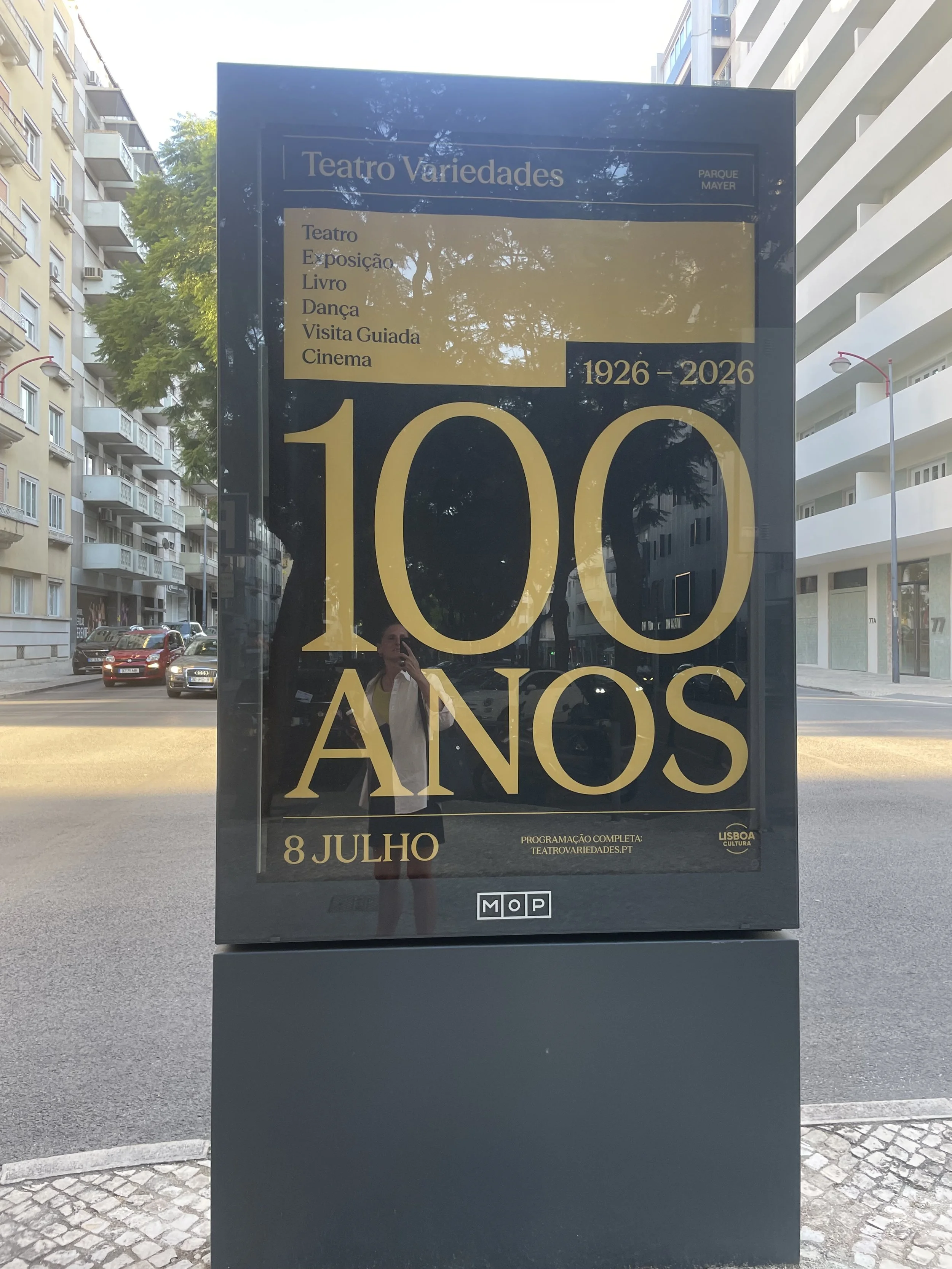
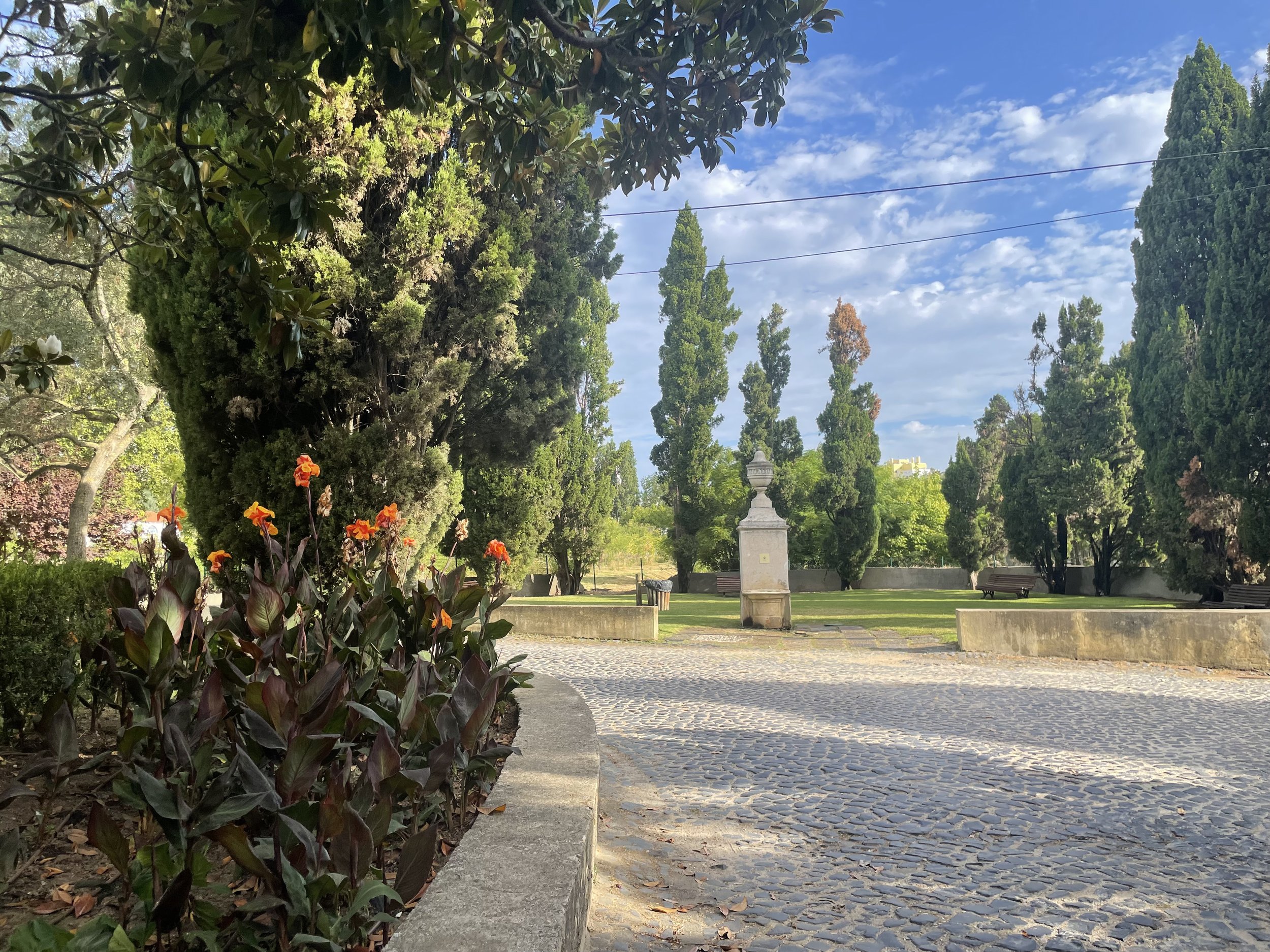
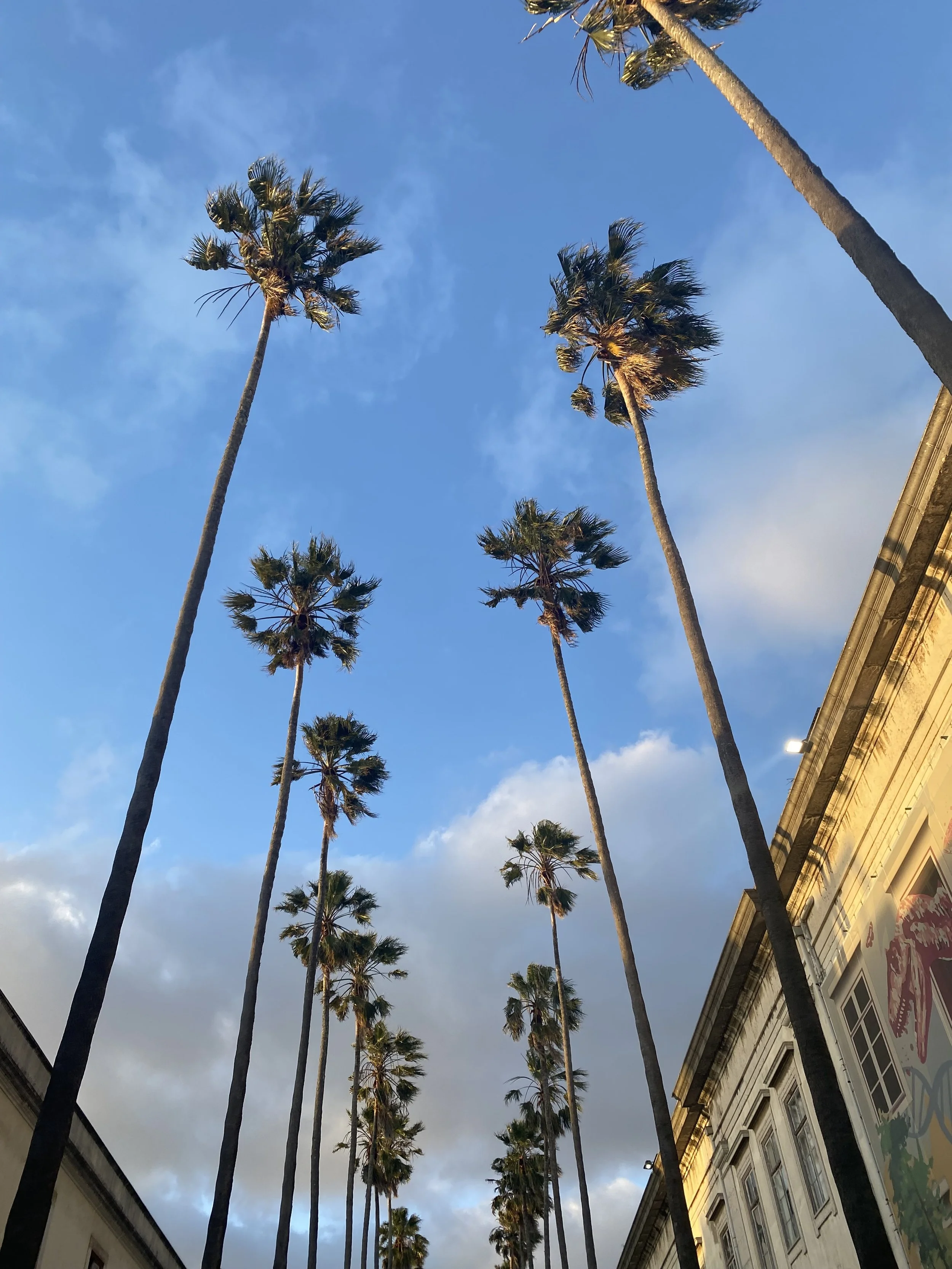
Parque Eduardo/ Monument 25th April/ Tennis & Gym club7
Right below El Corte Ingles and Park and Museum Gulbenkian
and above Marques Pombal statue and roundabout street circle

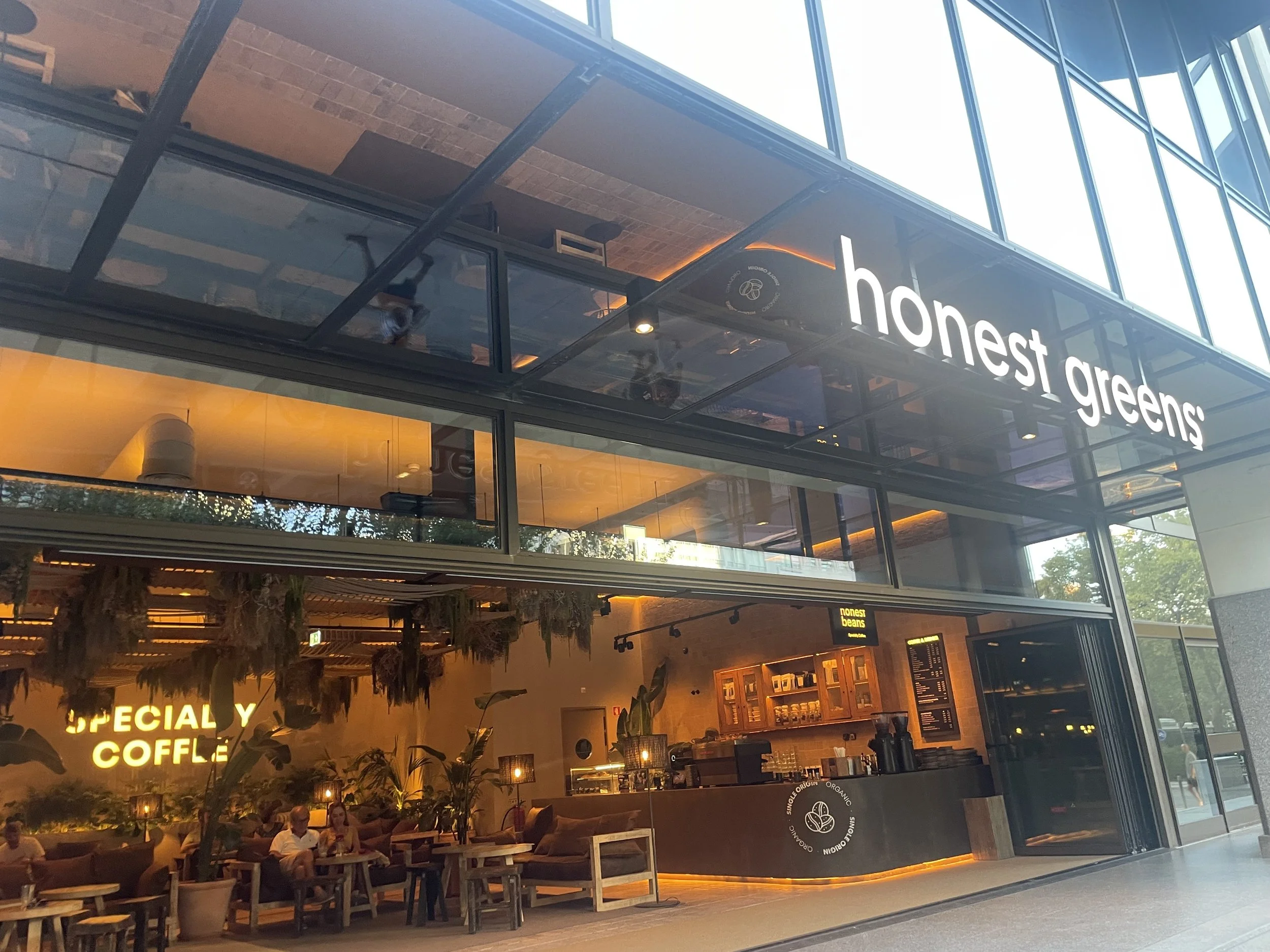
Saldanha
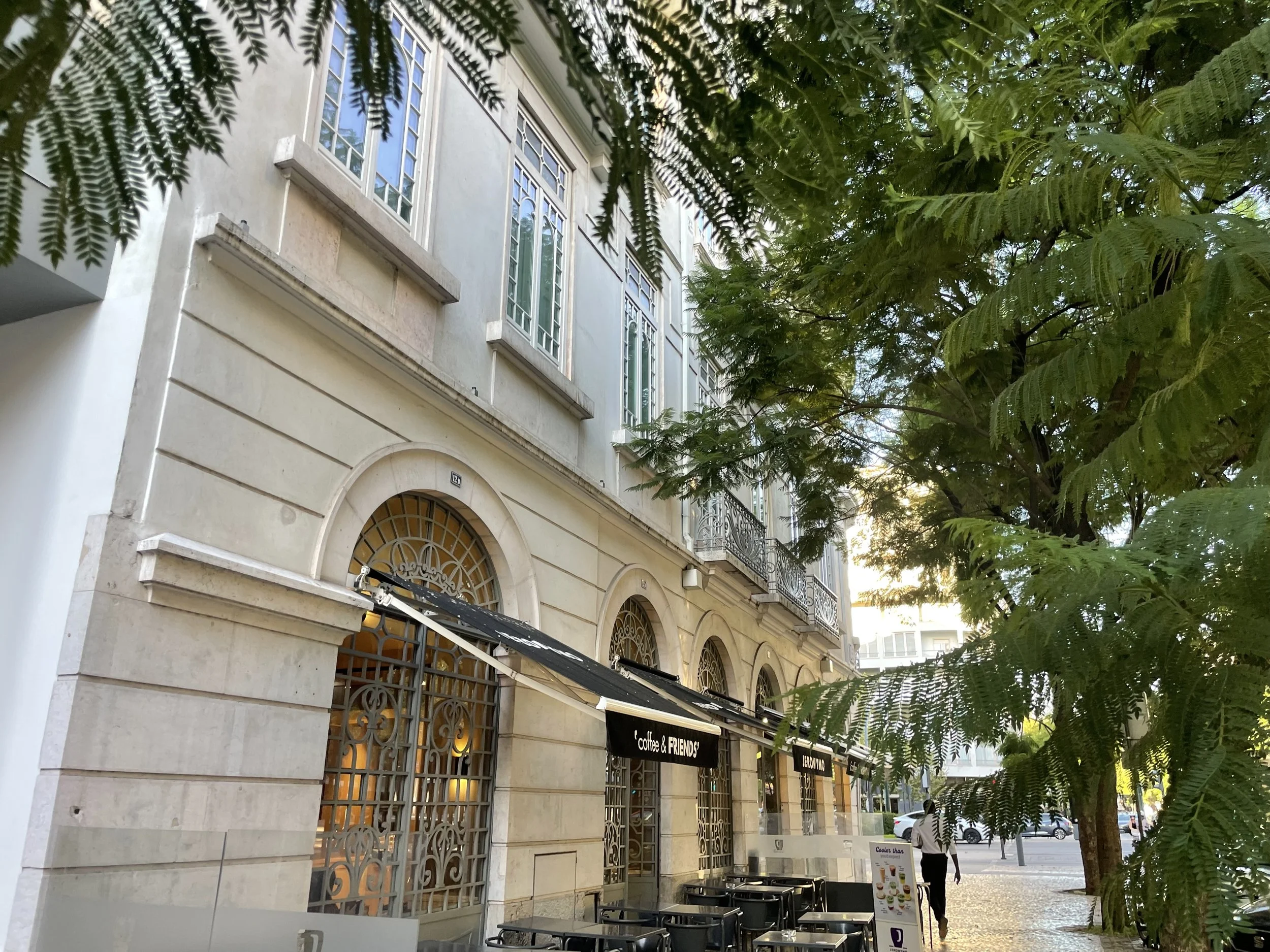
One of the less touristy, skyscraper, local business life areas including the city’s office for address registry and other tasks.
Yet worth a visit, has some nice restaurants and an overall clean, structured and inviting atmosphere.
Many locals enjoy slow post work summer evenings her.

Classical Wisdom Echoes
Via ‘Classical Wisdom’:
Should We Be Well-Rounded... or Hyper-Focused?
What Aristotle Would Say About Specialization
JUL 27
Dear Classical Wisdom Reader,
I keep having Odyssey-related dreams... sometimes it’s just the crashing of the waves and the shouts of the crew rocking me to sleep.
Or an abstract sense of needing to go somewhere... a longing for a return, though I don’t know where.
A few nights ago, I was trying to teach the ancient Greek alphabet... unsuccessfully.
Another time (and this is where it gets weird), I was conducting a scientific study on how the beating of drums during a bard’s recitation of the Trojan War somehow brings everyone’s heartbeat into sync.
Yes, dear reader, I clearly appear to have become obsessed!
The activities of the past few weeks... the Odyssey movie, the discussions, the articles, the notes, and the debates... have clearly suffused my mind. It’s been a period of intense focus resulting in me thinking about the Classics all of the time.
Now, this might simply be part and parcel of the job. Especially with my big project of the year being a book for St. Martin’s Essentials (Socrates and the Sphinx!), I need to be constantly steeped in the history, philosophy, and mythology of the ancients... which sounds wonderful... until you can’t get wily Odysseus out of your head!
Even my dear husband has gently recommended that I read... a different book.
But should I?
In our highly specialized and fiercely competitive world, it often seems that, to accomplish something truly exceptional, one needs to be intensely focused...to the point, almost, of single-mindedness. It is an image that has been romanticized time and again, with figures such as Tiger Woods, Magnus Carlsen, and Yo-Yo Ma embodying the celebrated specialist.
To be fair, there’s a good reason for this. Human knowledge has expanded so dramatically that no one can hope to master more than a tiny fraction of it. Specialization has become almost inevitable.
Nonetheless, I began to wonder whether the ancients would have considered such single-minded devotion a virtue... or a vice. Would Aristotle or Plato have considered obsession the path to excellence... or something to be resisted?
The Greek Ideal
The Greeks generally admired the person who cultivated many aspects of themselves. They even had a word for this ideal: paideia. It was an education that sought to form the whole person, intellectually, morally, physically, rhetorically, and aesthetically.
Knowledge was not simply about accumulating information. It was about becoming excellent (aretē).
Surely, none capture this broadmindedness better than Aristotle. He wrote on biology, zoology, politics, ethics, poetry, rhetoric, logic, psychology, astronomy, and metaphysics...You know, to name but a few.
If he were teaching at a modern university, he would belong to a dozen different departments... forever attempting to run between buildings and navigate entirely separate administrations!
Yet Aristotle never saw these seemingly diverse subjects as truly separate.
They were all part of a single investigation into reality. Ethics informed politics; politics depended upon an understanding of human nature; the study of living things illuminated broader questions about nature itself. Everything was connected, because specialization without an understanding of the whole would have seemed incomplete.

Notice Aristotle does not say "to know chemistry" or "to know politics."
Plato similarly outlines his thoughts on the matter in the Republic. In what is perhaps the most famous educational curriculum in history, he advocates that future philosopher-kings spend decades studying gymnastics, music, and poetry, alongside mathematics, geometry, astronomy, harmonics, and dialectic.
Interestingly, Plato delays practical political leadership until around the age of fifty. Only after mastering this broad education are they considered fit to govern.
The Stoics, meanwhile, divided philosophy into the three branches of Logic, Physics, and Ethics, yet repeatedly insisted that they could not truly be separated.
Chrysippus reportedly compared them to an egg. The shell was viewed as logic, the white physics, while the yolk represented ethics. Distinct though they were, each formed part of a single living whole. To understand one properly required an understanding of the others.
Well-Rounded Romans
The Romans inherited this Greek ideal... and no Roman embodied it more fully than Cicero, the quintessential eclectic! In his De Oratore, the great statesman criticizes the narrow specialist, arguing that the ideal orator and leader should be well versed in philosophy, history, law, rhetoric, and literature.
Indeed, he writes that the perfect speaker should possess knowledge of “all important subjects.”
However, there is a natural limit to all of this. After all, it’s easy to say we should know everything... it’s considerably harder to do. And how can we achieve excellence, aretē, if we spread ourselves too thin?
To this, the Stoic philosopher Seneca the Younger offers a more nuanced answer. There is little value in pursuing knowledge simply for its own sake or as an ornament to impress others. True learning should be transformative, not ornamental; it should shape one’s character rather than merely expand one’s store of facts.
In De Tranquillitate Animi (On Tranquility of Mind) 9.4, Seneca writes:
“What avails countless books and libraries, whose titles their owner can scarcely read through in his whole lifetime? The student is oppressed by the mass of books, not instructed; and so, since you cannot read all the books that you may possess, it is enough to possess only as many books as you can read.”
— John W. Basore, Moral Essays, Loeb Classical Library, Vol. II (1932)
Plutarch captures this same idea beautifully with a powerful metaphor, comparing learning to bees gathering nectar. Bees visit many flowers... but they do not merely collect nectar, they transform it into honey. Likewise, we should read many authors and encounter many ideas, but more importantly, we should transform them into wisdom of our own. The goal is to synthesize rather than merely accumulate.
What About Experts?
Of course, the ancients certainly recognized expertise, what the Greeks called technē. After all, a physician should specialize in medicine, a sculptor should master sculpture, and a shipbuilder should understand ships.
Indeed, Plato often uses craftsmen as examples of specialized knowledge. However, when discussing the highest human life, the examined life, the emphasis shifts.
The philosopher, statesman, or educated citizen should not become intellectually narrow. Nor, it seems, should physicians, mathematicians, or historians. One need only think of the many remarkable polymaths of antiquity, including Hippocrates, Pythagoras, Herodotus, Thucydides, Xenophon, and, above all, Aristotle.
This was not, however, a form of dilettantism, the practice of engaging with subjects in a flippant or superficial way. The ancients drew an important distinction between sampling everything superficially and integrating many fields into a coherent understanding. The goal was not to know a little about everything, but to understand how everything fit together.
The Purpose of Wisdom
Perhaps wisdom consists not in knowing more isolated facts than anyone else, but in understanding the causes and principles that connect them. This is one reason the modern term “polymath” fits so many ancient thinkers. Their intellectual ambitions did not fit neatly into the silos of our modern curricula, in part because their aim was not to know a little about everything, but to see how everything fit together.
Philosophy, history, science, mathematics, politics, literature, and art all illuminate one another... and a life of genuine wisdom depends upon that conversation between disciplines.
Even our specialization can be enriched by occasionally broadening our interests and pursuits.
“and a life of genuine wisdom depends upon that conversation between disciplines. “
Via Substack, 27th July 2026
Gulbenkian Card
Starting today 28th July
Gulbenkian
for its 70th anniversary is giving
free entry
to both museums (the new modern art museum CAM opened last year 2025, and the old museum ‘anew’ reopened this month July 2026)
for one year
—for everyone who registers for free for the Gulbenkian Card online.
Information via
Gulbenkian Newsletter,
27th July 2026.
Lisbon— Europe’s most livable city
20th July 2026
via
The Lisbon Letter:
“Lisbon is one of the three best cities in the world to call home, measured by the things that actually make a place worth living in. The harder task, now that the whole world has been told, is keeping it that way for the people already here.”
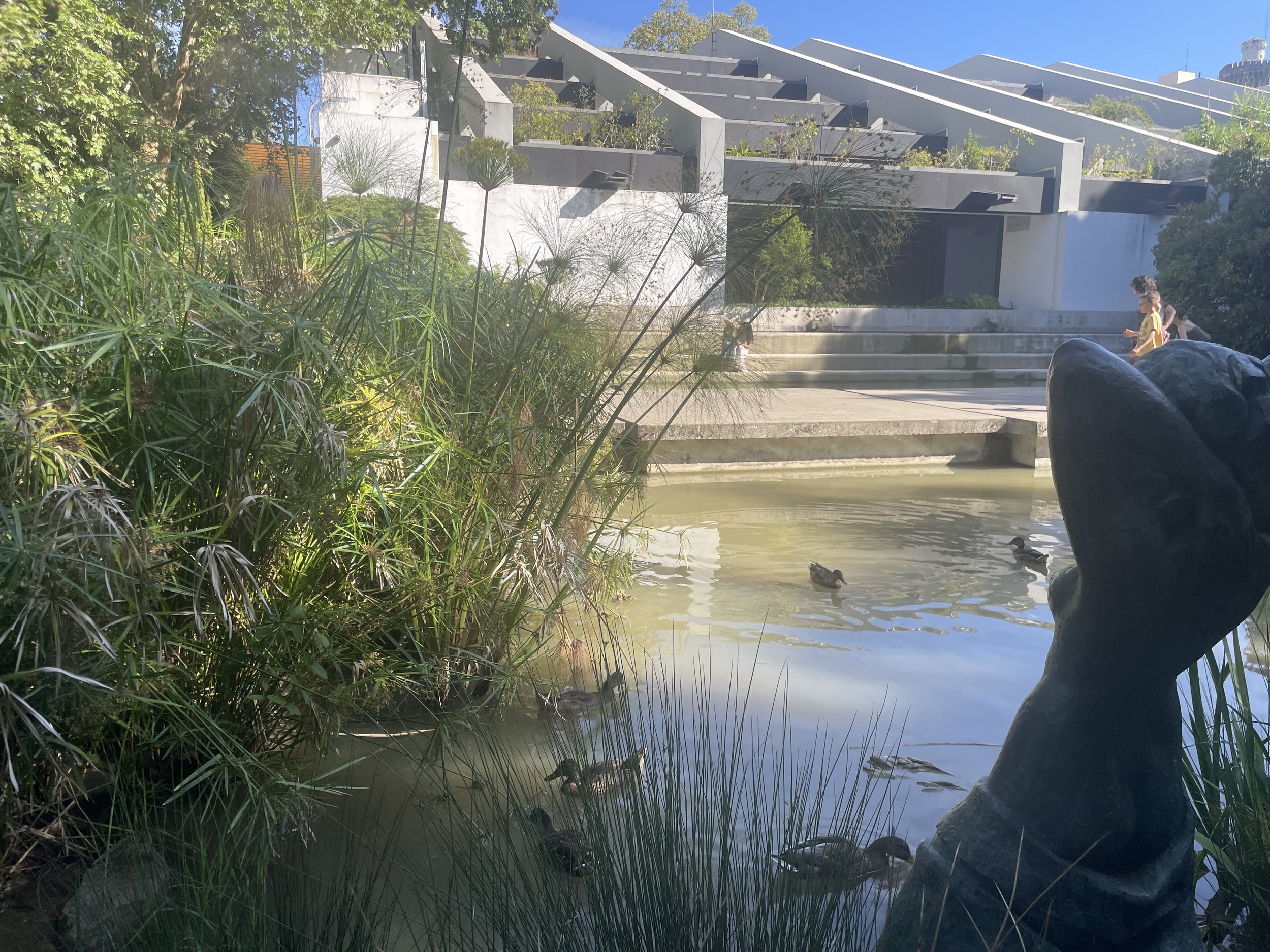
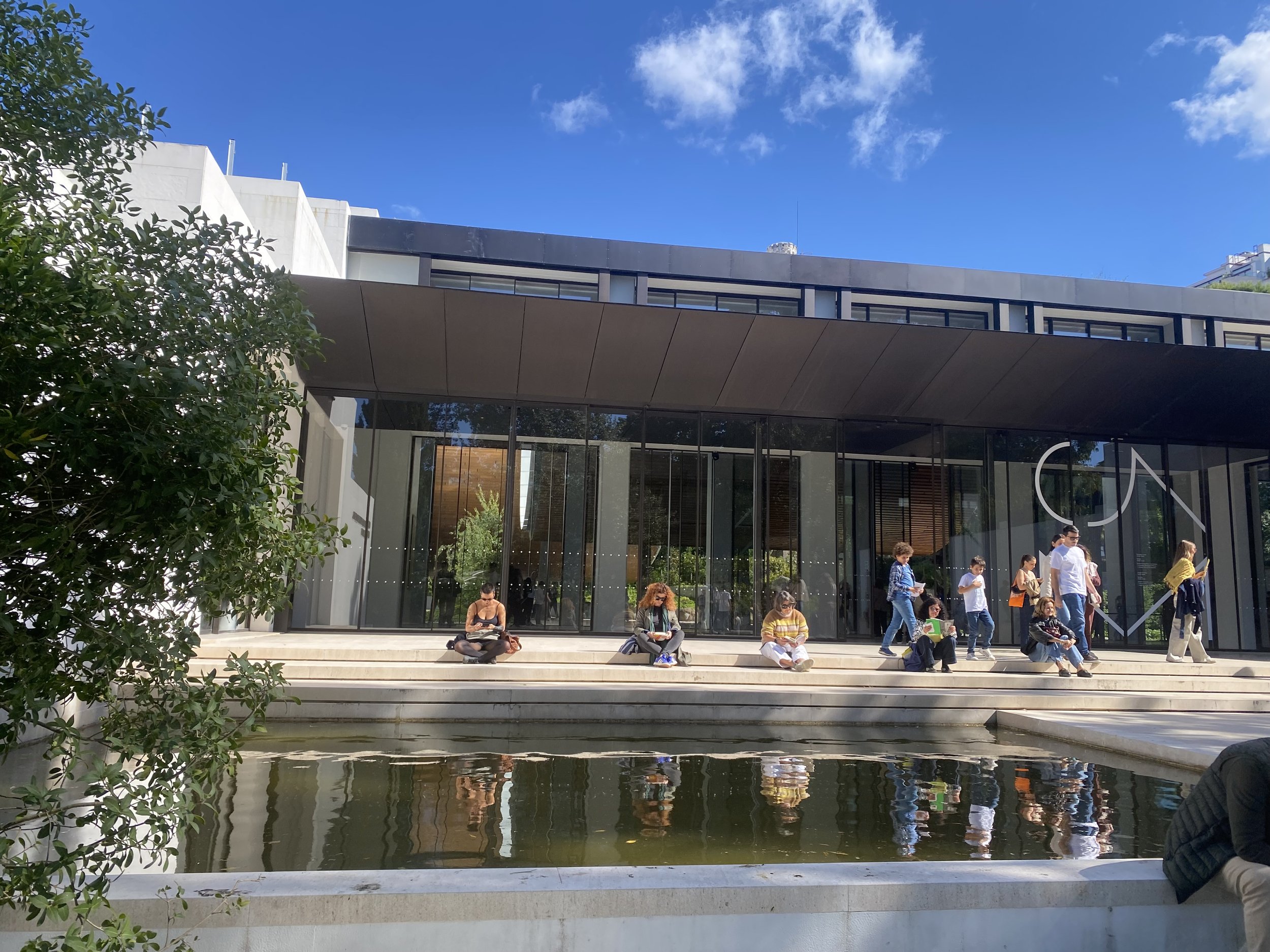
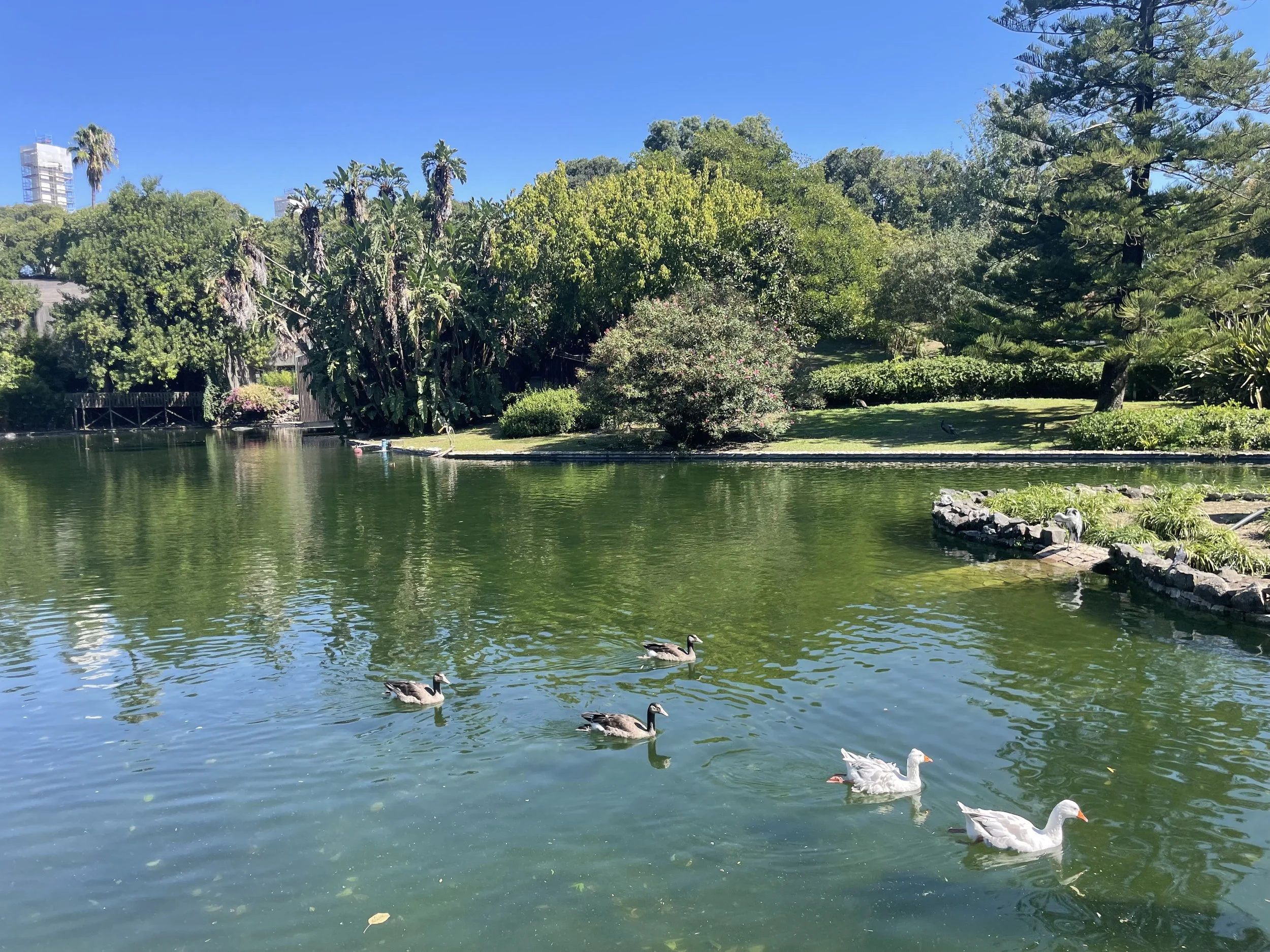
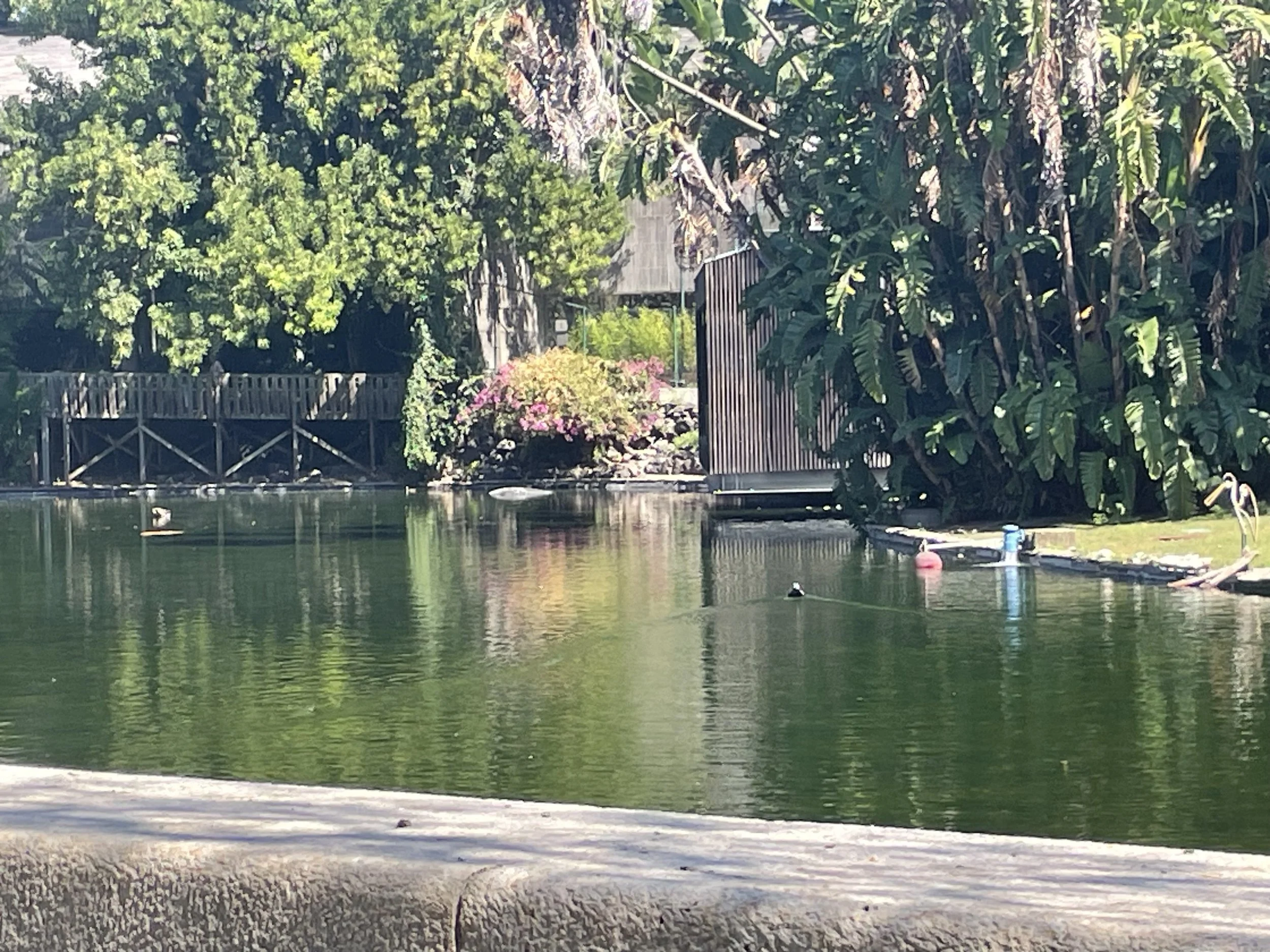
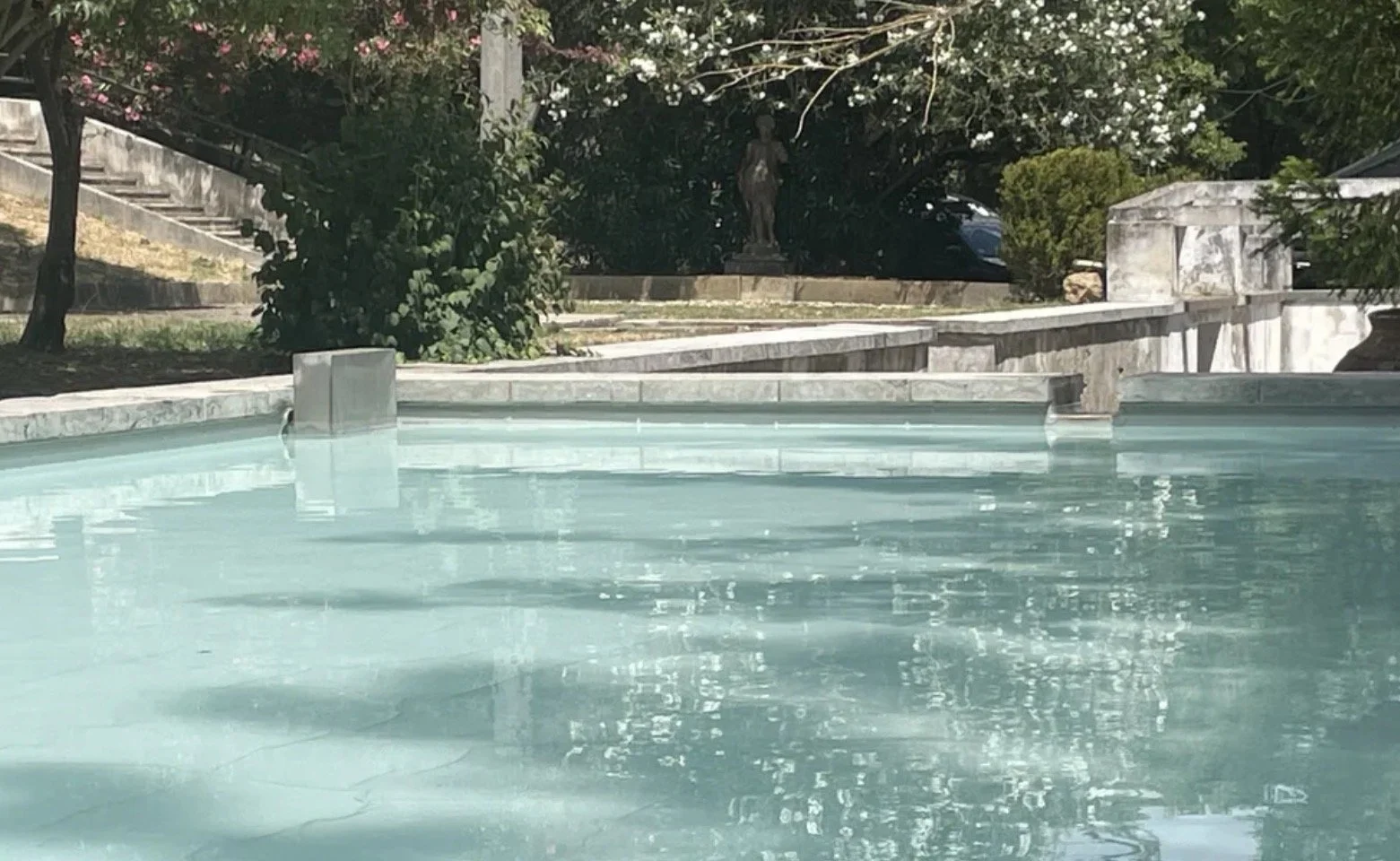
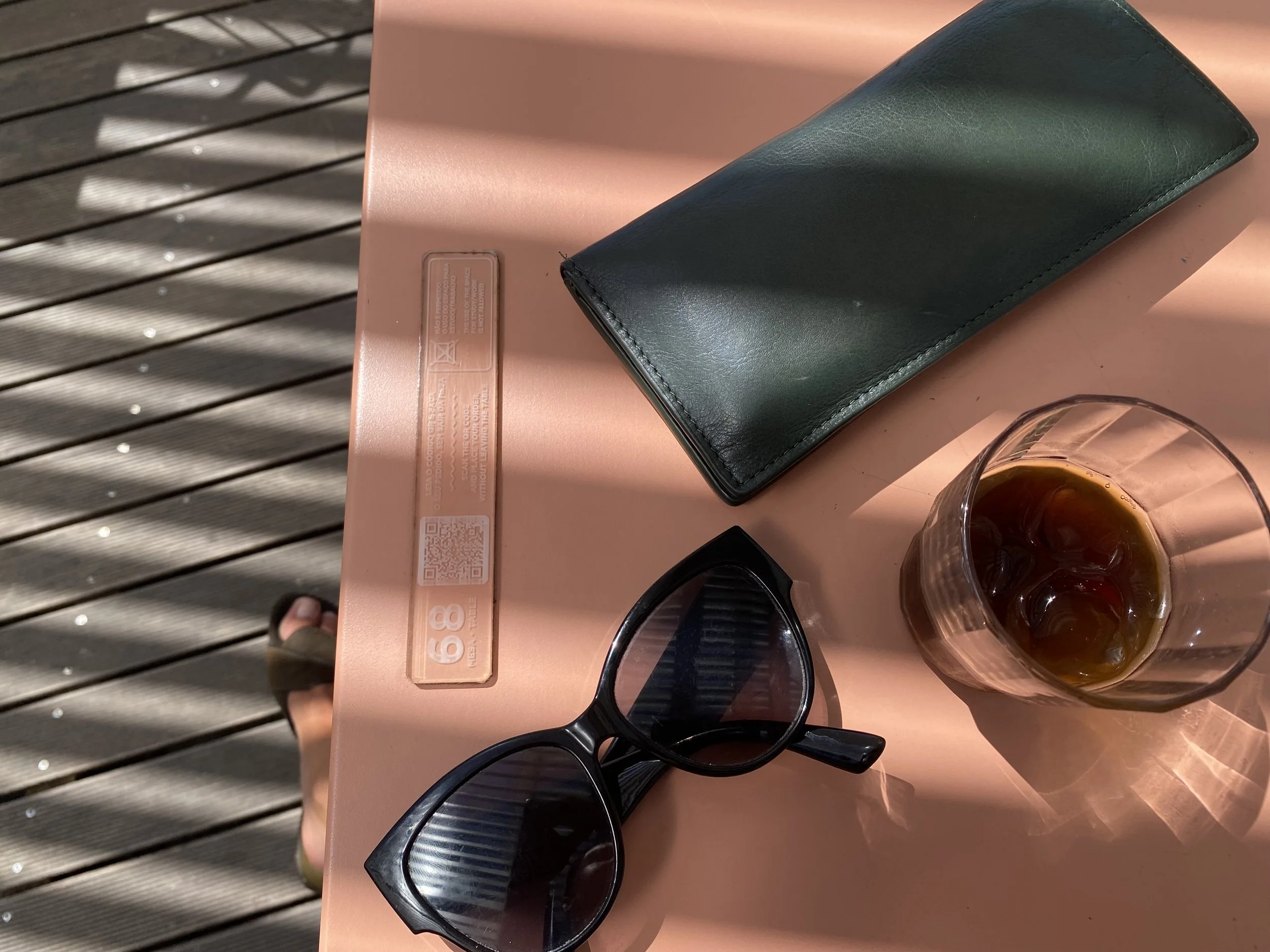
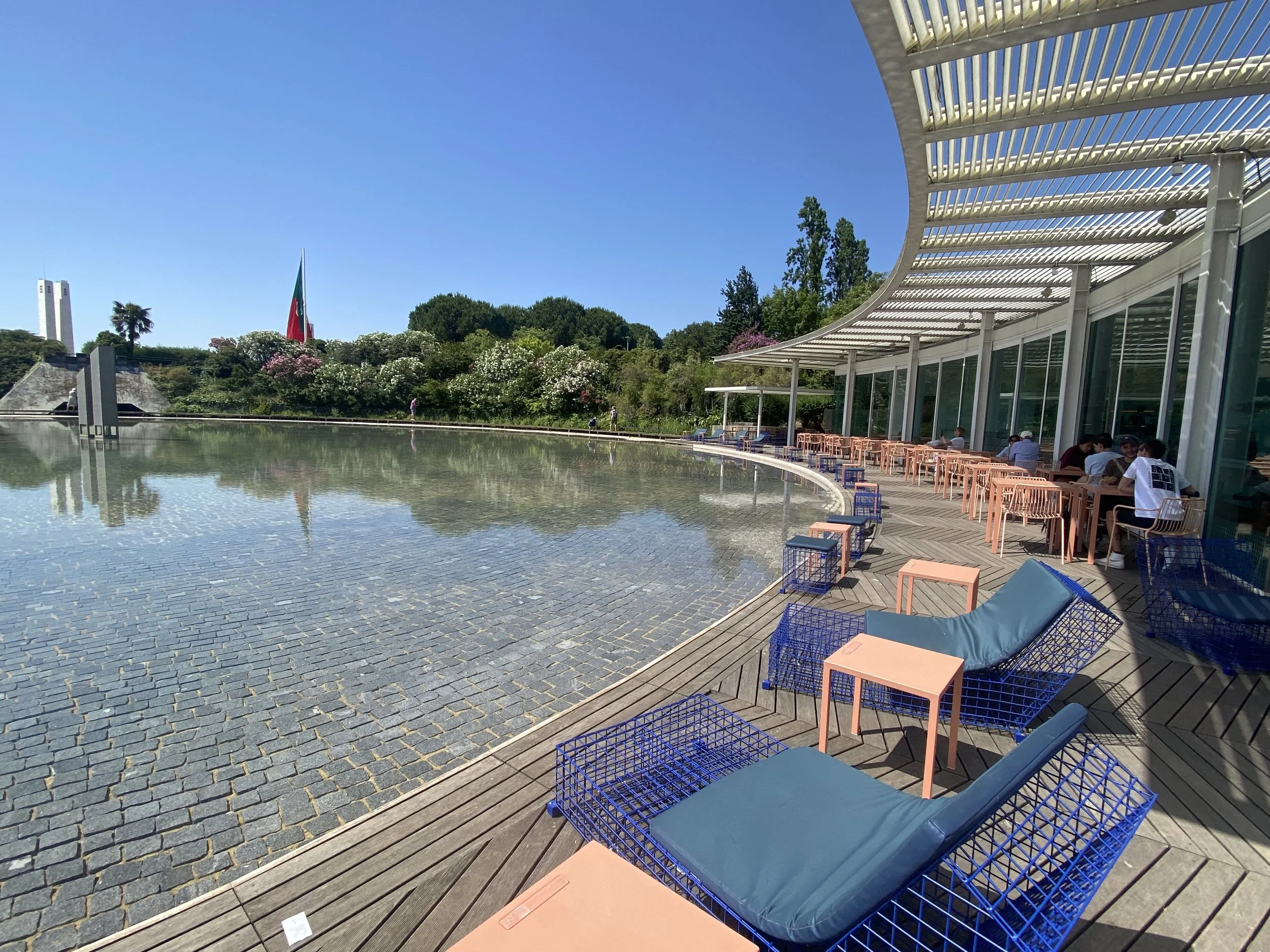
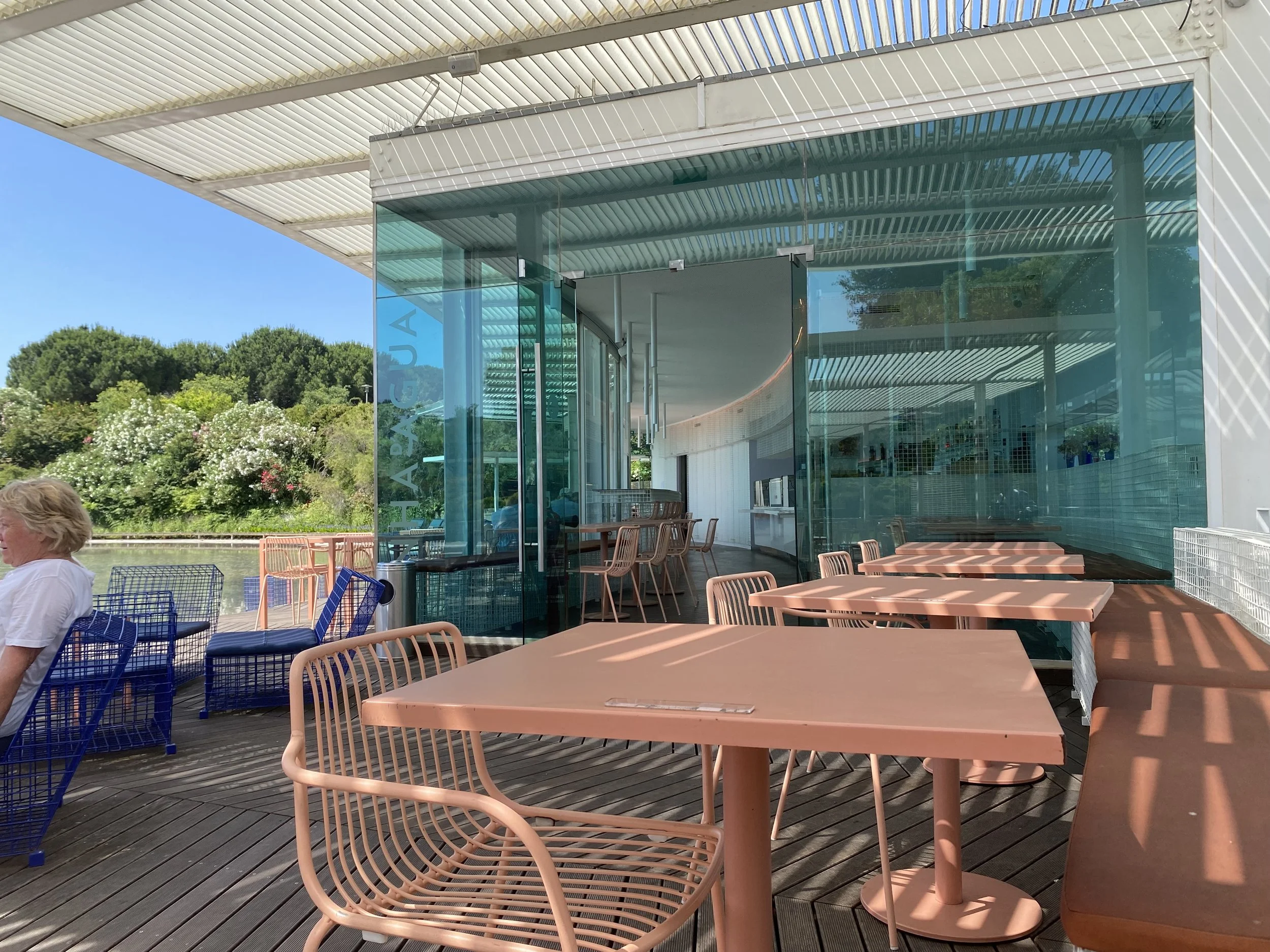
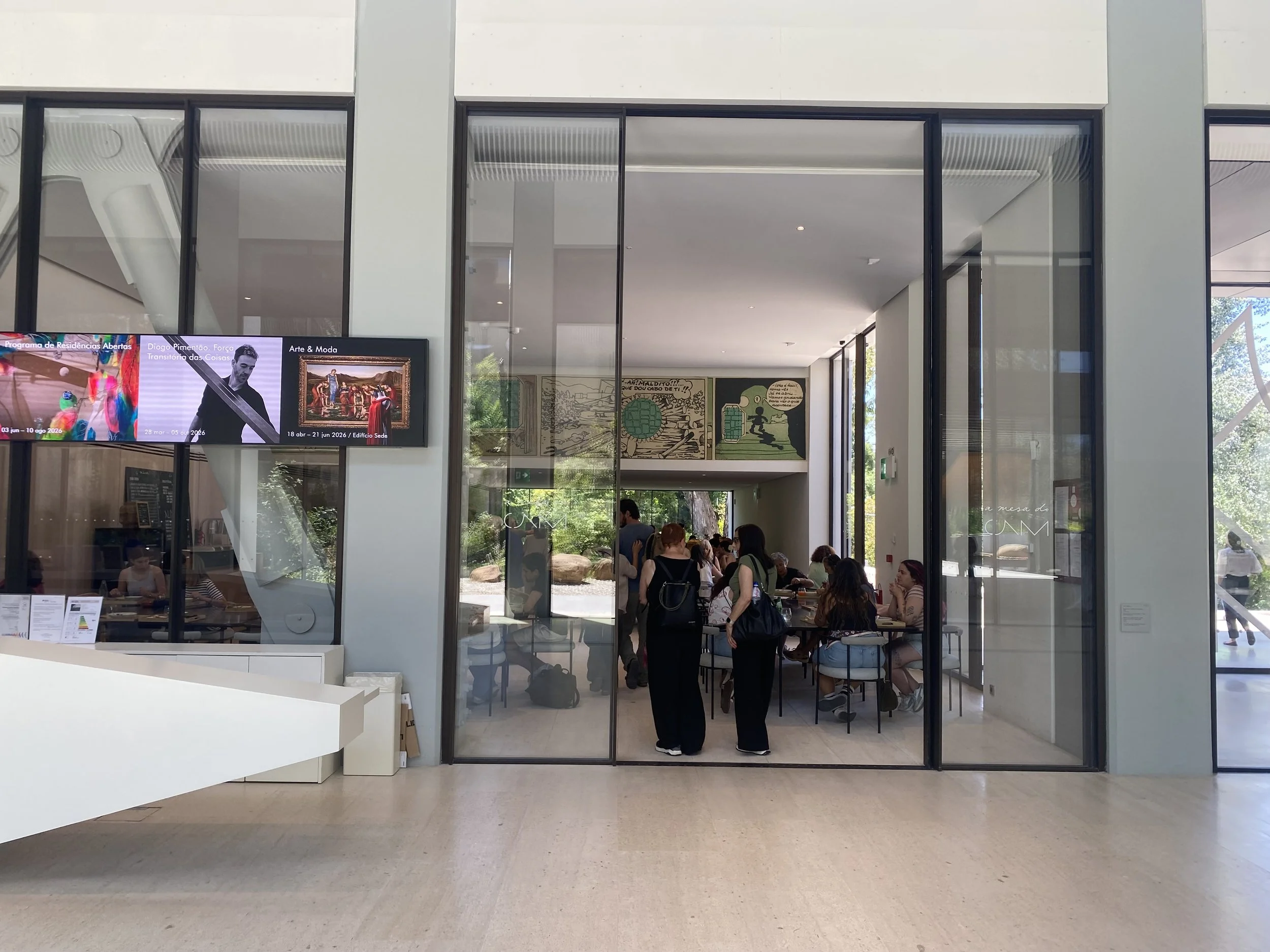
Park Gulbenkian— free entry to both museums for the 70th anniversary and the reopening ‘Anew’ of the original ‘old’ museum — 18th until 26th July 2026– park always free, open sunrise to sunset, ducks, ducklings, geese, tortoises and others included— also new La Mesa cafe and restaurant worth visiting with reasonable price in the elegant glass cube of the new CAM modern art museum— and the mensa and cafe and the other cafe both around the old ‘anew’ museum in the park have reopened— just like the lake— it’s time to visit now that the free summer concerts in the park and museums have reigned in a new chapter
Lisbon was named the third best city in the world to live in. Tokyo first, Copenhagen second, then us. The magazine that said it also warned that what makes Lisbon special is now under threat. It's Monday, 20 July. Twenty-five degrees. The World Cup is over and Spain are champions. Here's what you need to know.
🌬️ AIR QUALITY: 24 (Good).
🗞️ TOP STORY
LISBON IS THE THIRD MOST LIVABLE CITY IN THE WORLD. THE CATCH IS IN THE FINE PRINT.
Monocle, the British magazine that has run a global quality-of-life survey for nineteen years, has placed Lisbon third in the world for 2026. Only Tokyo and Copenhagen finished ahead. Behind Lisbon come Vienna, Sydney, Zurich, Madrid, Paris and Munich. London did not make the list at all. Nineteen years in, it is about as serious as a livability ranking gets.
The praise is specific, which is what makes it worth reading. Monocle credits nearly a decade of steady city governance: continued investment in the metro, trams and river ferries, the first new tram line in almost seventy years, and a fivefold rise in cycling trips between 2011 and 2021. It counts 2,806 hours of sunshine a year, a quarter of the city given over to green space, and an airport connected to 144 international destinations. But the survey is not really about infrastructure. It was built to measure the things other rankings ignore, whether a neighbourhood has real life in it, whether you can find a good meal and a drink after ten at night, whether a place has ambition and is also enjoyable to be in. Lisbon scored on all of it: the farmers' markets, the newsstands, the historic shops protected under the Lojas com História scheme, the reopened contemporary art museum at the Gulbenkian.
Then comes the paragraph that complicates the celebration. Monocle warns that Lisbon is at risk of becoming a victim of its own success, and it names housing as the single biggest threat to everything else it just praised. In the magazine's framing, the danger is that Lisbon becomes two cities in one, split between the people who can afford it and the people being pushed out of it. It points to the strain that a growing population places on services, and it lists the funicular accident and last year's nationwide blackout as tests of how much pressure the city's systems can take.
That is the uncomfortable knot at the centre of the ranking. The qualities that put Lisbon on the podium, the light, the safety, the walkability, the dinner you can still get at ten, are the same ones drawing enough demand to strain them. A high rent is the flip side of a desirable street. The honest version of the story holds both facts at once rather than choosing the flattering one, because everyone who lives here, whether their family has been in the neighbourhood for generations or they arrived last spring, is living inside the same tension.
It is not a reason for gloom. A city that has spent a decade governing itself well, investing in things like tram lines and ferries, has the tools to manage its own popularity if it chooses to use them. Monocle's warning is a warning, not an obituary. The open question is whether Lisbon spends the next decade protecting what got it here, or lets it get priced out one street at a time.
Bottom line: Lisbon is one of the three best cities in the world to call home, measured by the things that actually make a place worth living in. The harder task, now that the whole world has been told, is keeping it that way for the people already here.
⚡ QUICK HITS
The country you moved to is now outgrowing Germany. Southern Europe has rewritten the last decade's script. Portugal, Spain, Greece and Italy are now outpacing the old economic core, while Germany managed barely 0.9% growth and France and Italy drag on the eurozone average. Portugal's growth has run about 3.3 percentage points above the eurozone average since 2019, ahead even of Spain, helped by a services-led economy, falling public debt and European Union recovery funds peaking this year. The honest caveat is the one the central bank governor made a week ago: this is growth without much gain in productivity, which is why wages still lag the headlines. But as a bet on where to place your life, Portugal is looking like a good one.
That’s exactly why I am interested in solving— so we can do both enjoy beauty while catering to truth— preserving and stewarding what’s entrusted to us— or what we discovered— see more under Investor Seeking (scroll to get the link)
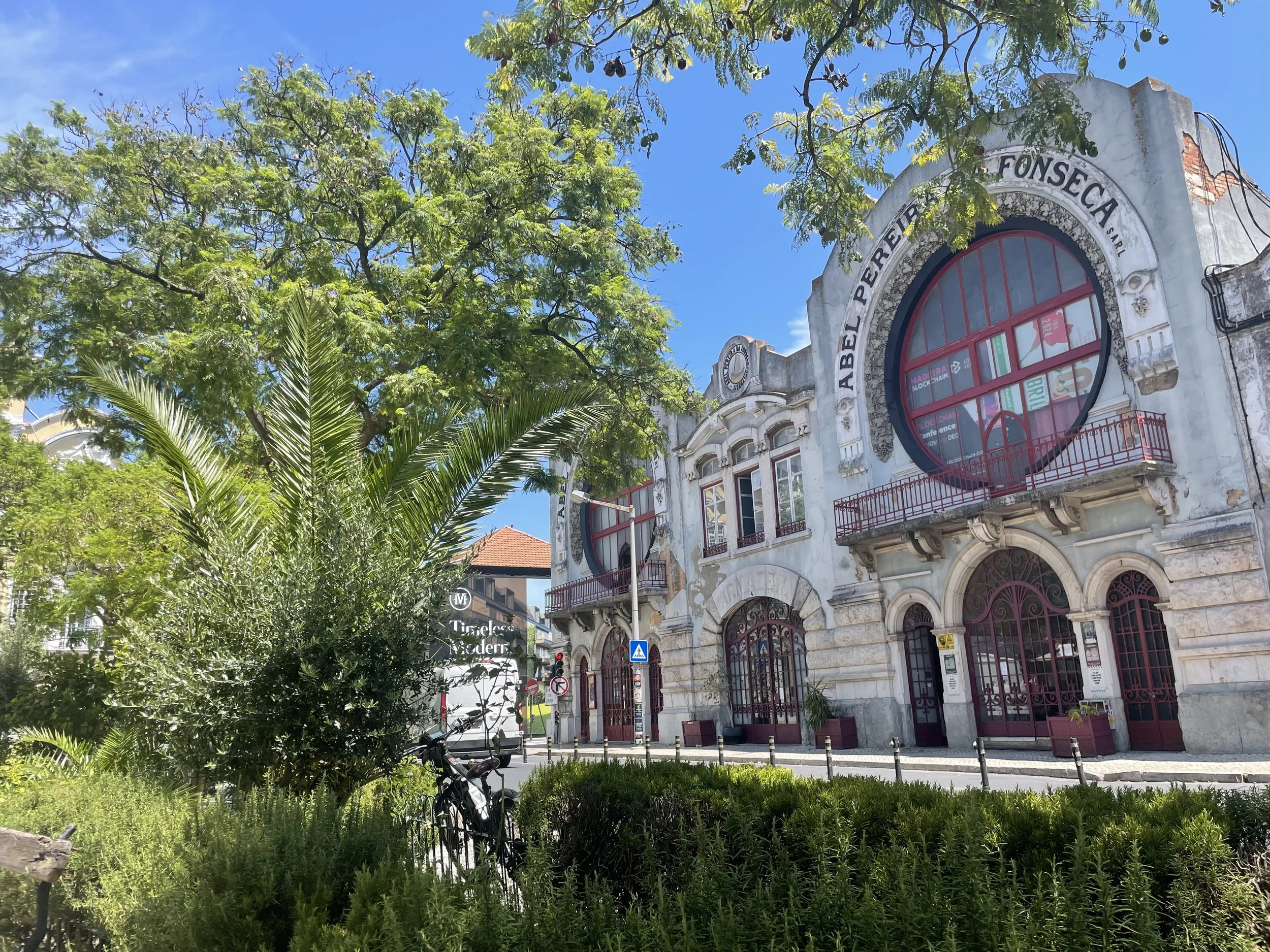
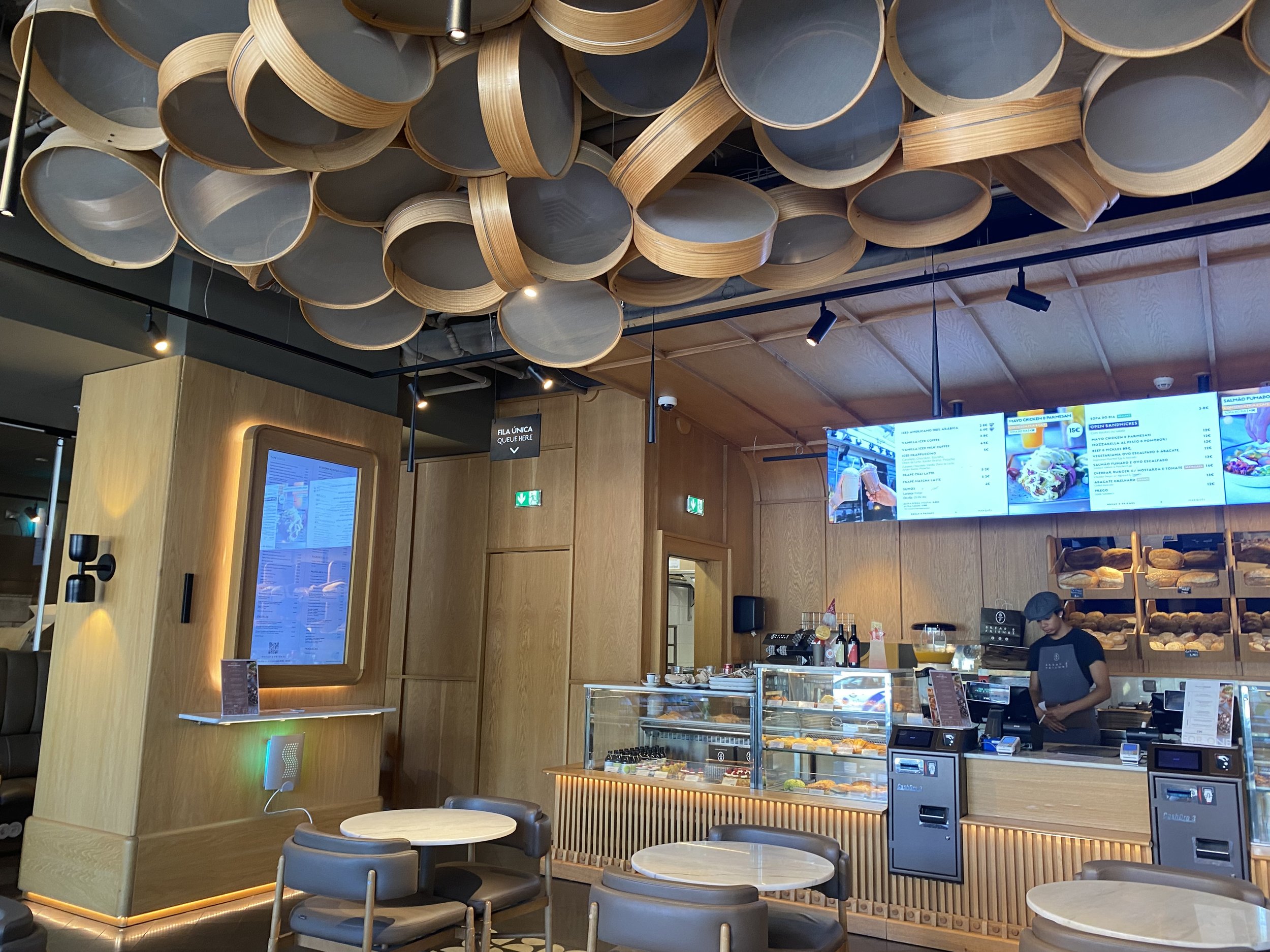
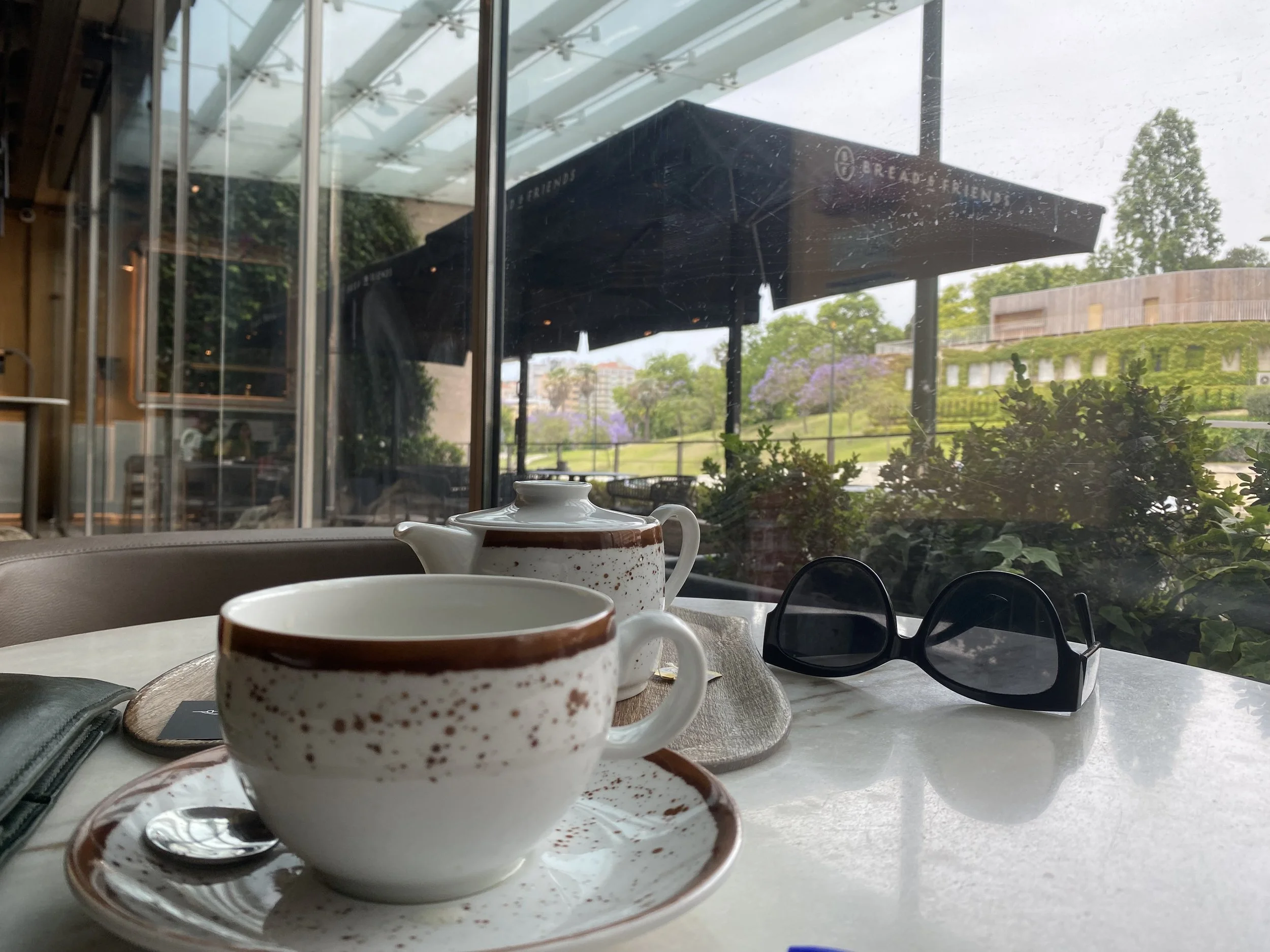
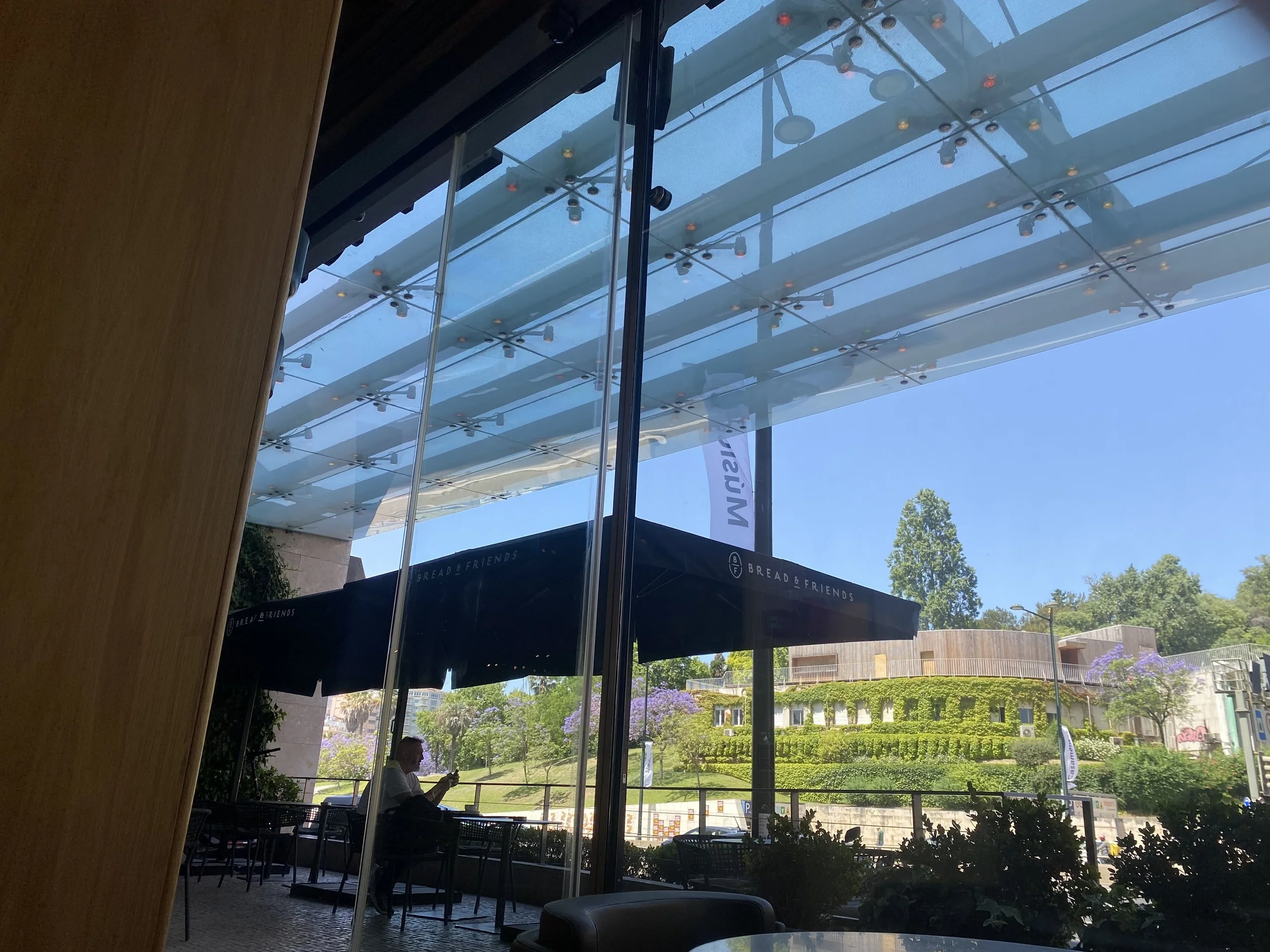
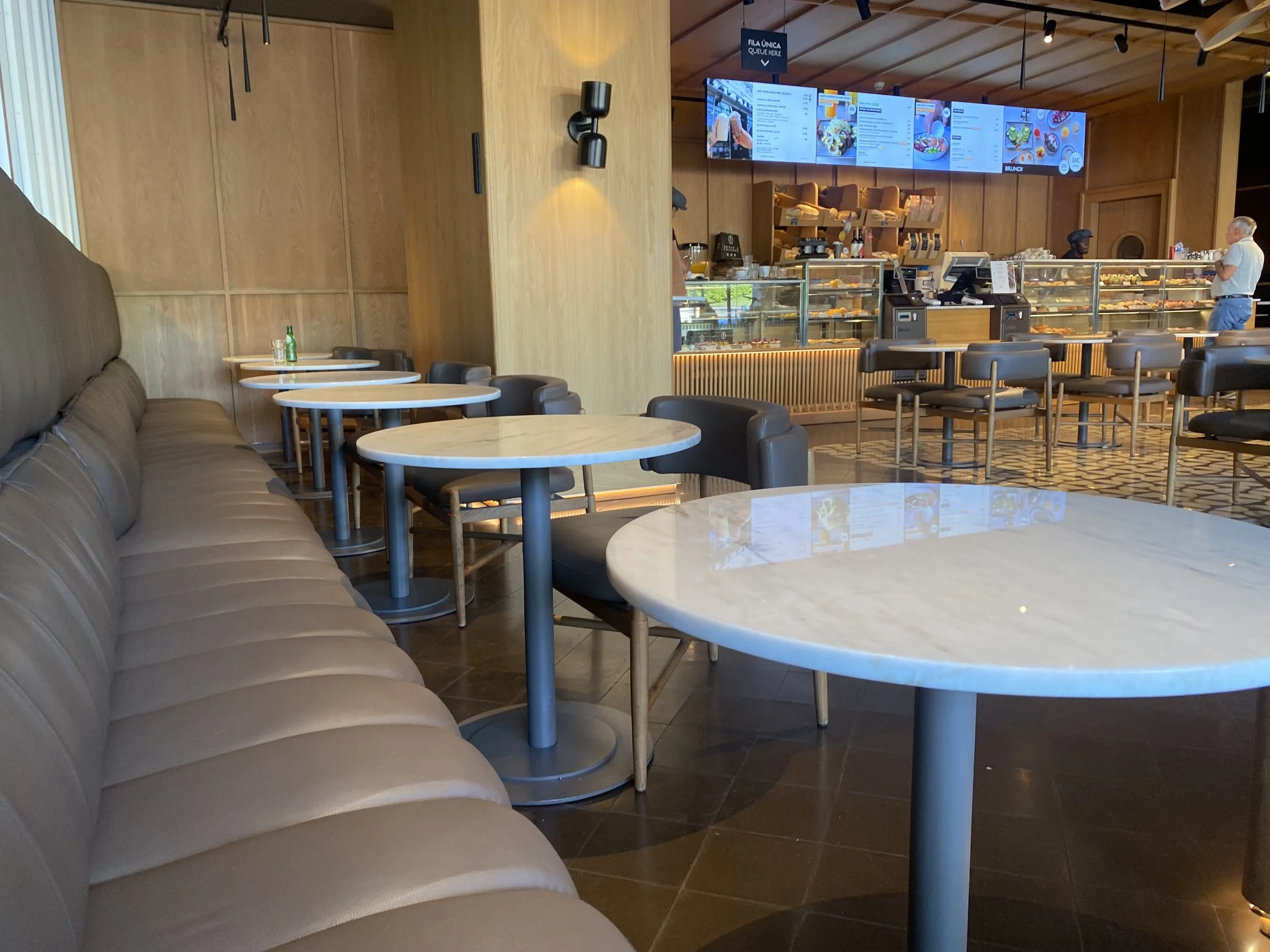
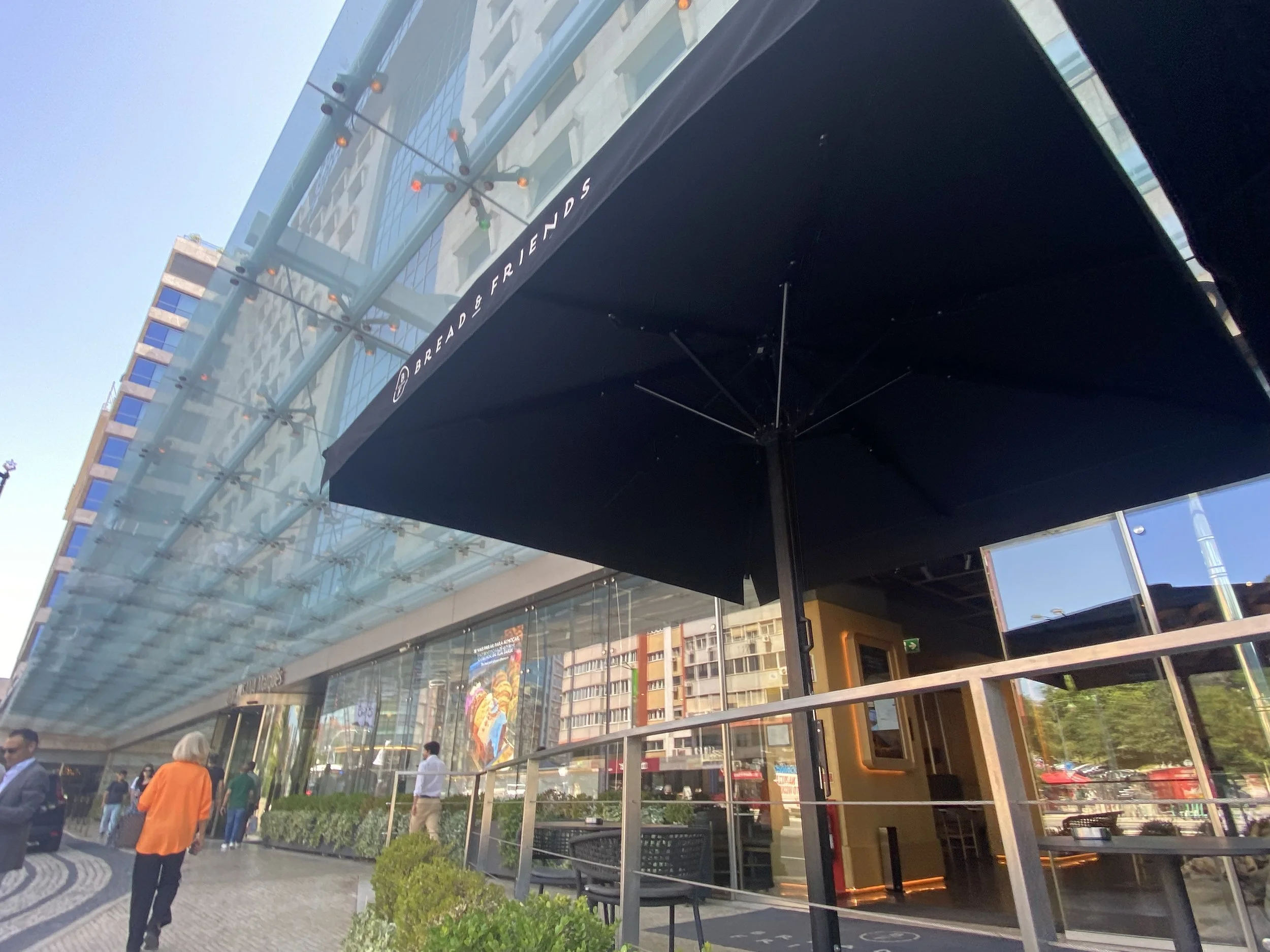
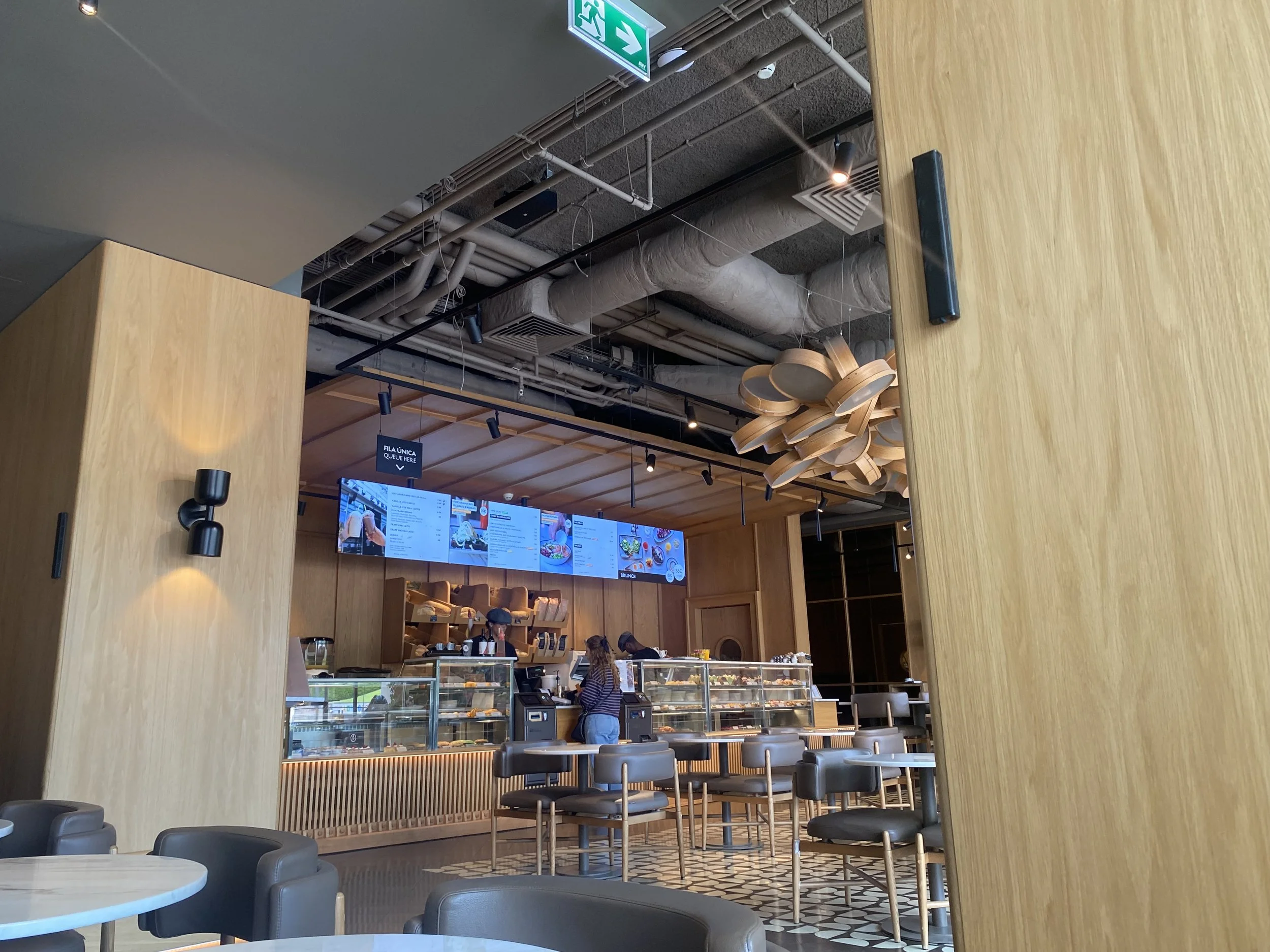
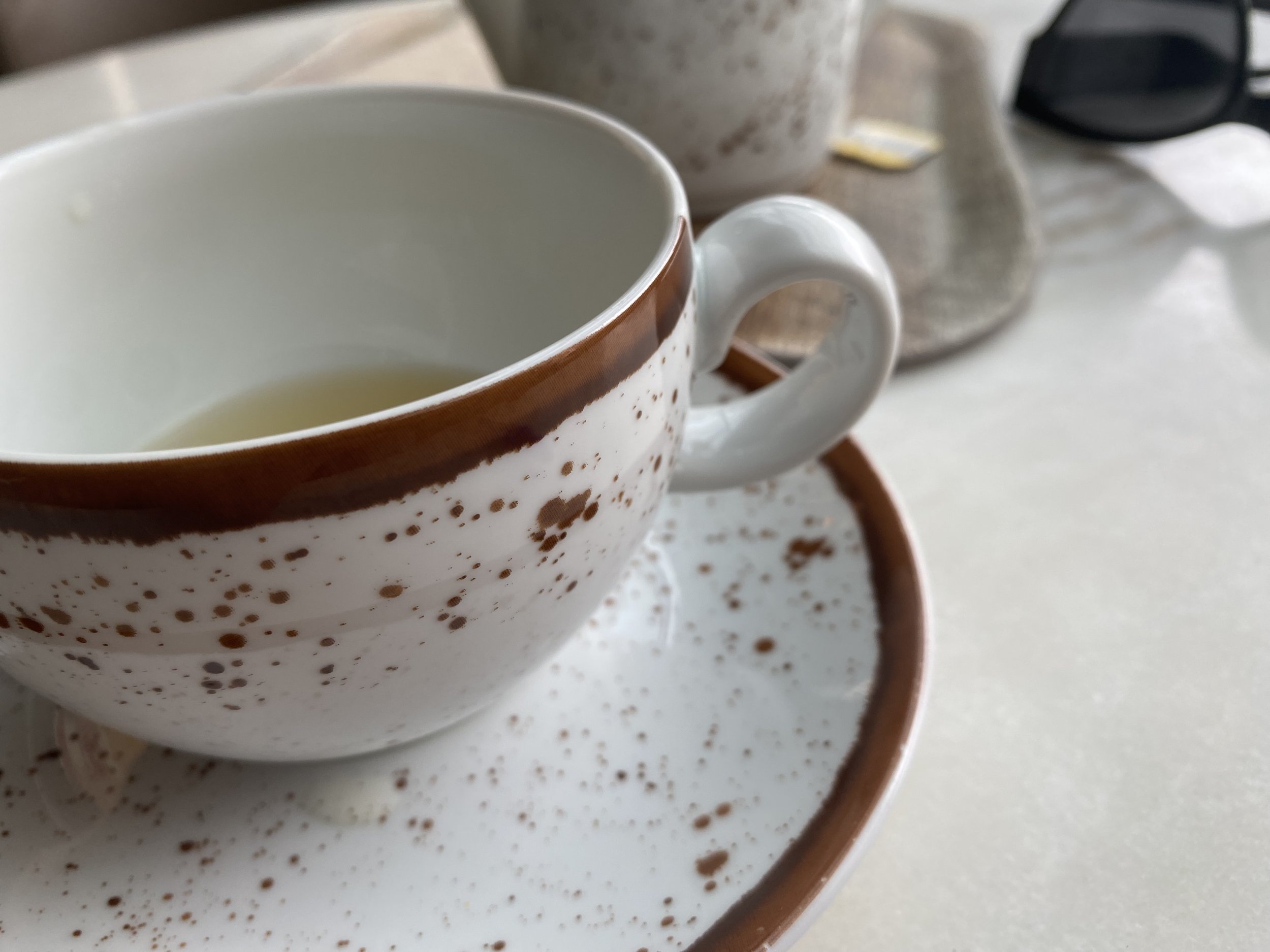
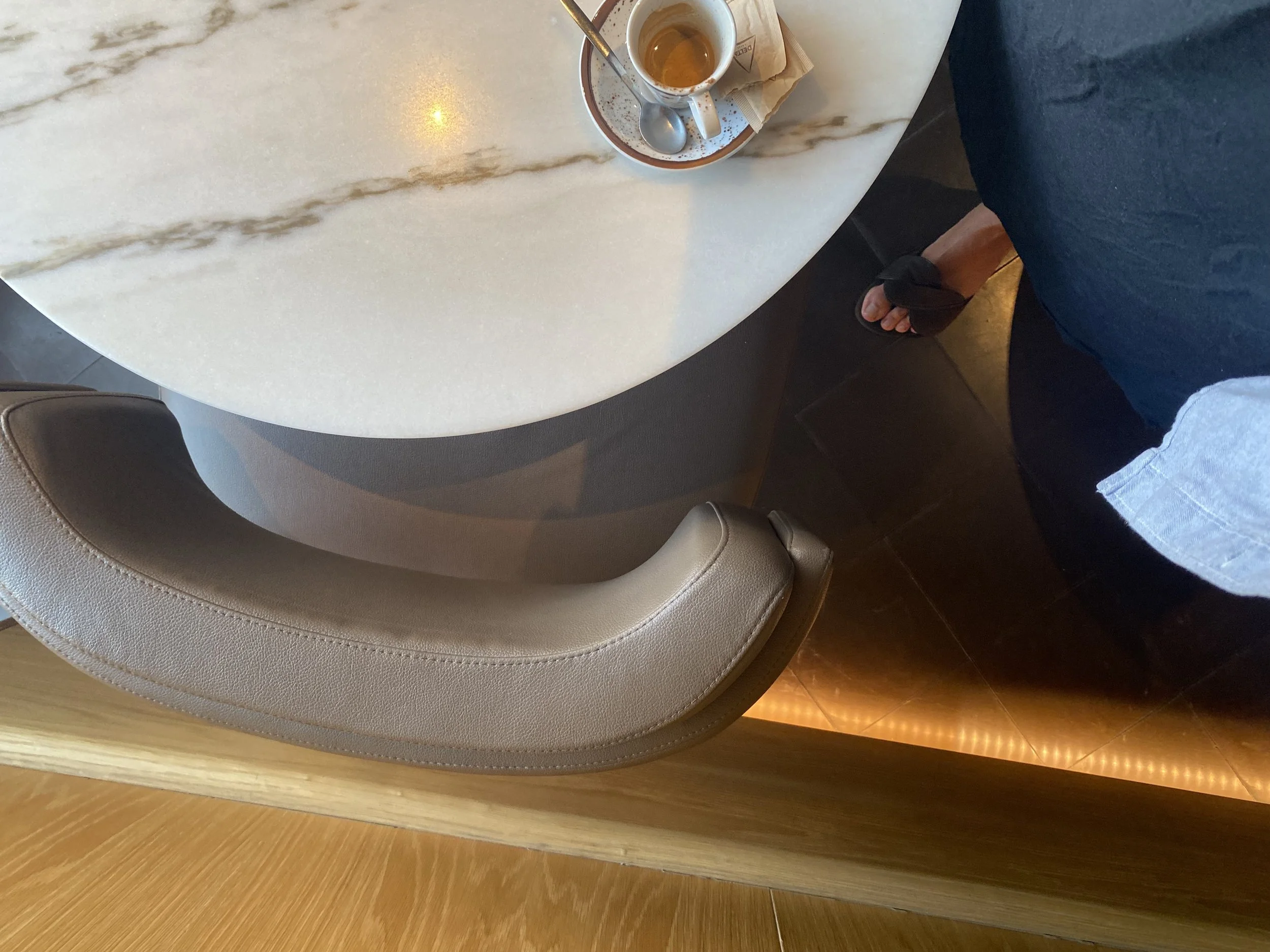
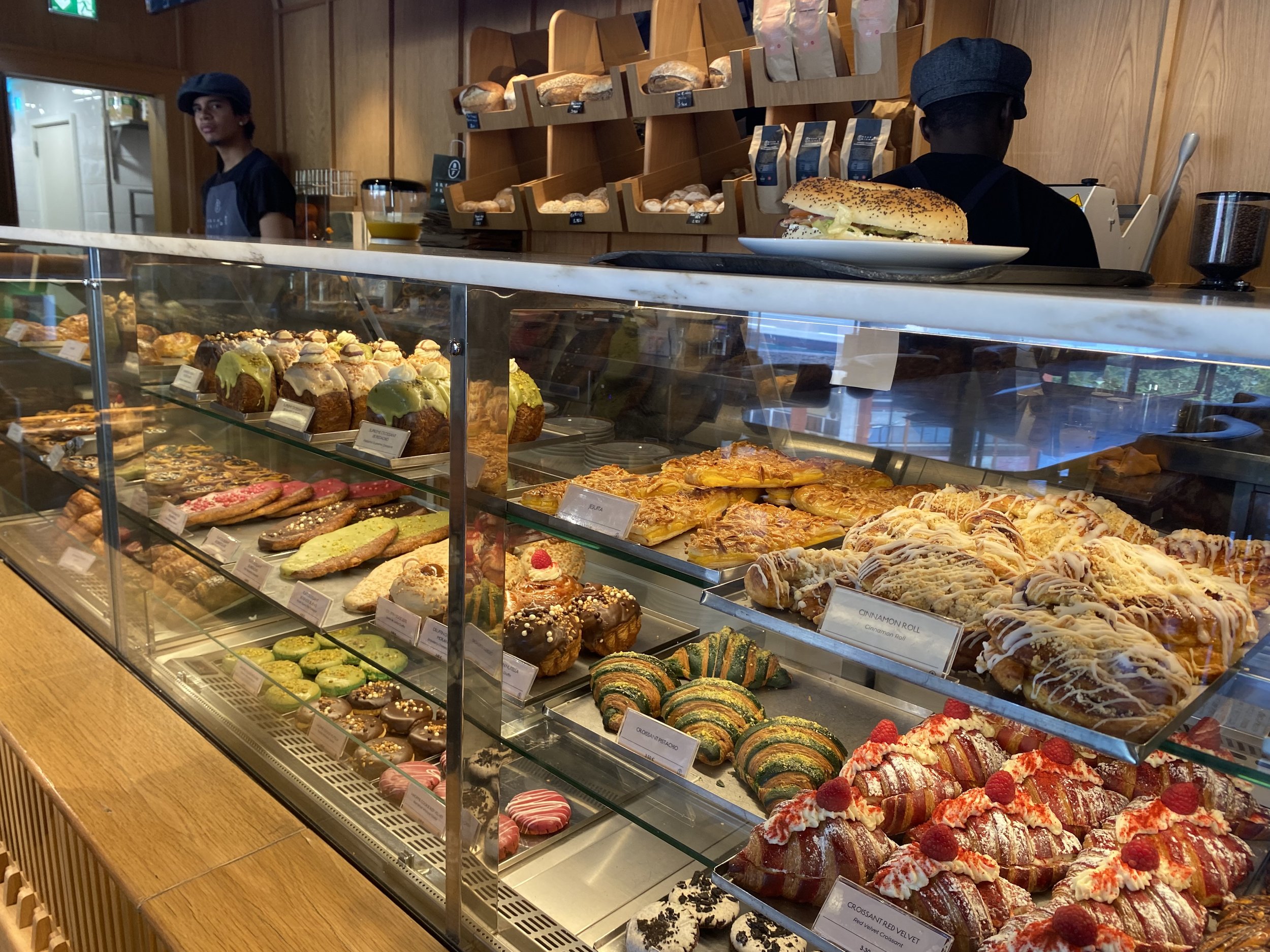
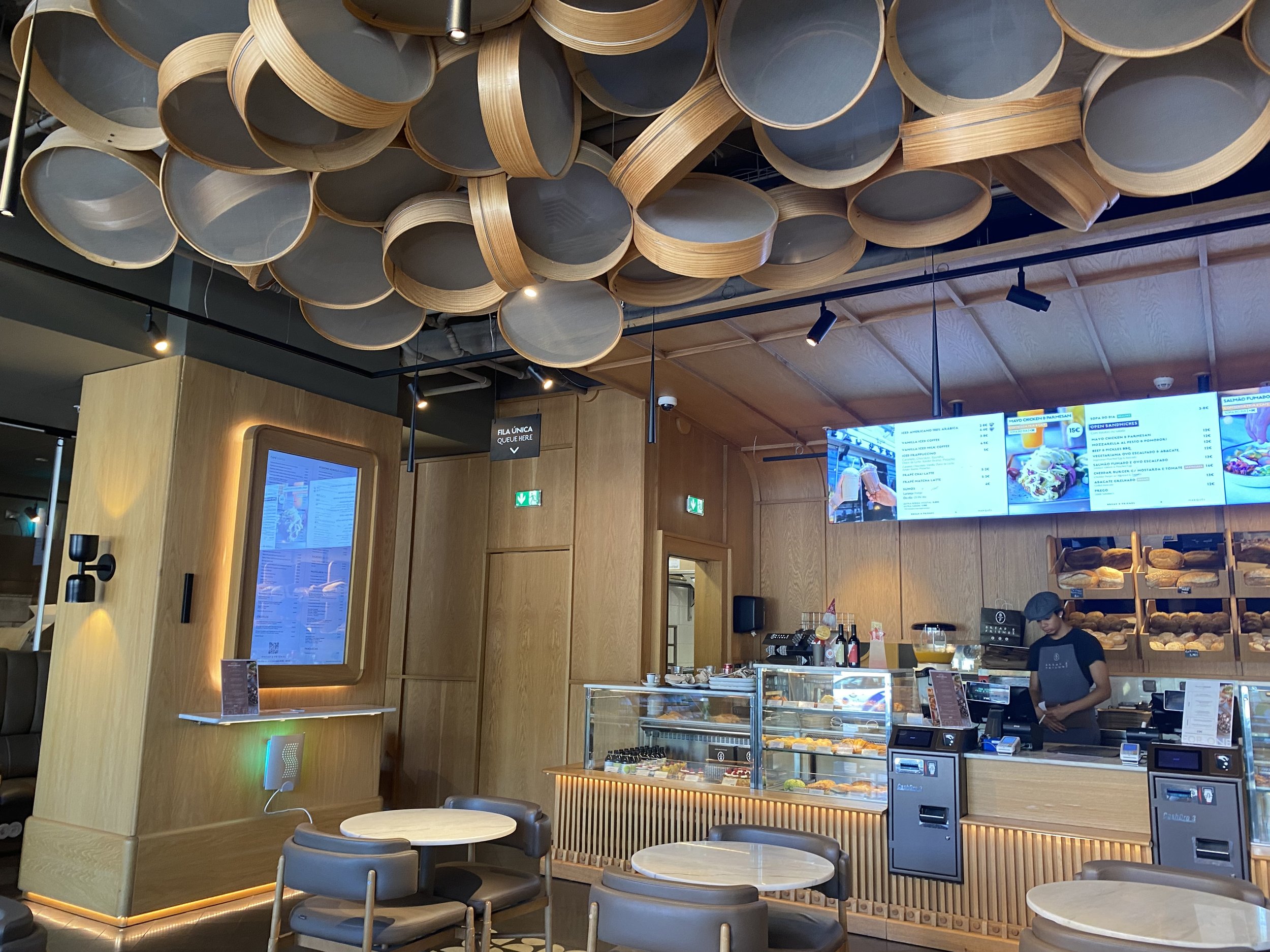
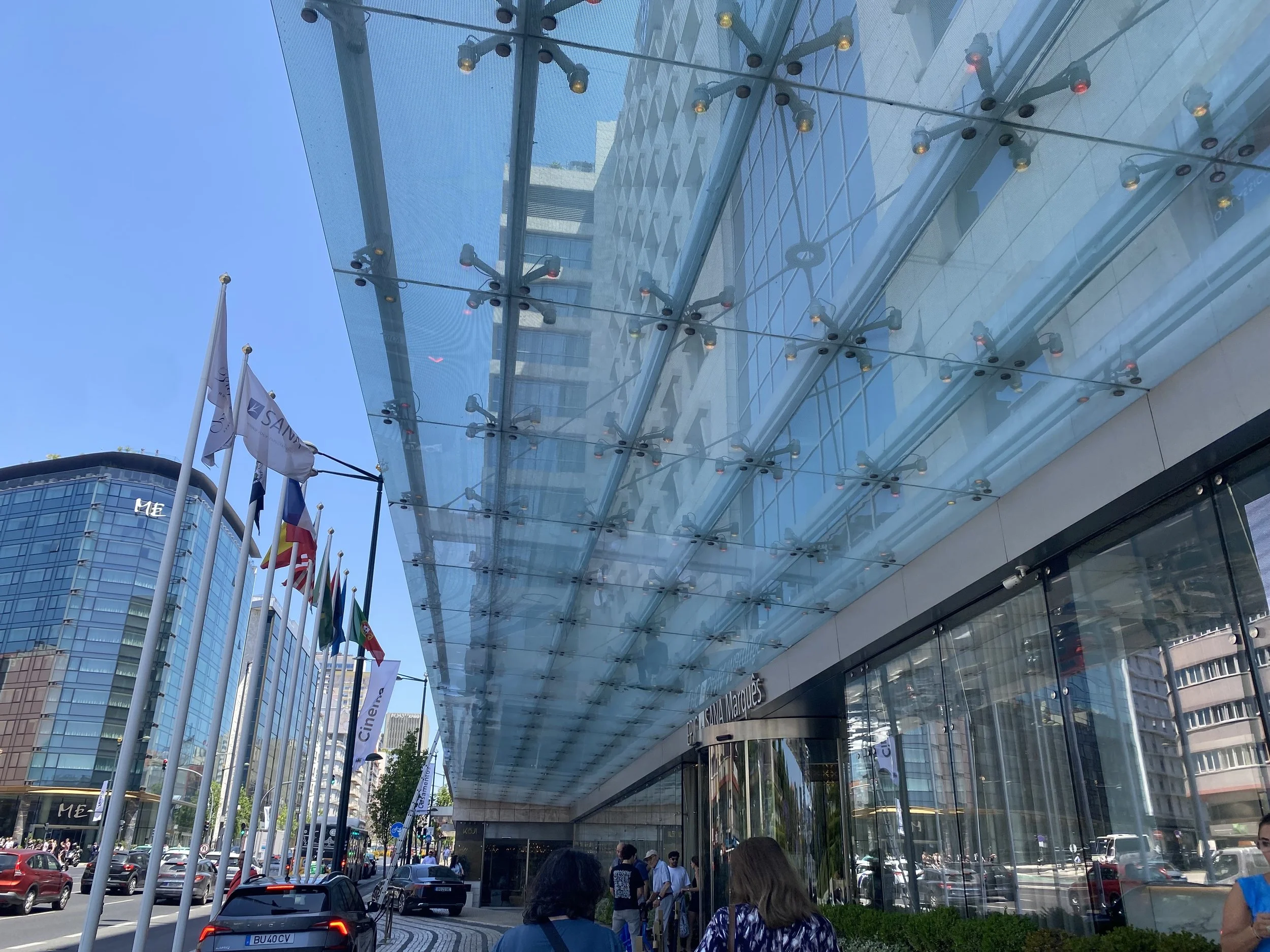
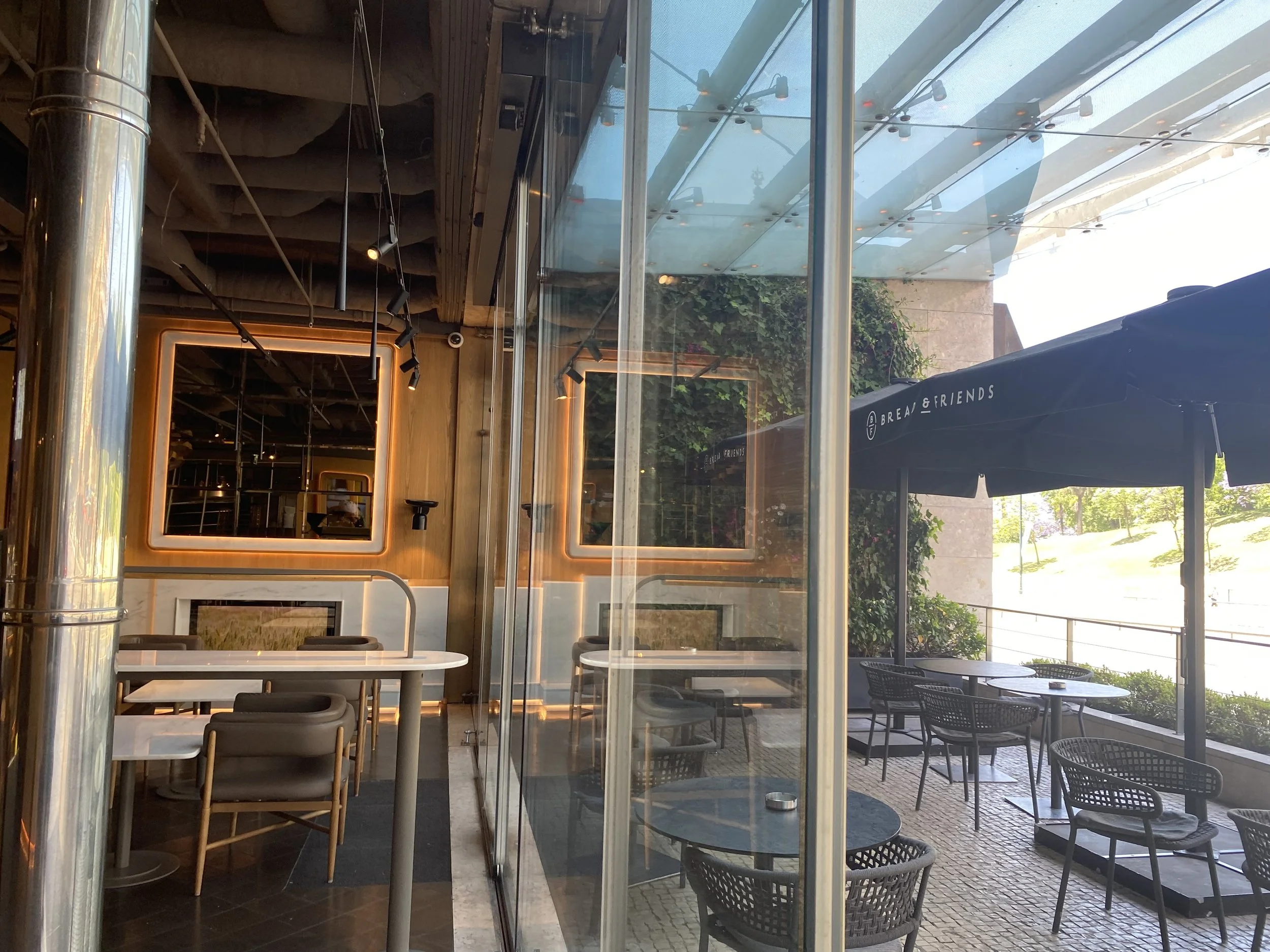
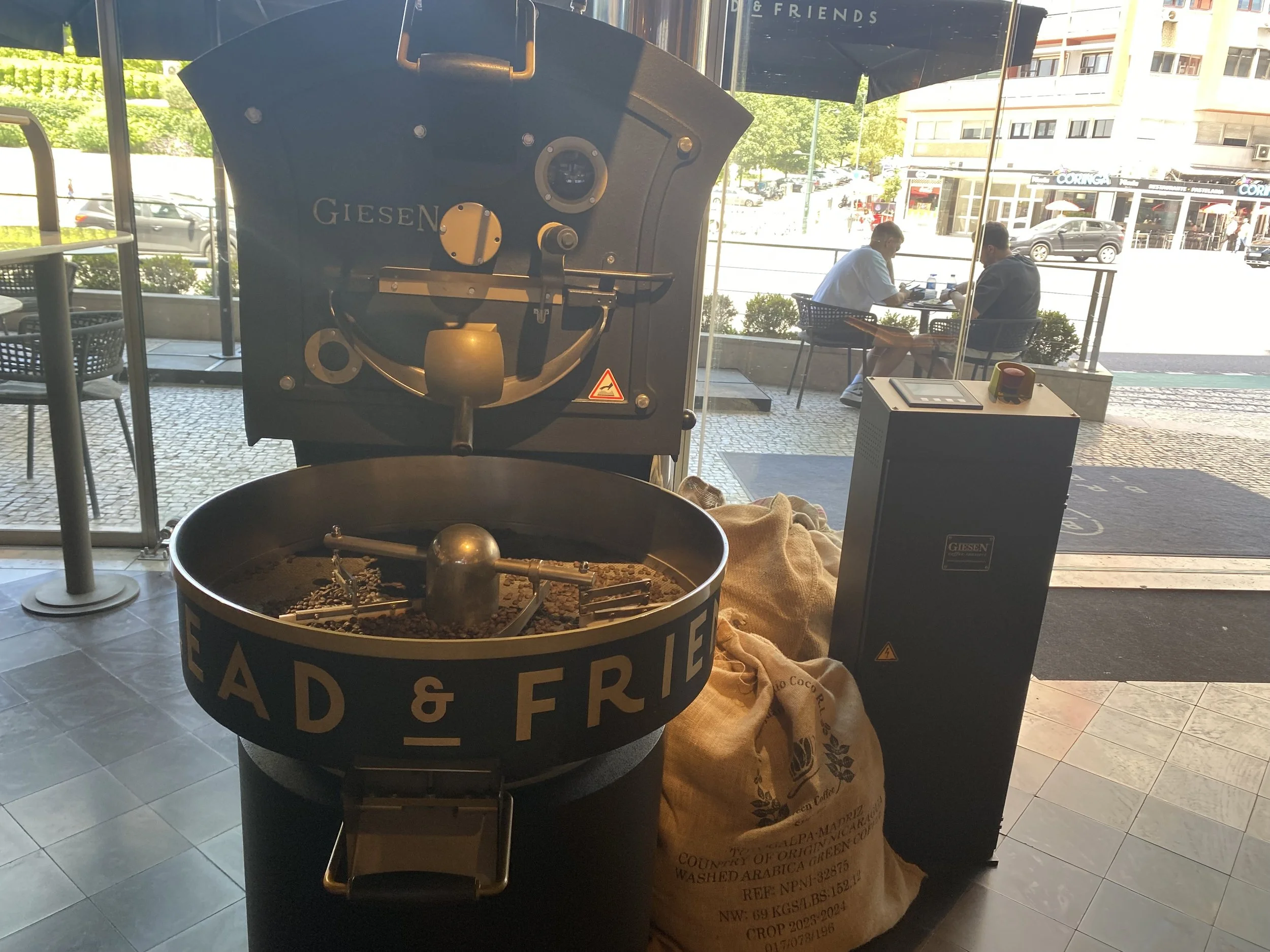
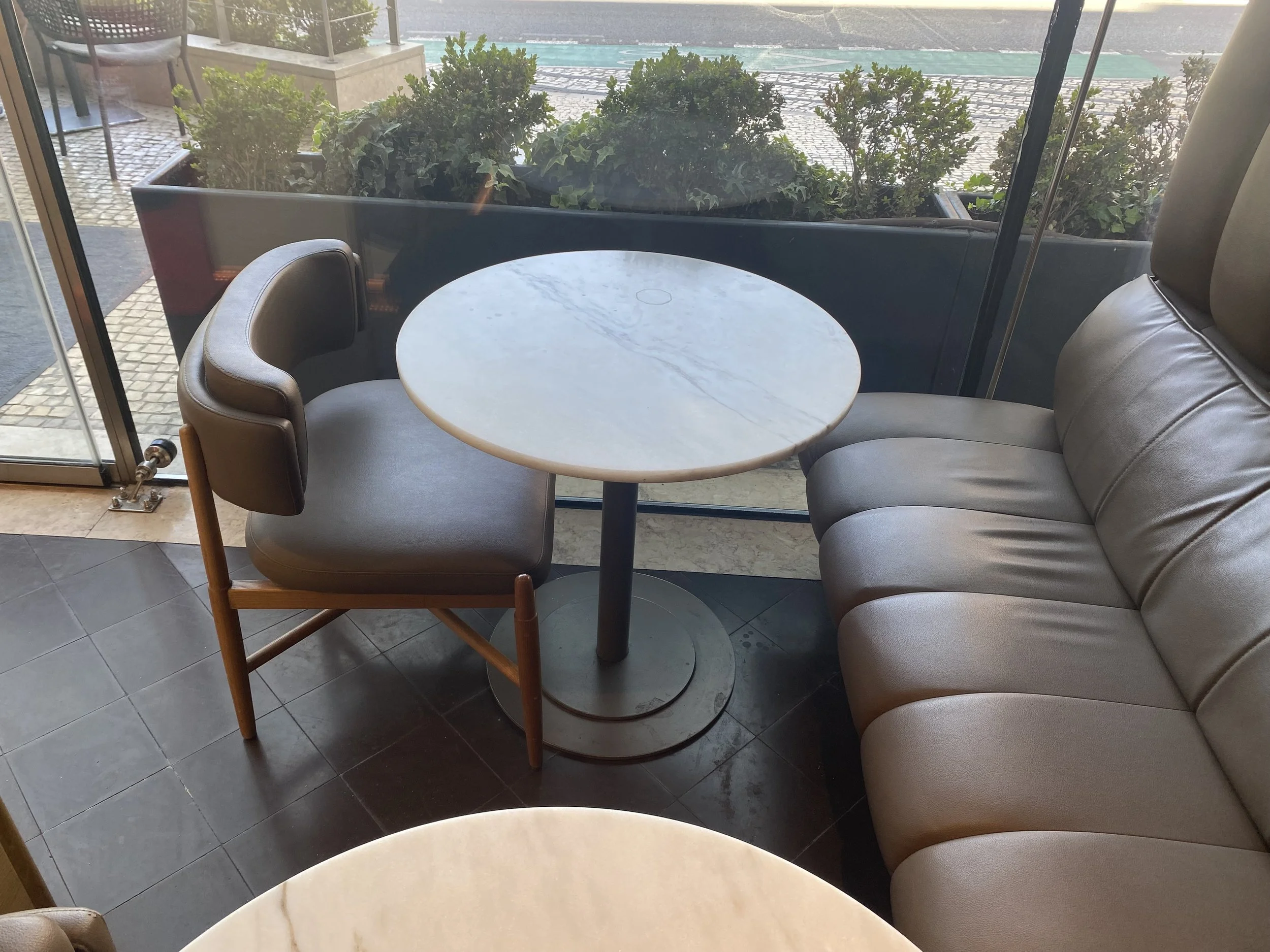
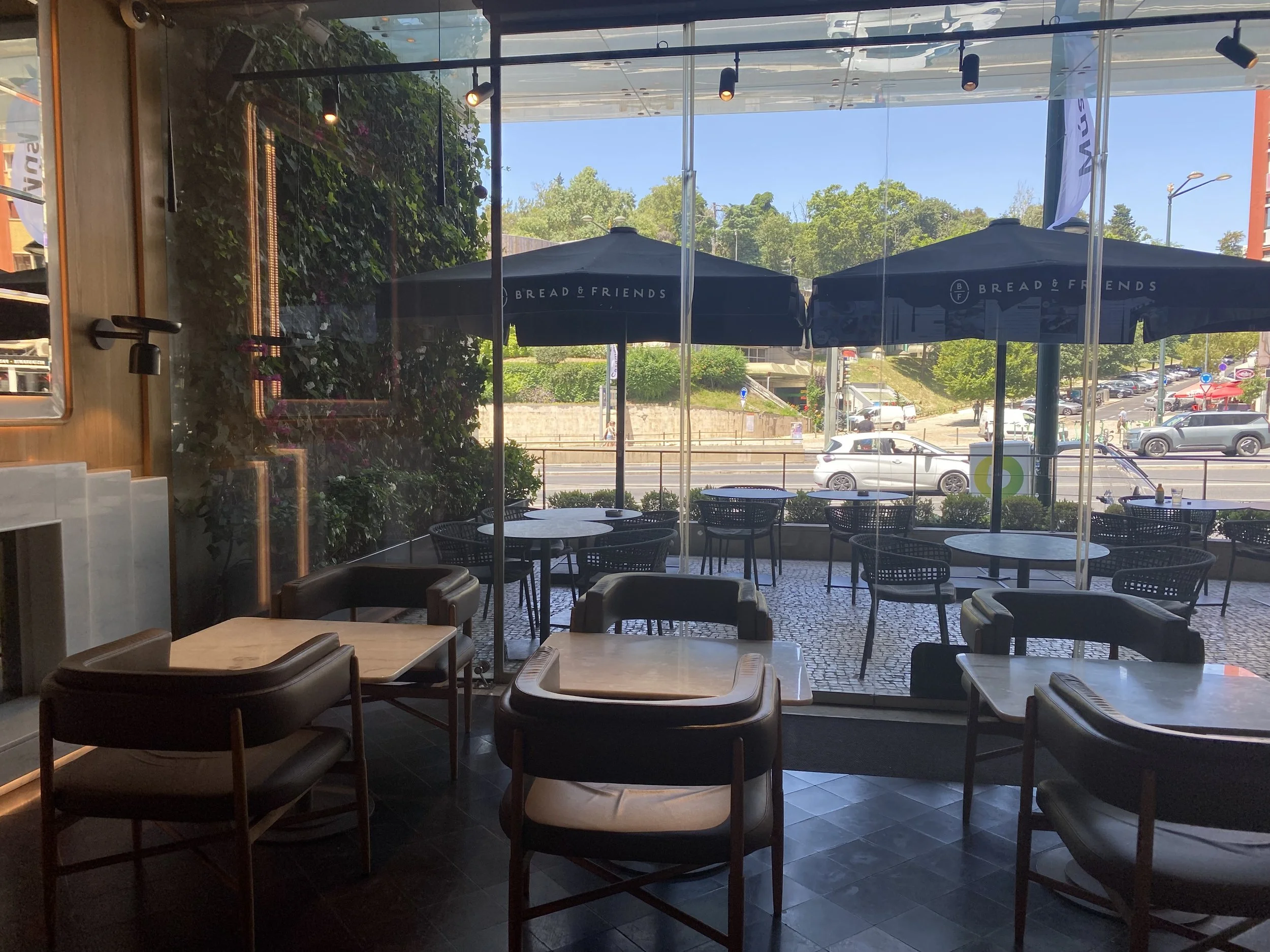
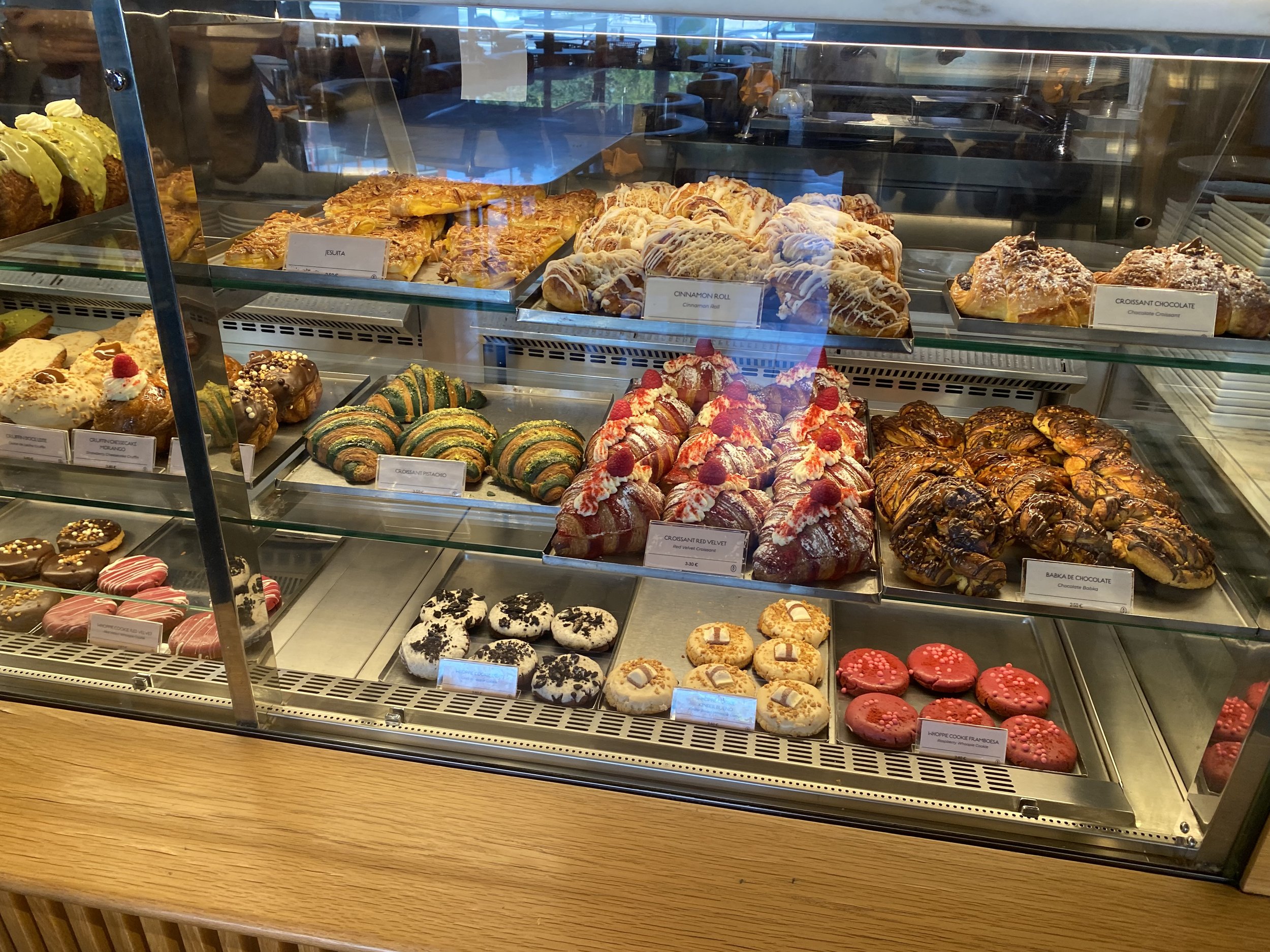
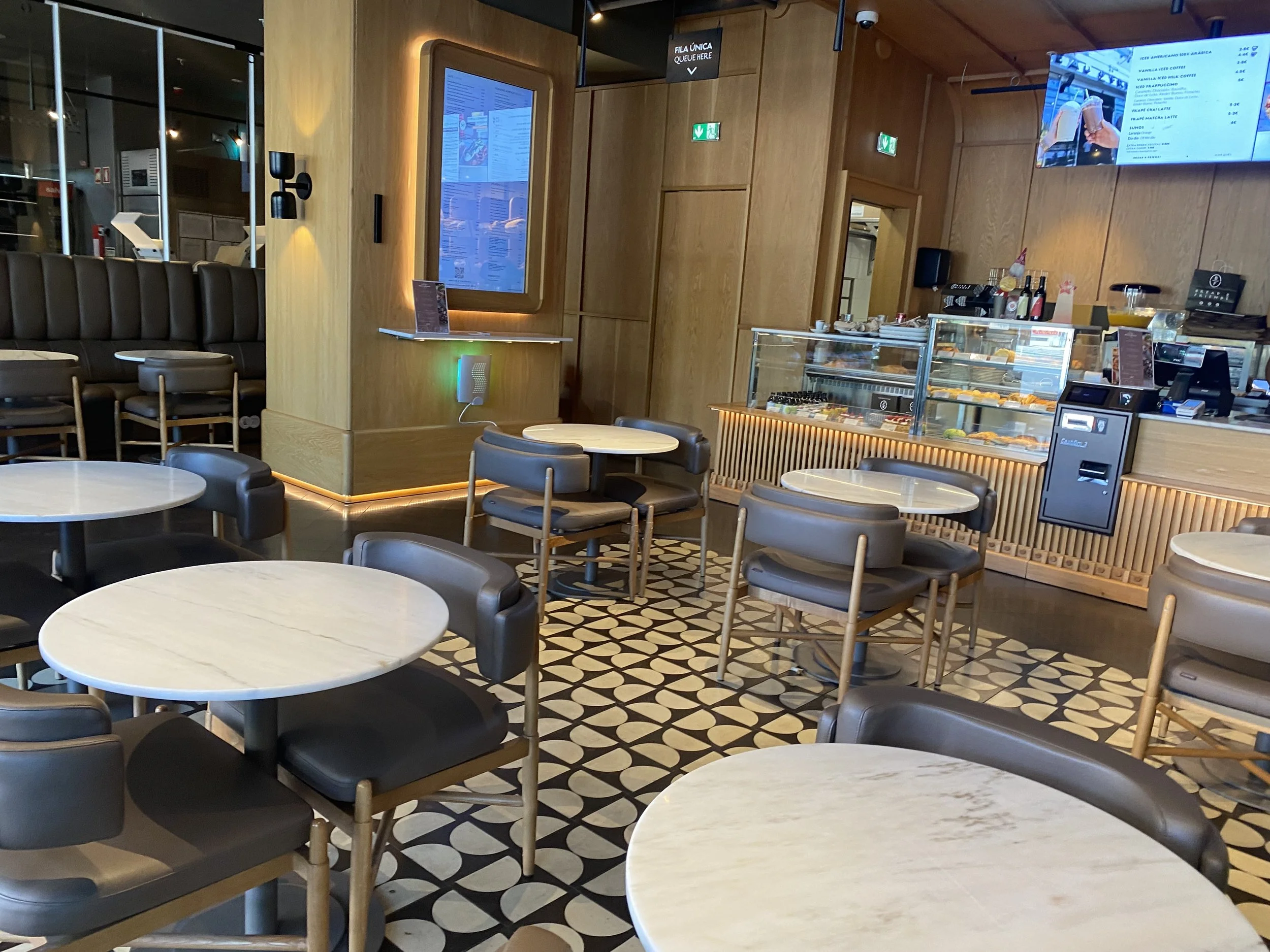
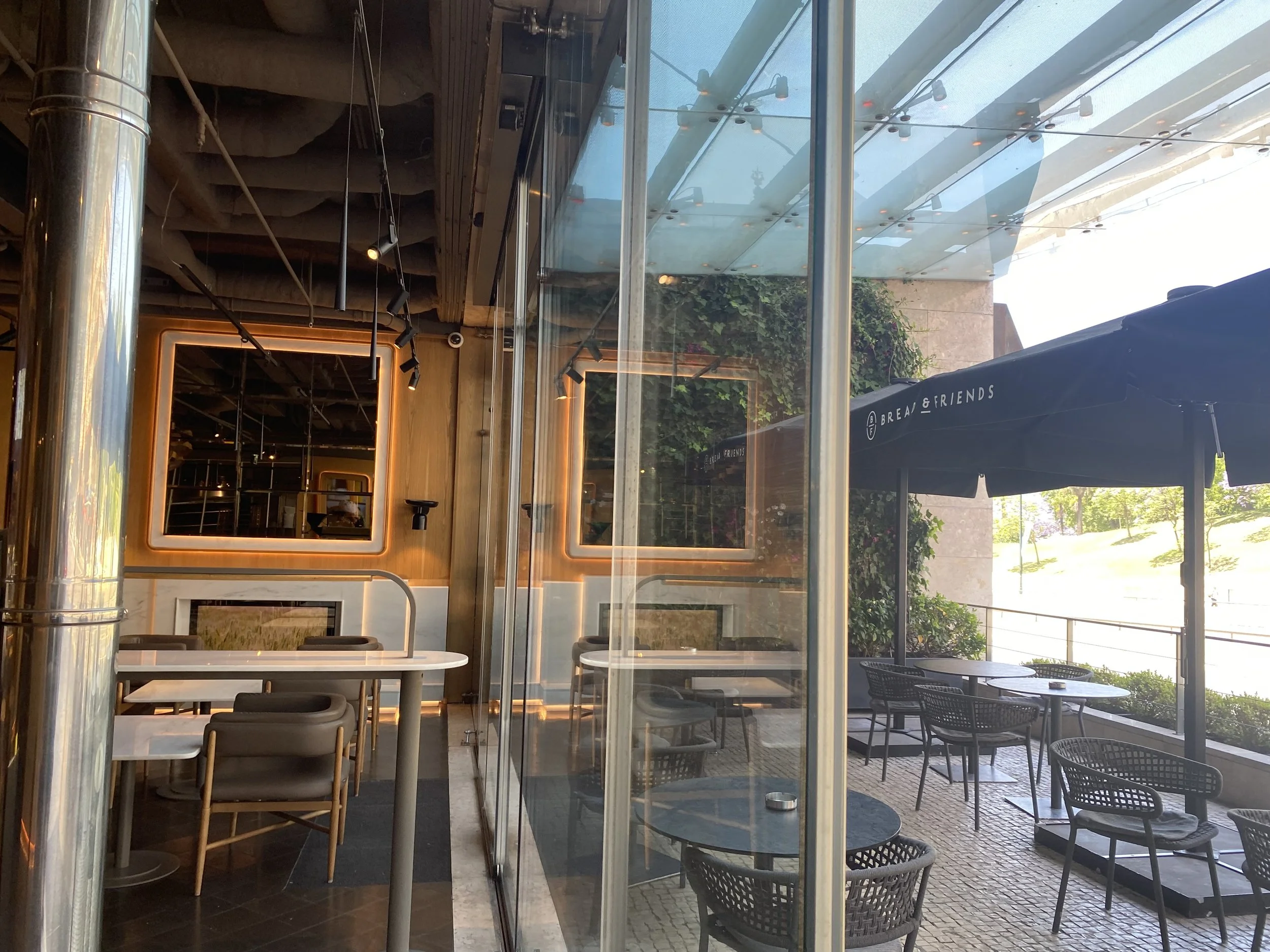
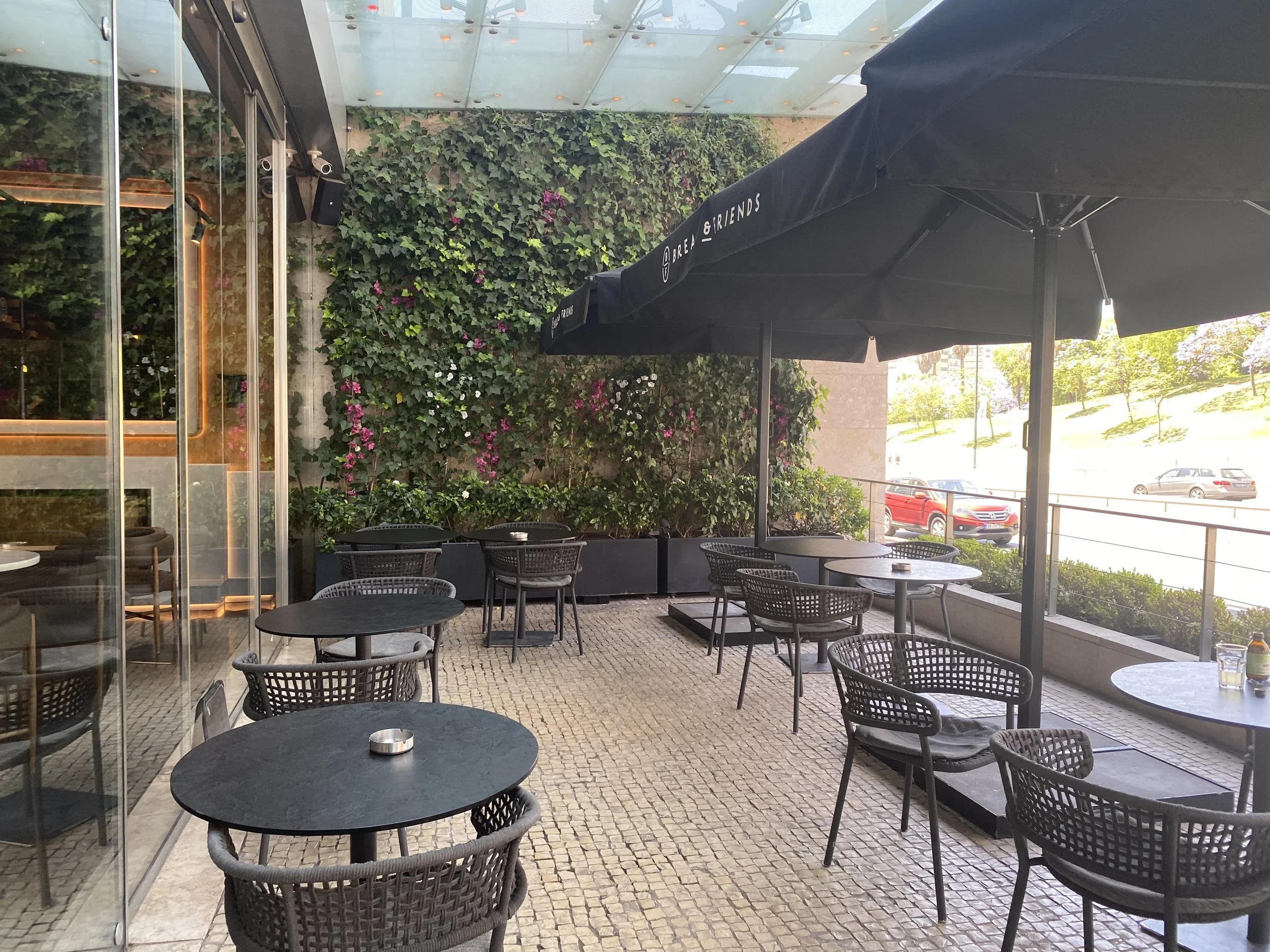
Bread & Friends Marques
Hot summer day tipp (and also what we do during our moening tour—
if we don’t skip Marques Pombal entirely and take the route with one stop from Metro Parque to Metro Avenida, due to no shade around Marques’ statue and nowhere to hide, after we leave the shade providing trees of Estufa Fria and Parque Eduardo), yet in case youre brave or insist on a photo with Marques, nestled between Parque Eduardo’s Labyrinth and Avenida’s entrance—
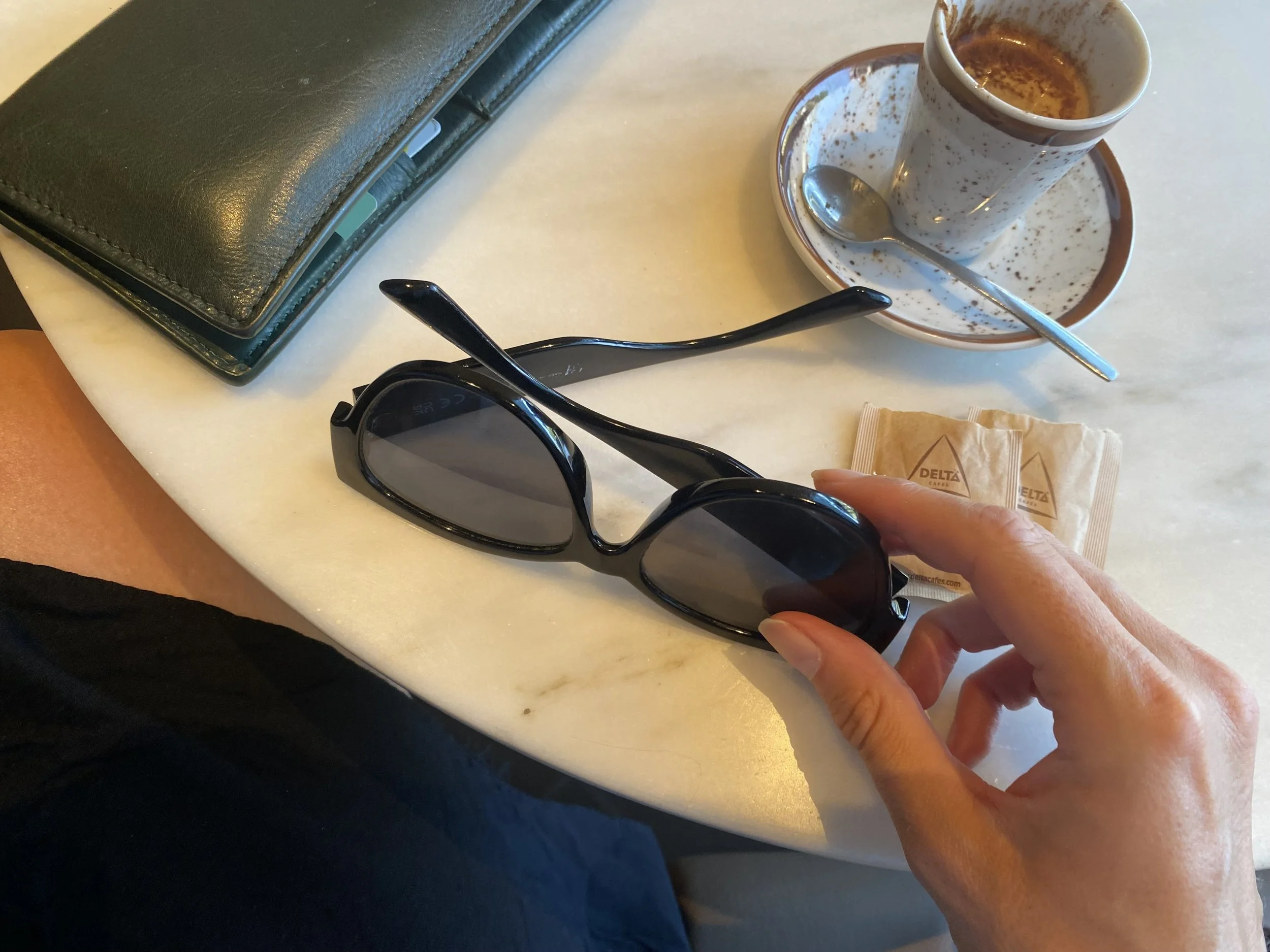
this is the place we cool down for a moment, do a bathroom break, have a (1,30€) coffee, maybe some colorful baked goods and enjoy the air conditioned oasis— warming up in winter, cooling down in summer— for a moment
at EPIC SANA Marques.
Spotify Playlist ‘The Art Of À Lisbon Morning (Àt Bread & Friends)
https://open.spotify.com/playlist/083an4ZfXrYYKOSQThfzQg?si=fEe_1lVMQNCixHZd4S2AoA&pi=y5_oFNNtQeKME
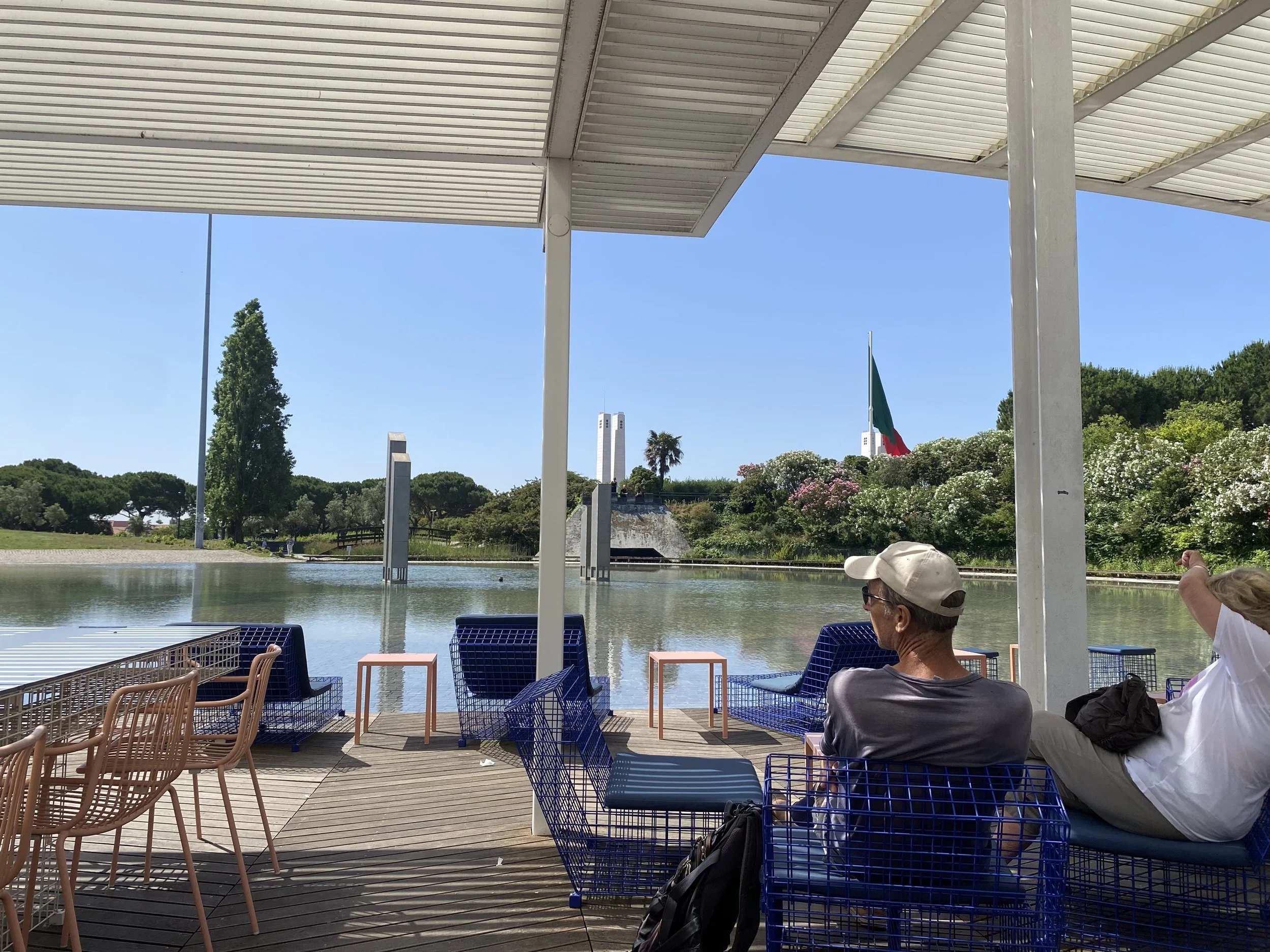
Linha D’Agua àt El Corte Ingles/ Gulbenkian/ Parque Eduardo
Hidden access for those who know:
Nestled between El Corte Ingles and 25th April Monument àt Parque Eduardo, use back exit of El Corte Ingles 2nd Floor Men’s & Shoes Floor or walk arkund El Corte Ingles or climb the stairs atop the 25th April Monument towards El Corte Inglea
Spotify playlist:
Consistent every day, setting a slow ascending elevating atmosphere
https://open.spotify.com/playlist/7phw44mIvGsluzBFd1dqGL?si=d4_z_UjxRZegTGCO-38rTQ&pi=b25tq79ETrOFd
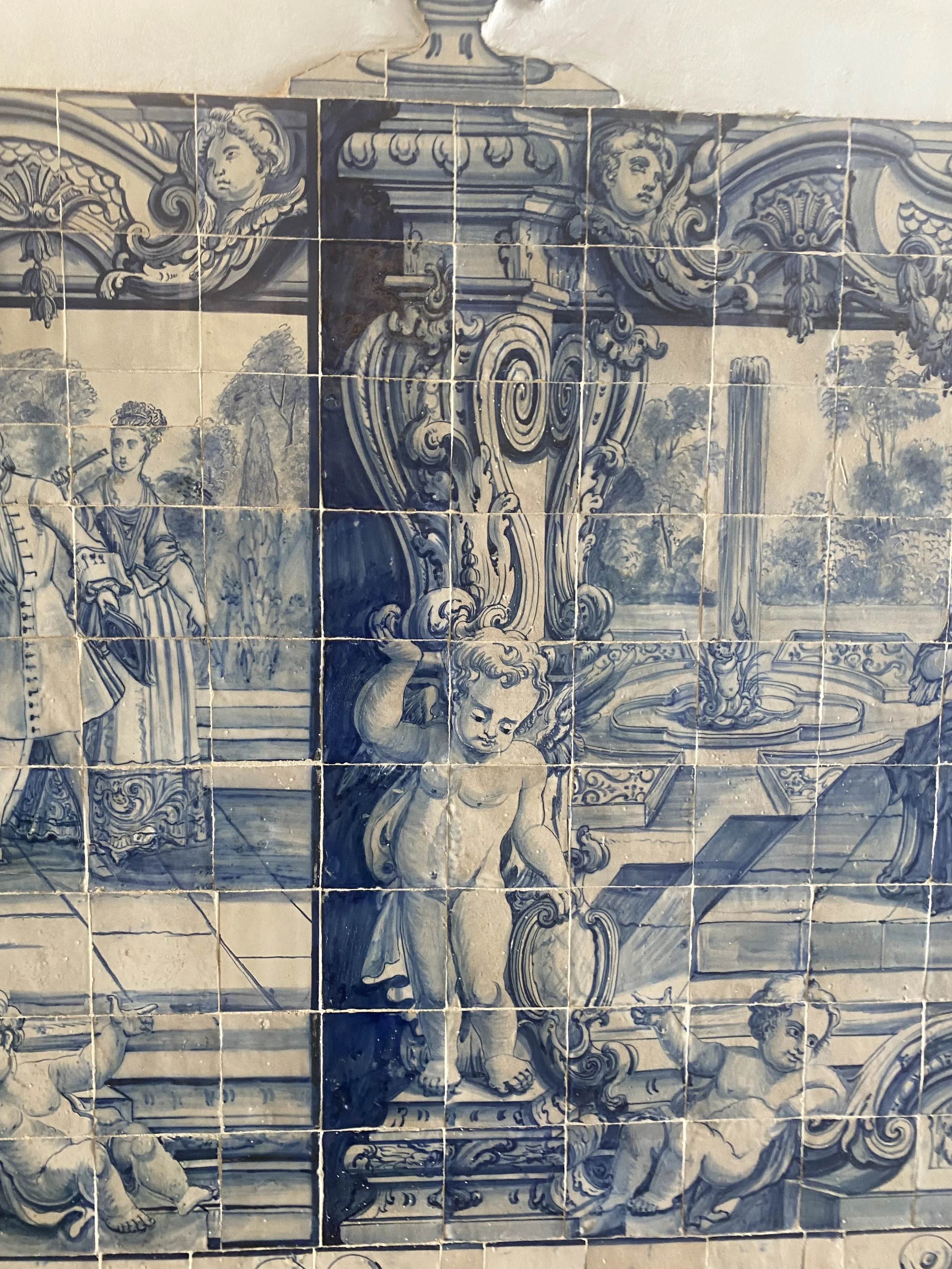
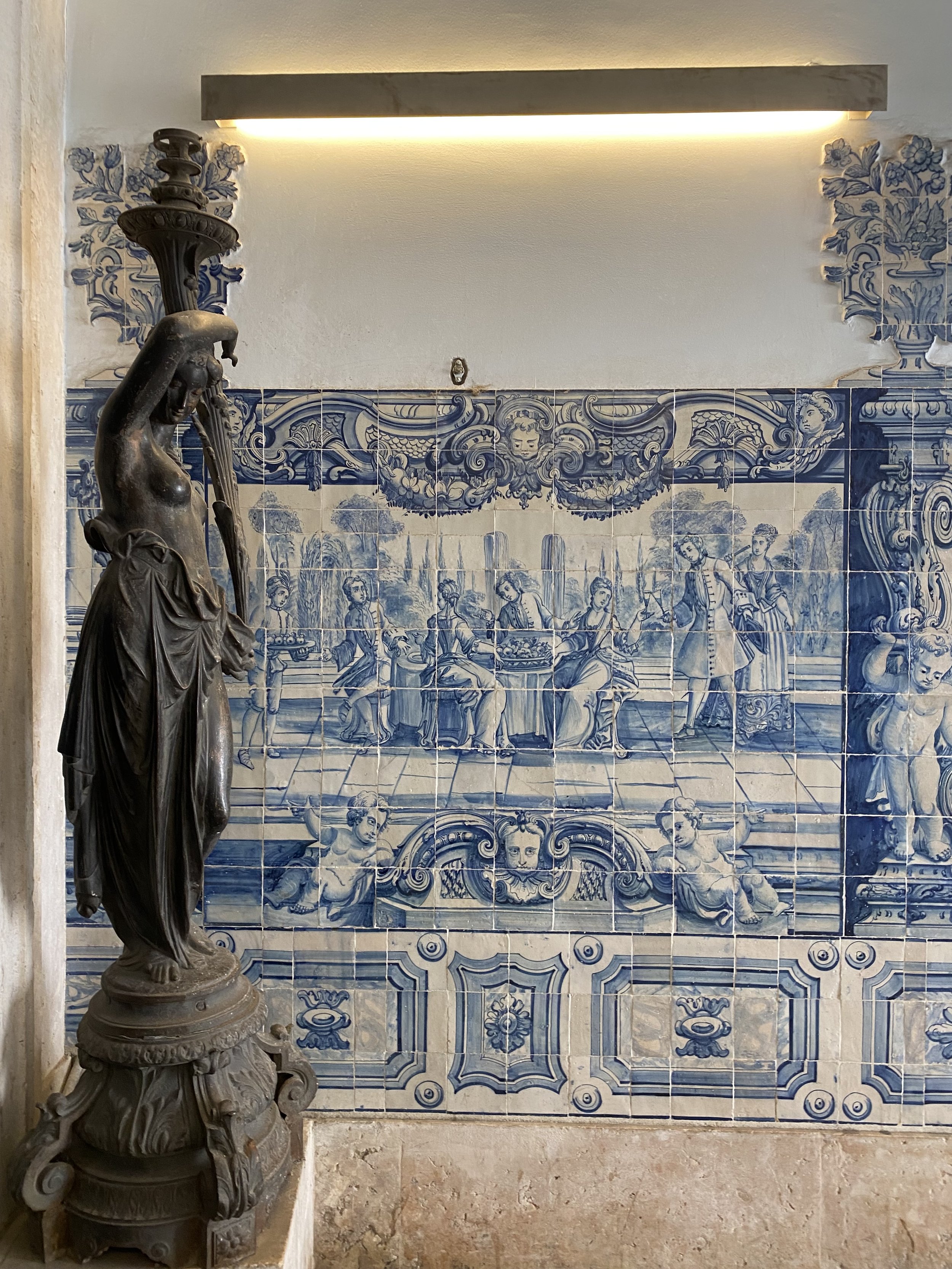
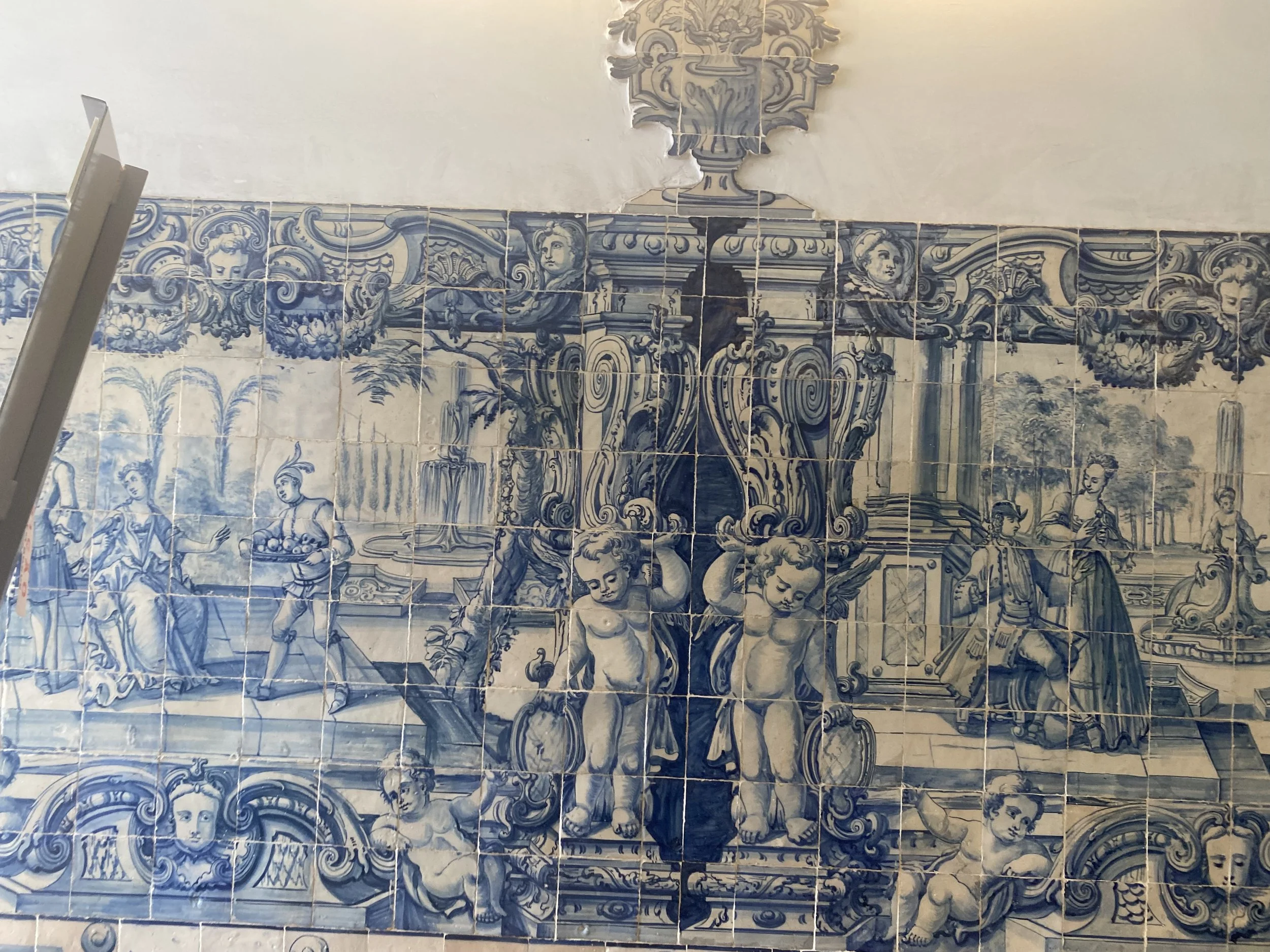
Zara Home Lounge (Rossio Lisbon) — Summer Tipp
Tipp for scorching hot summer days:
If youre doing a real tourist tour— not one of the tours here— yet the thick of Rossio, Rua Augusta, Praca Commercio— if the sun is costing you sanity, focus and motivation mid day and cafes feel atmospheric yet too busy (even though I always recommend a stop àt CAFÉ BALTHAZAR BY CONFEITARIA NACIONAL just across the street, established in 1829 and with old world flair, wooden floors, golden decor and white table cloth— and à hot chocolate that deserves the name— hint it’s actual chocolate in à fountain, ongoing— and leave room for some Bolo de Bolacha roughly translated as Cookie Cake— I hope thats the name of the specific one I mean, it looks like a Wavy Sand Dune— insanely delicious in à beige not boring way— and they even have a daily lunch menu. Never tried that, yet to stay in flair maybe worth à thought) — so long story short of cafes or restaurants arent the thing the moment, yet seating is welcome try àn unconventional approach to a refreshing air conditioned yet well temperatured space:
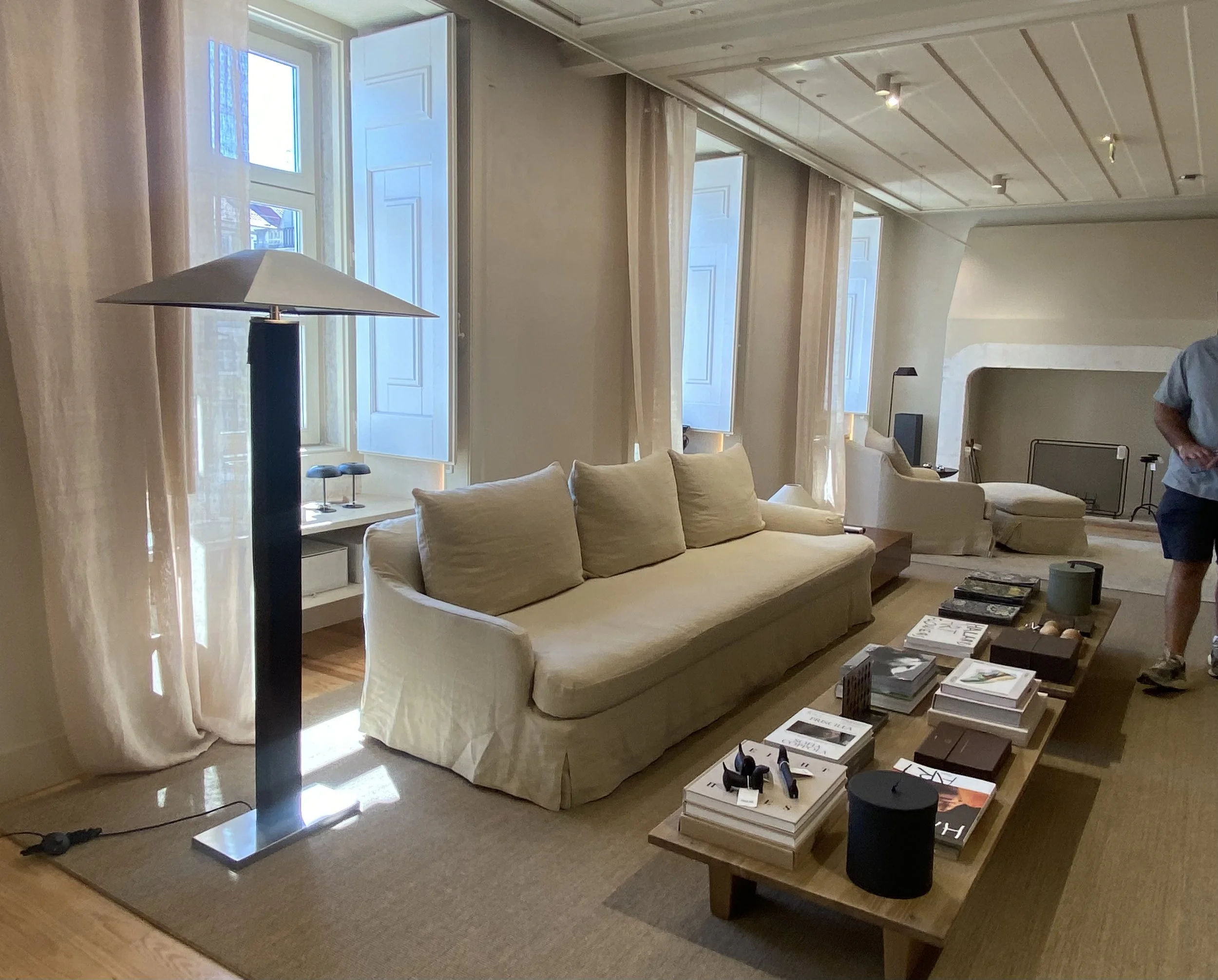
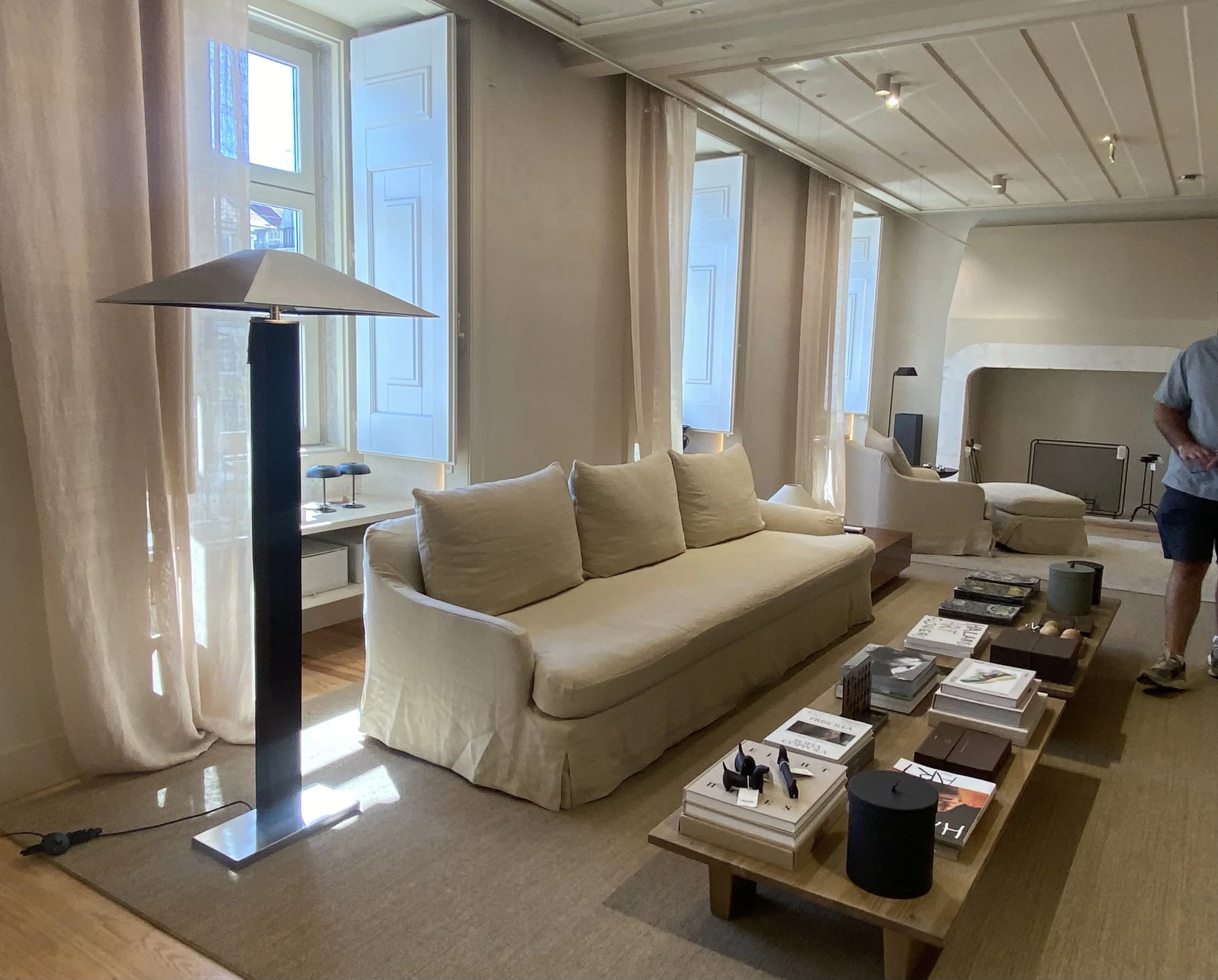
The last floor, the Home floor, right above the square, of Zara àt Rossio.
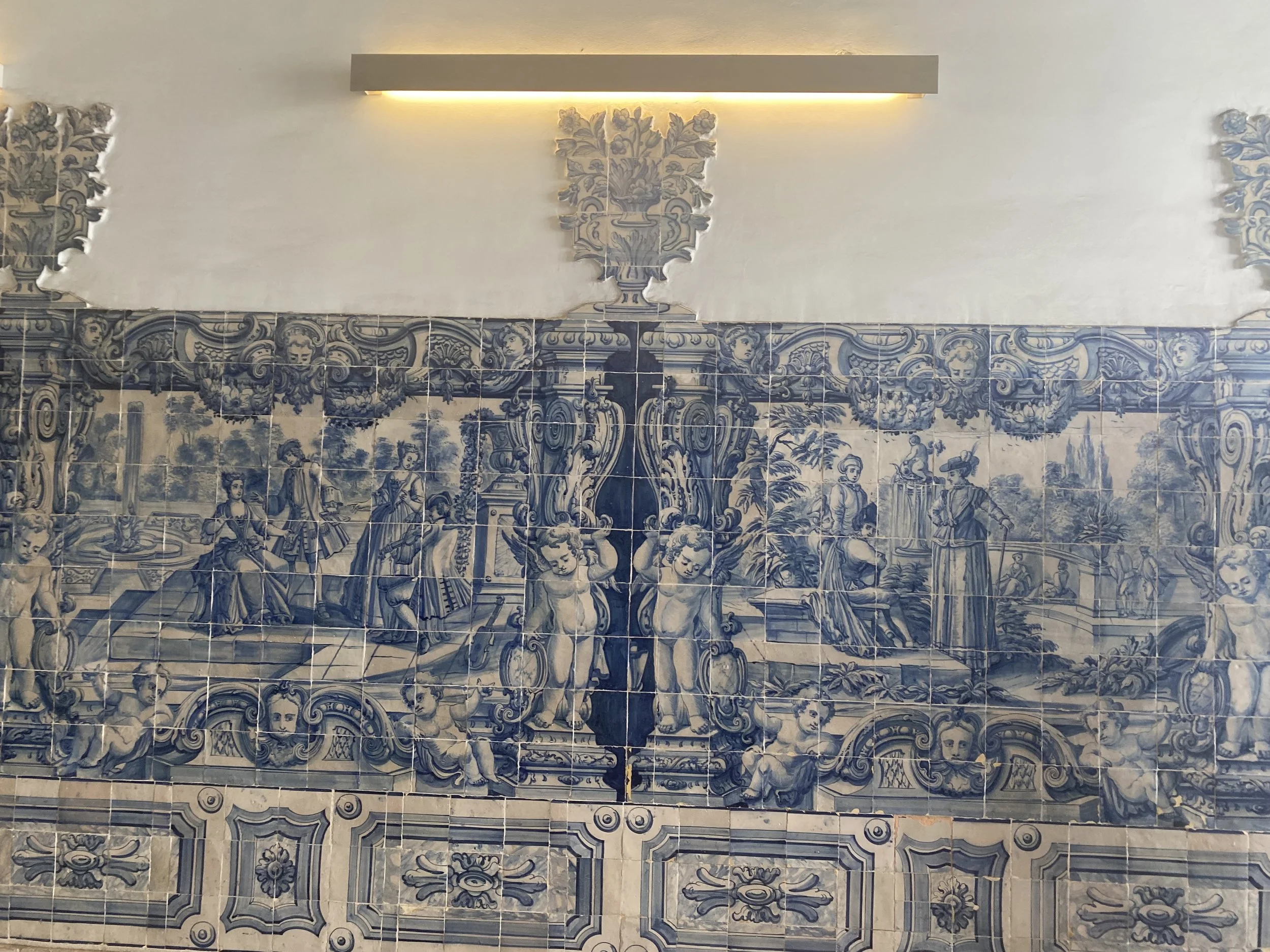
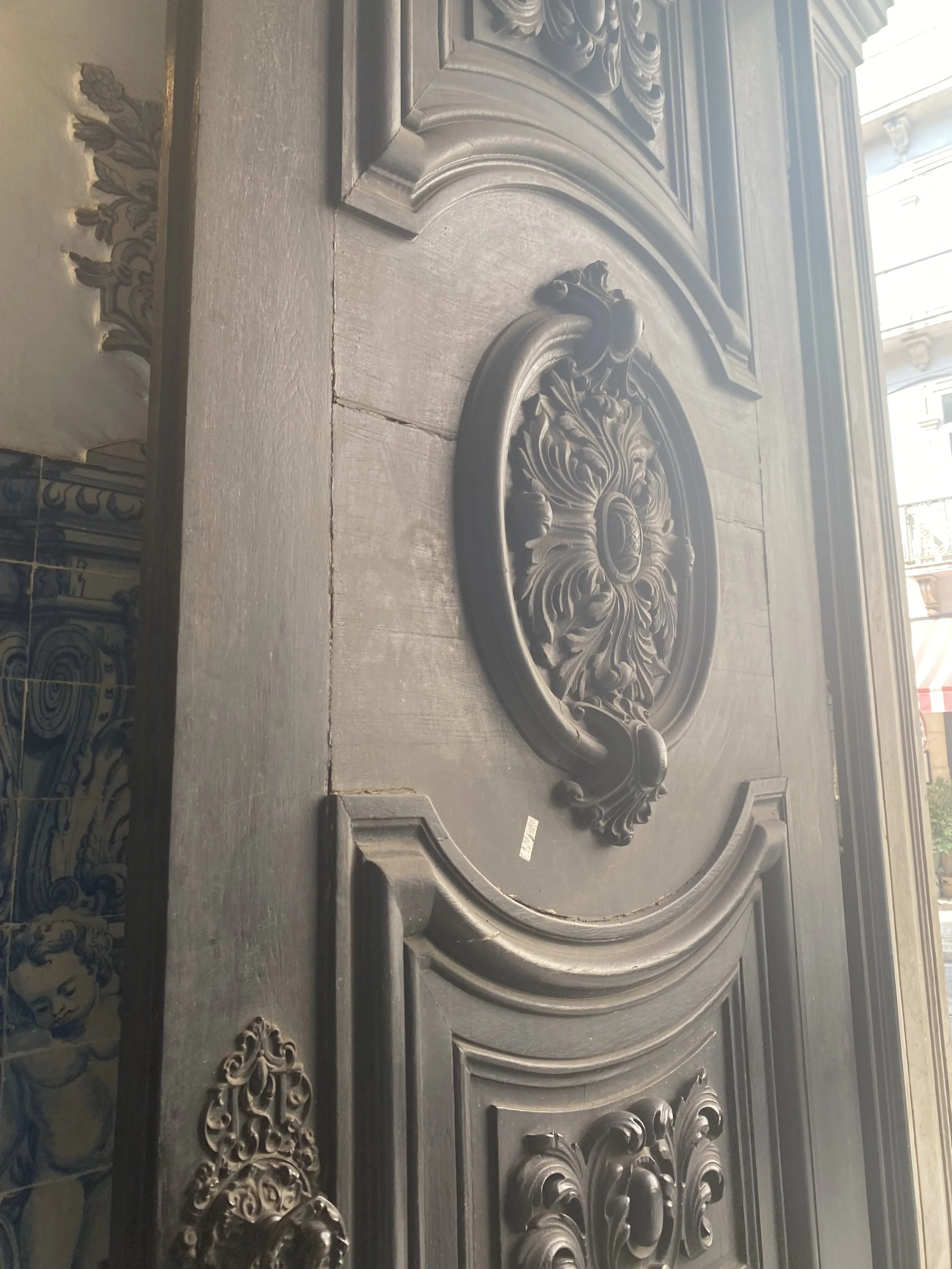
It’s an immensely beautiful, old, freshly restored building with old details preserved, and modern yet earthy honoring heritage interior and a surprisingly beautiful view— in spring towards the purple blooming Jacaranda trees and Lisbon’s landmarks.
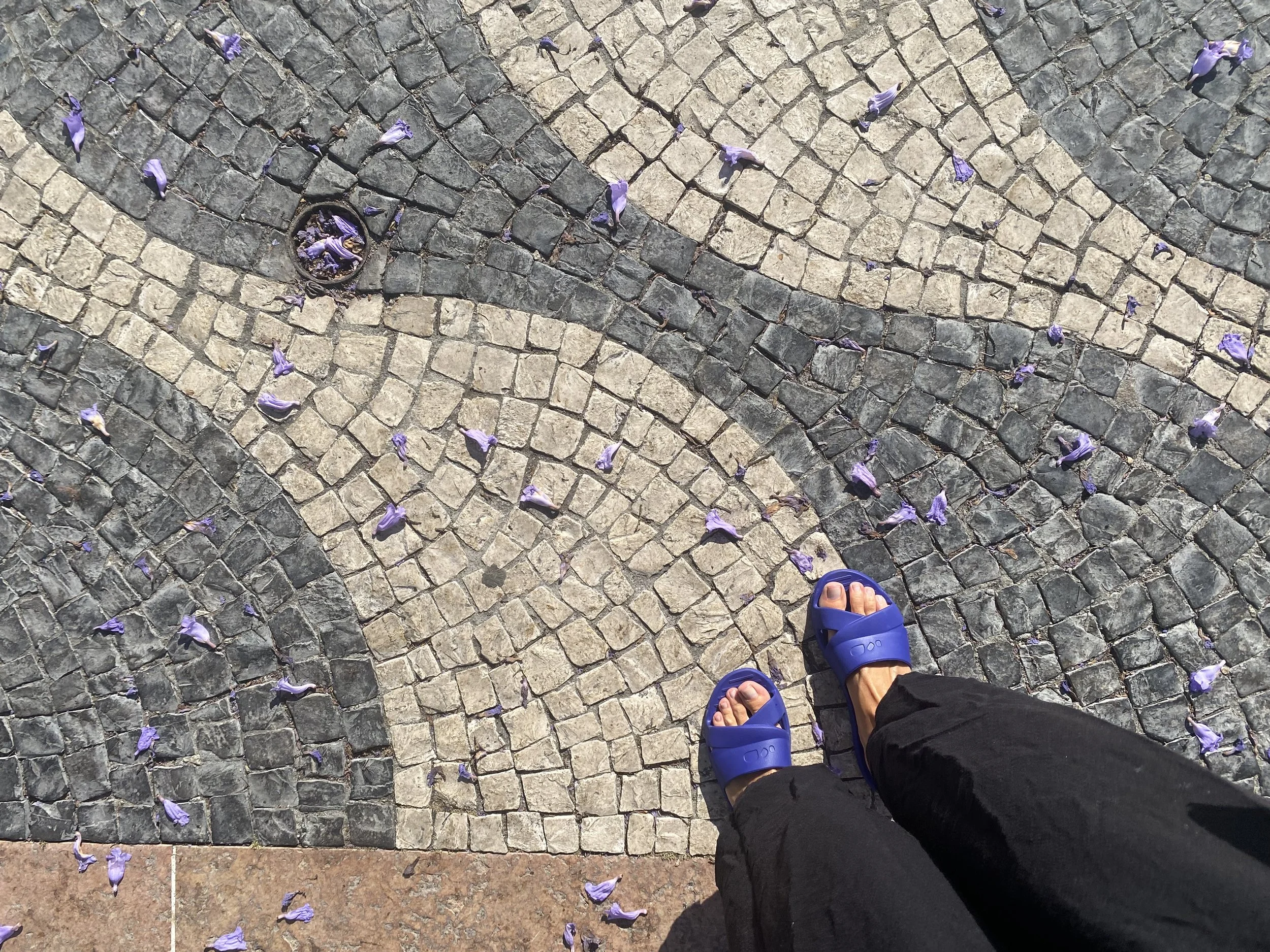
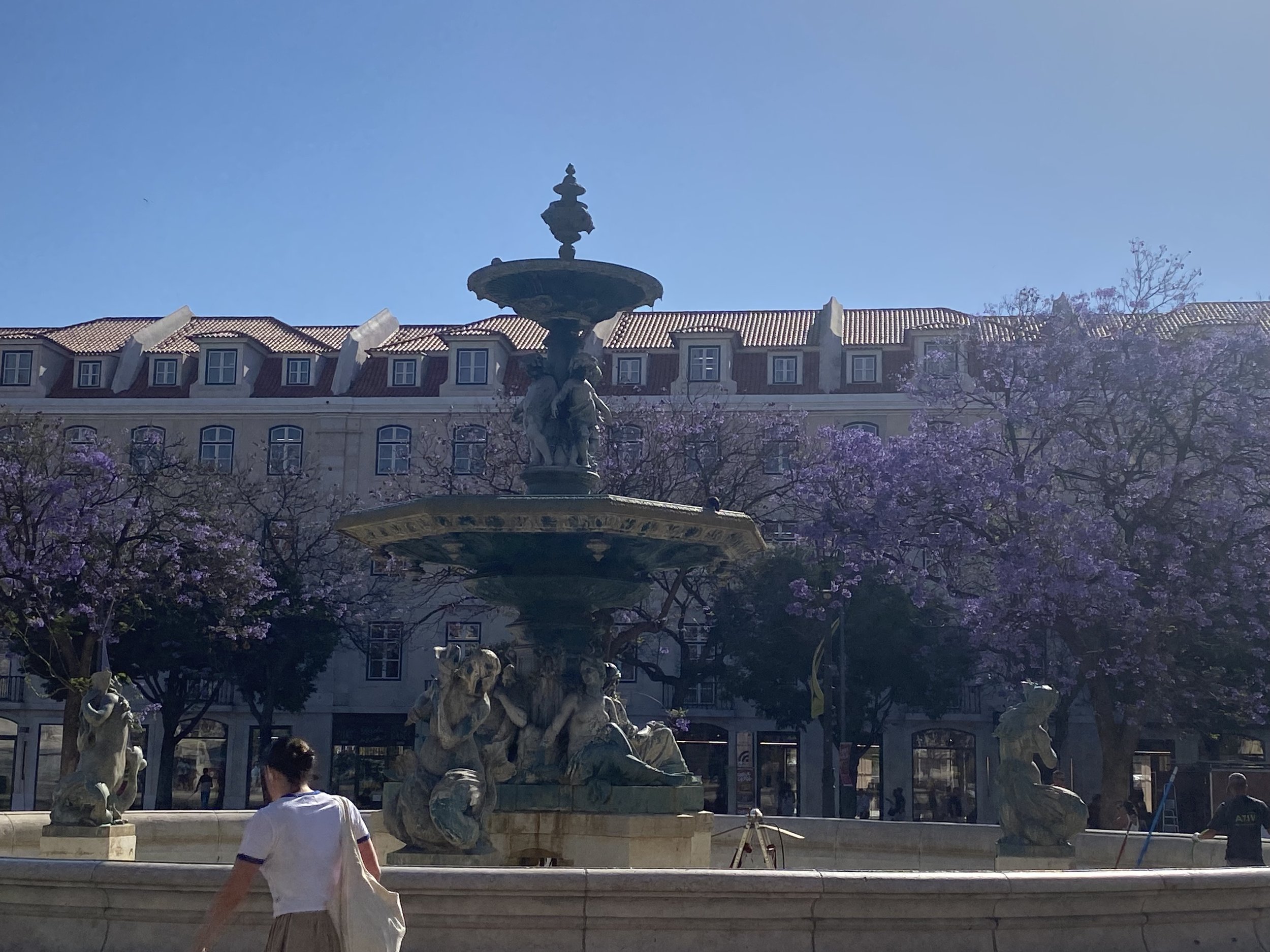
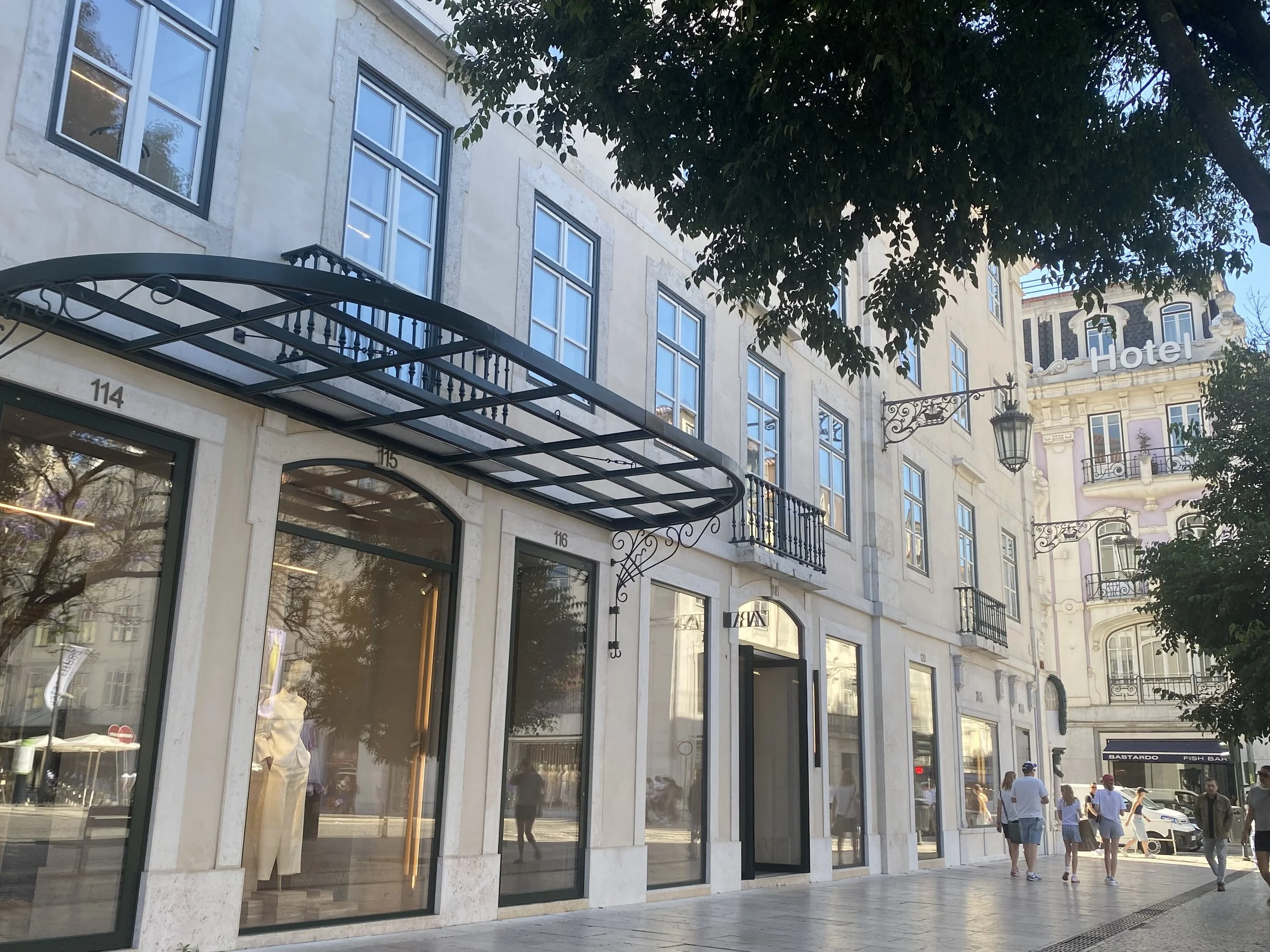
I believe they even have a cafe in-house downstairs, yet the Home area all the way up, with heavy huge slouchy couches and coffee table books featuring Sofia Coppola and the like— paired with soft gentle music— I made a Spotify playlist for you here— and àn overall sense of calm and settling in on the whole generously laid out giving room to unfold floor. You might have to fight your way through the clothing sales floor frenzy— yet above that you literally ascend into higher spheres of calm.
Like an Oasis.
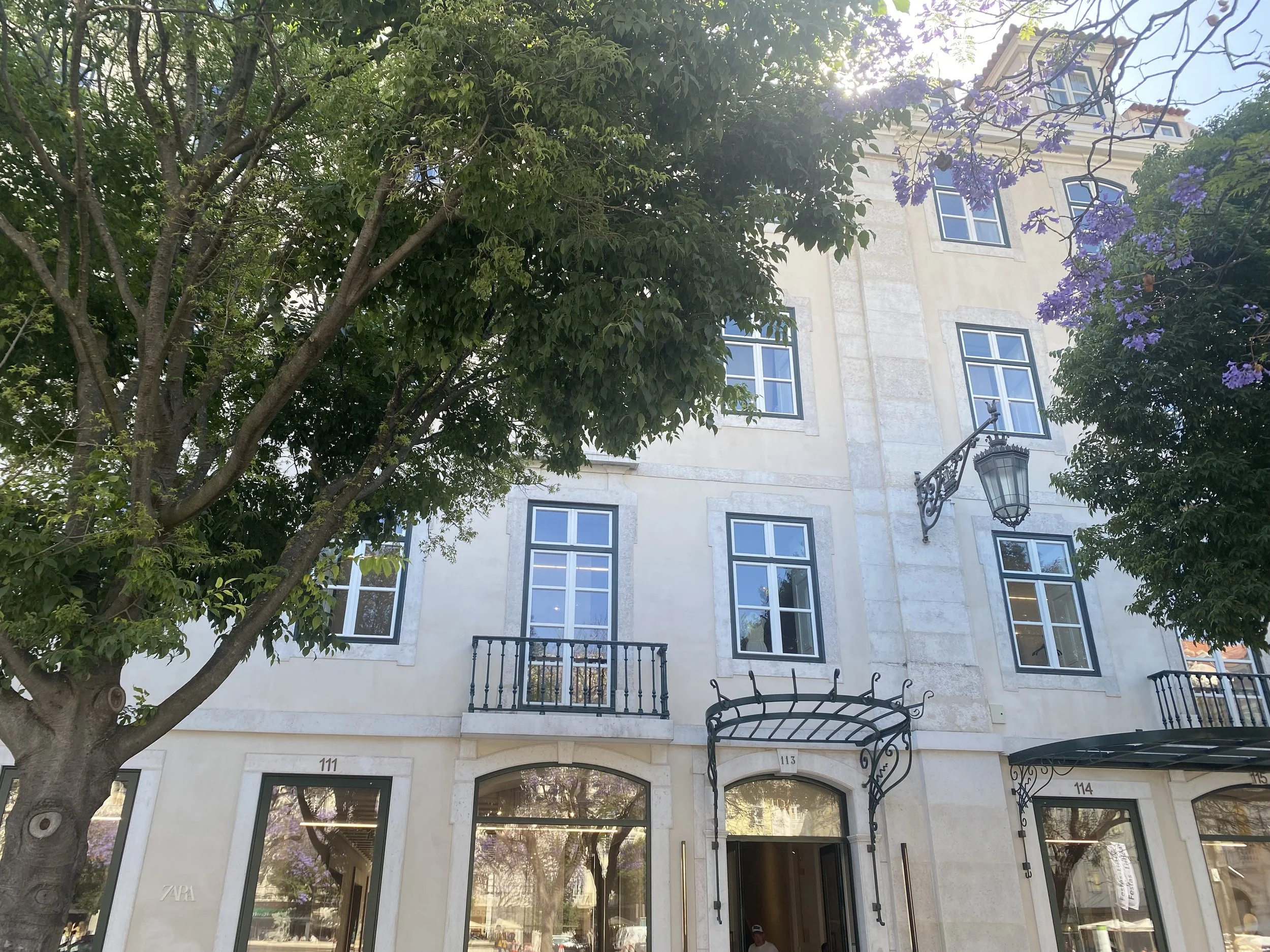
Enjoy your mid day break.
Also they have free Wi-Fi.
And of course eveurhinf you’d need to recreate that atmosphere in your own home.
Here à Spotify playlist to ensure its the right the mood upfront, the music is always mellow and vanishes comfortably in the background ensuring the expanding sense of calm.
https://open.spotify.com/playlist/0ladn3Vrmq8MWFLRRQQASp?si=2_O6834bSZCrJU0_KluKgw&pi=WMDgrrb-SHWvN
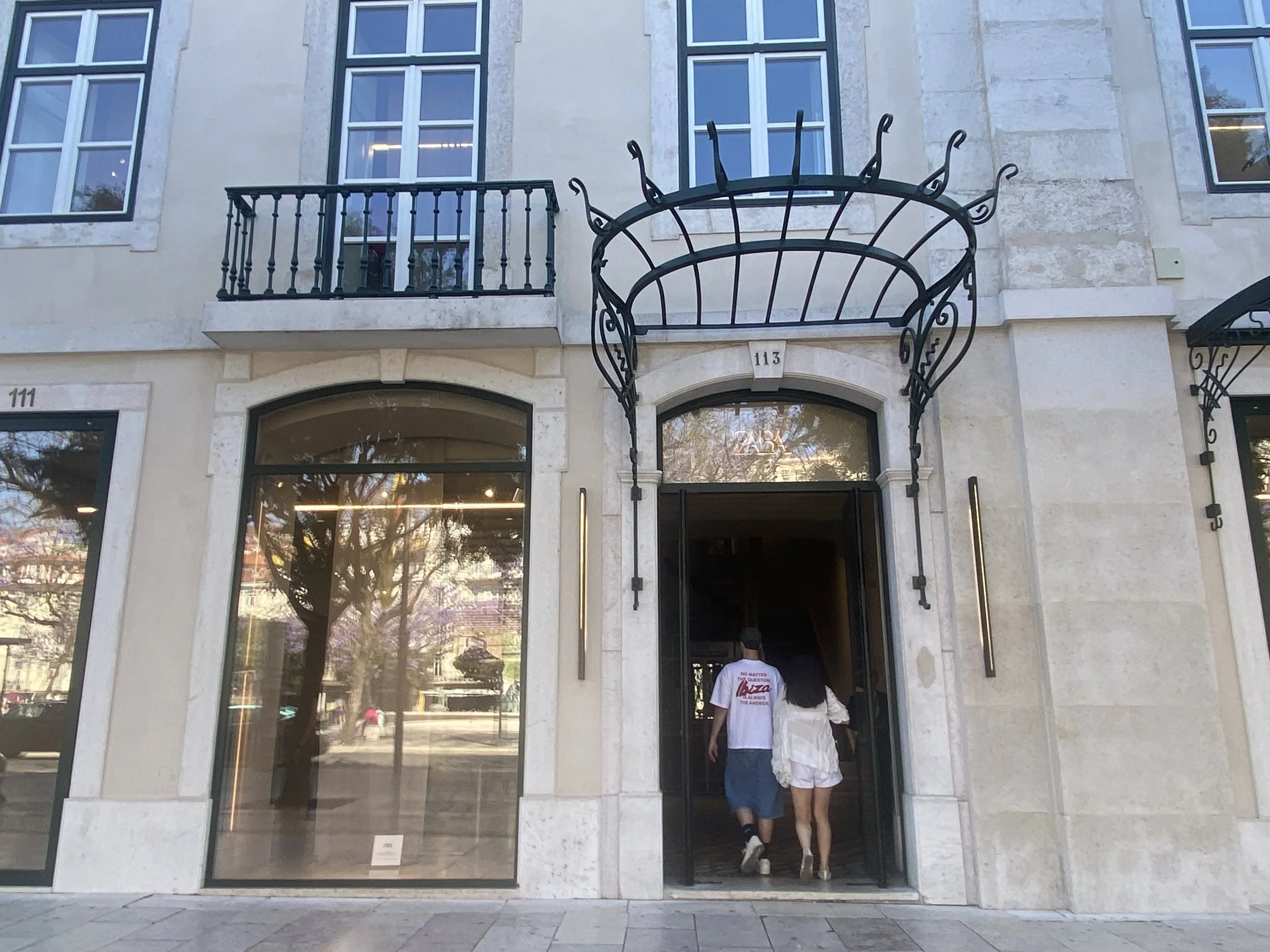
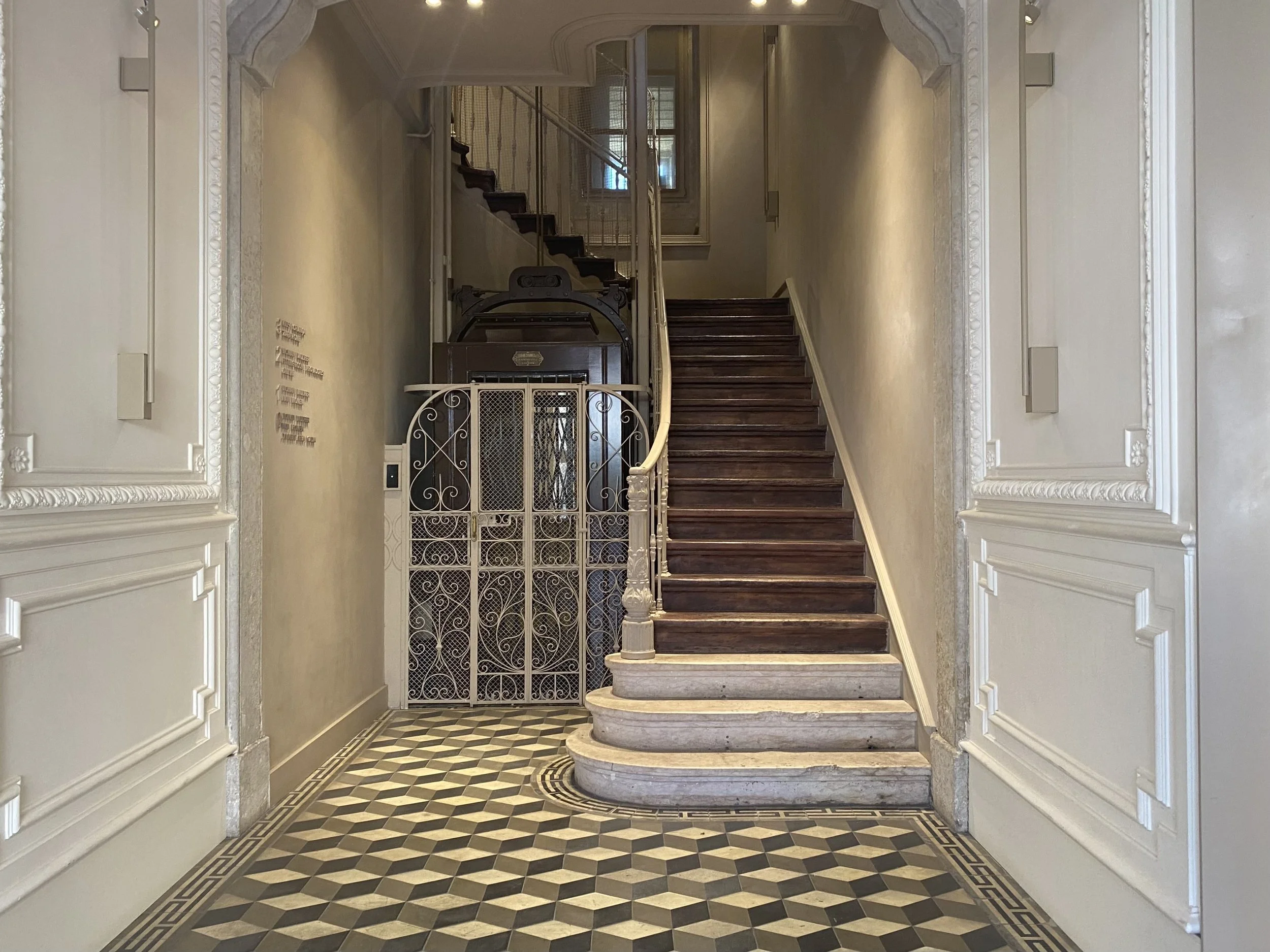
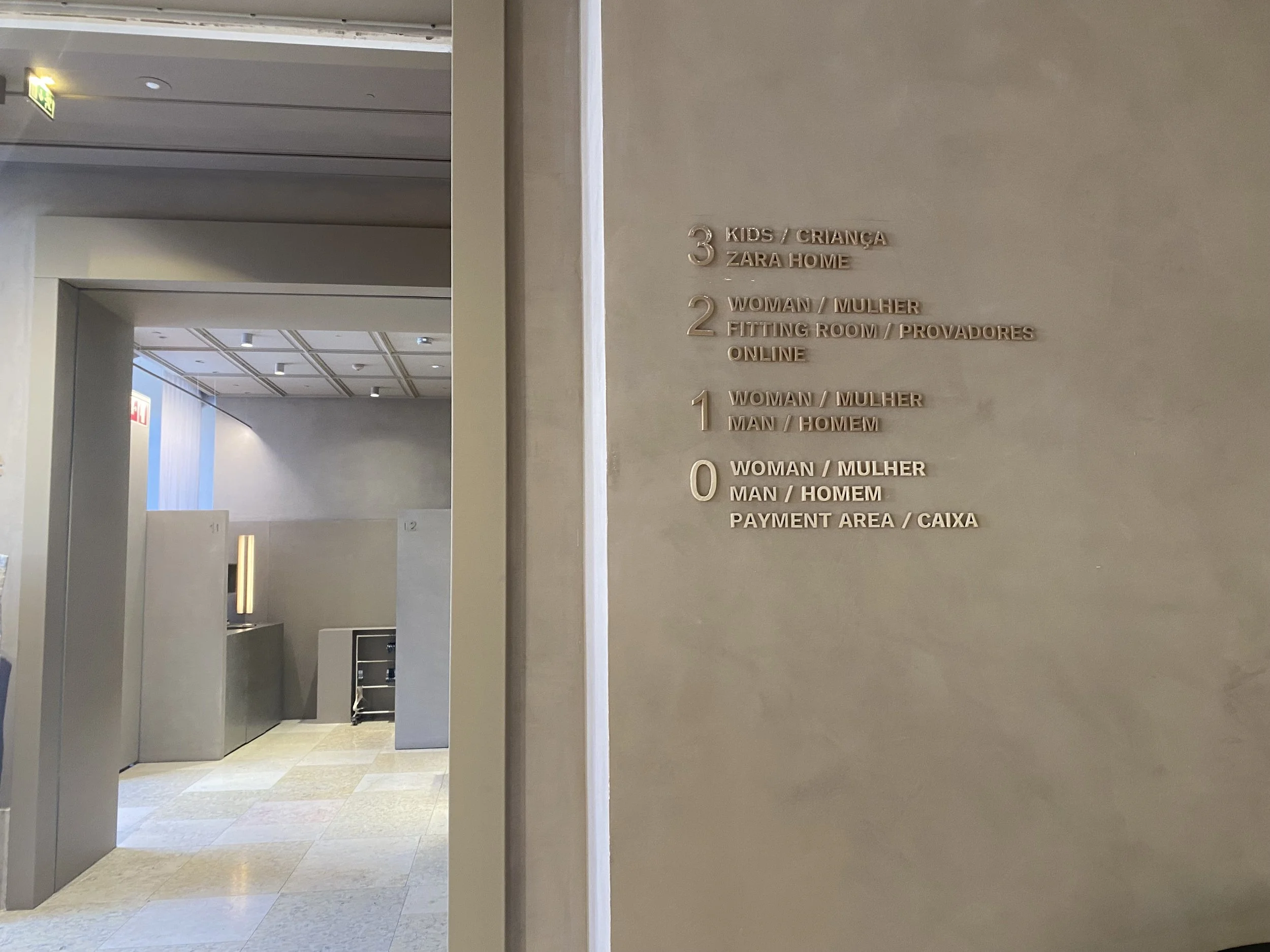
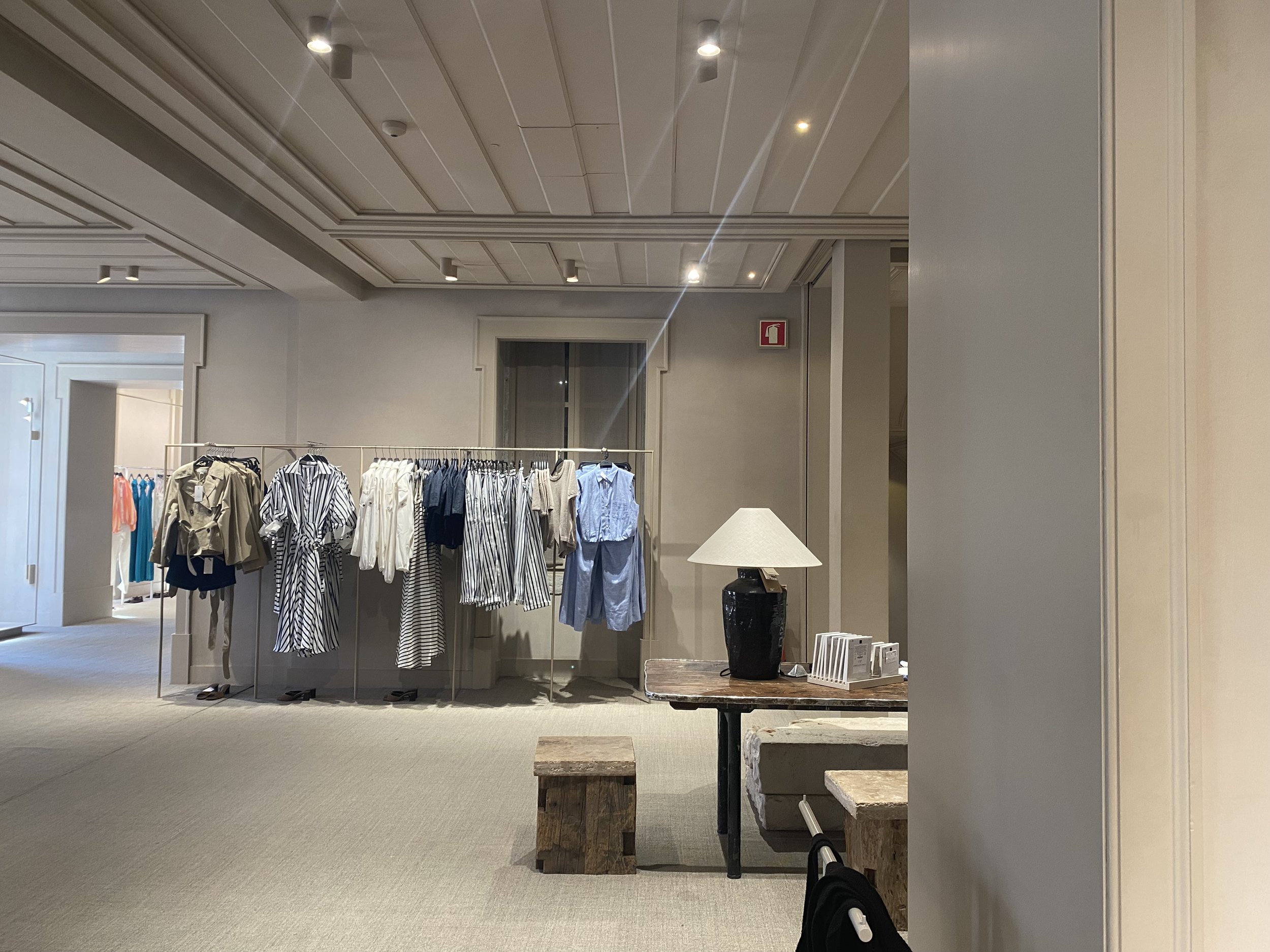
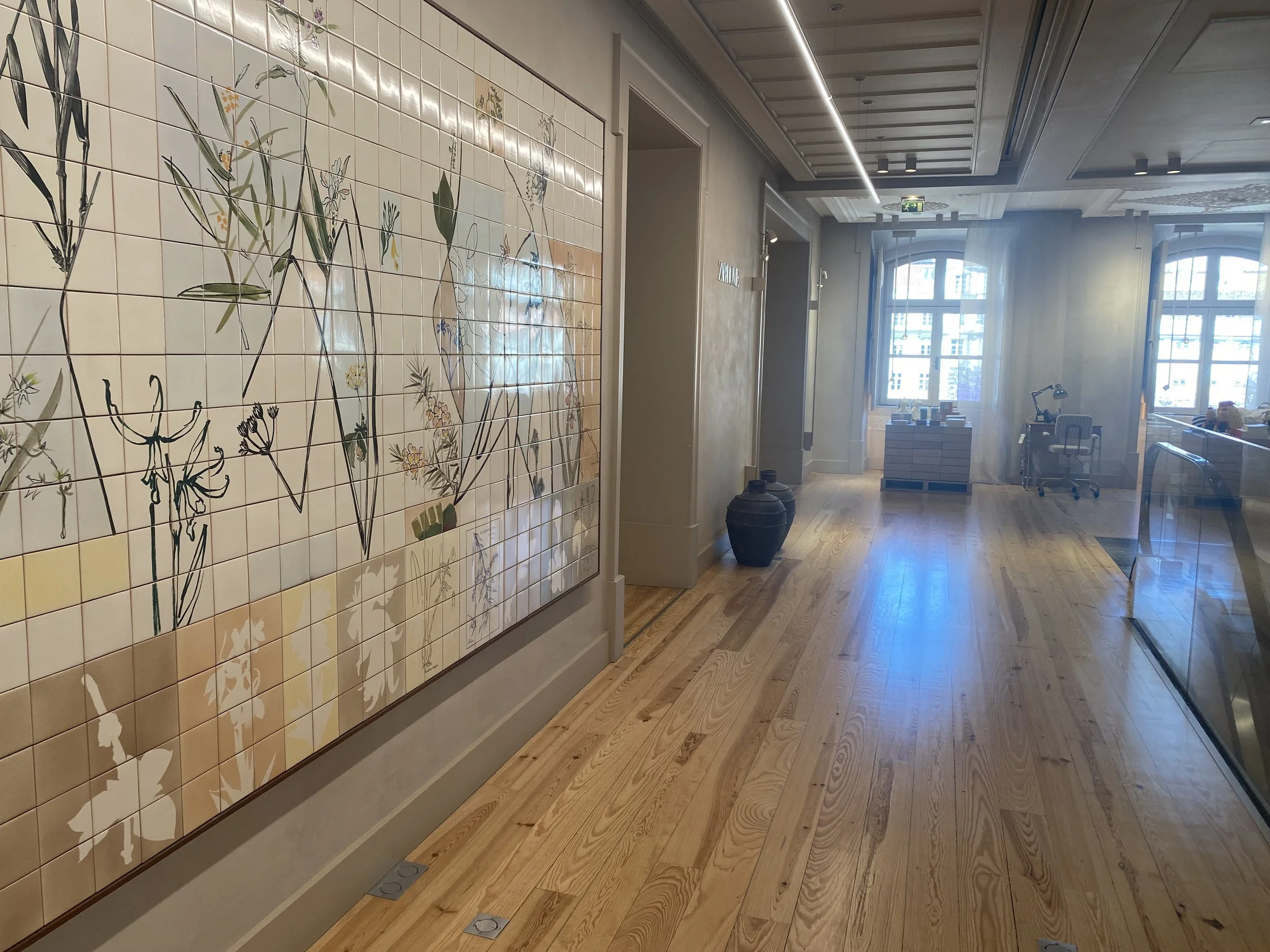
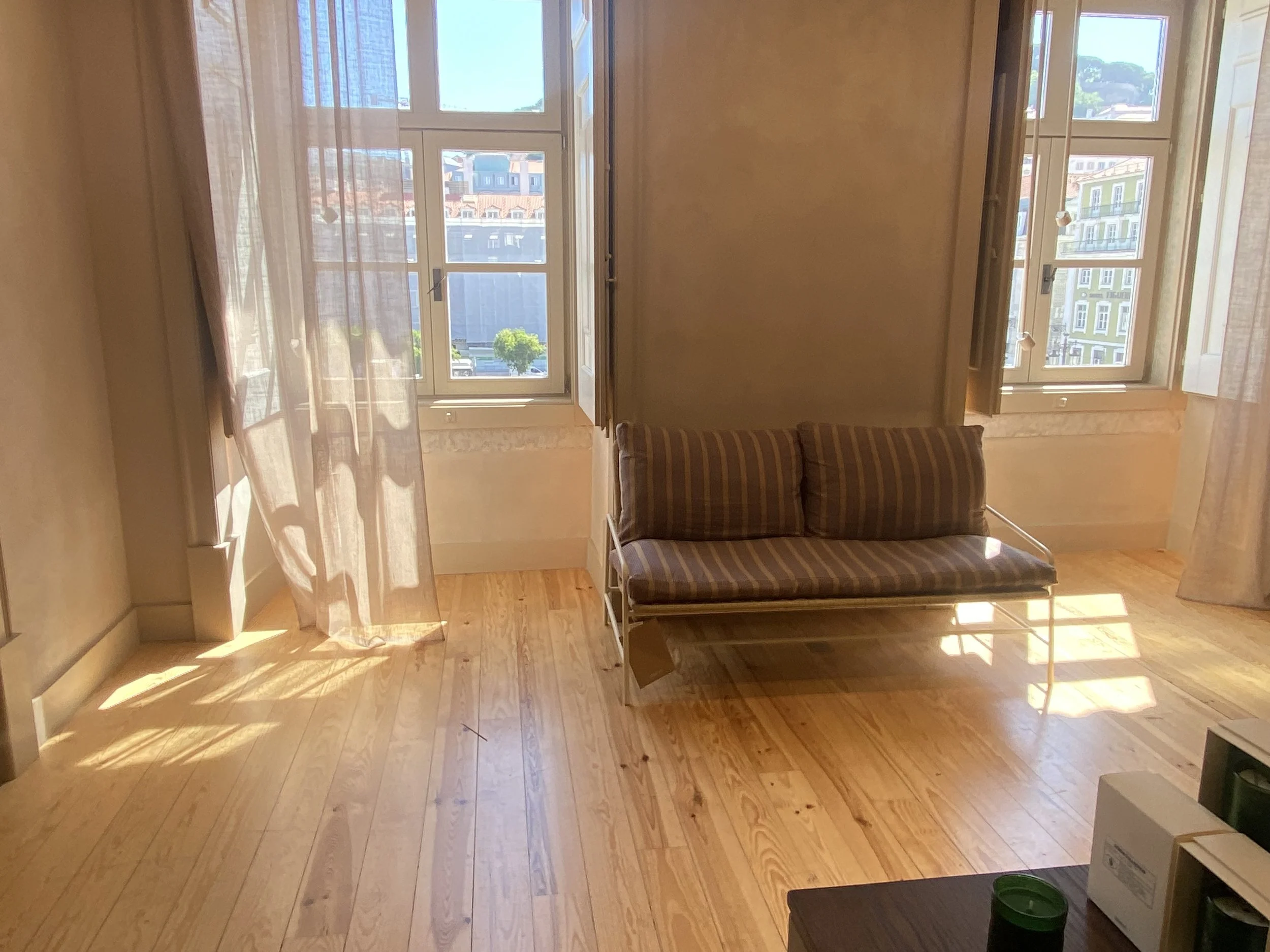
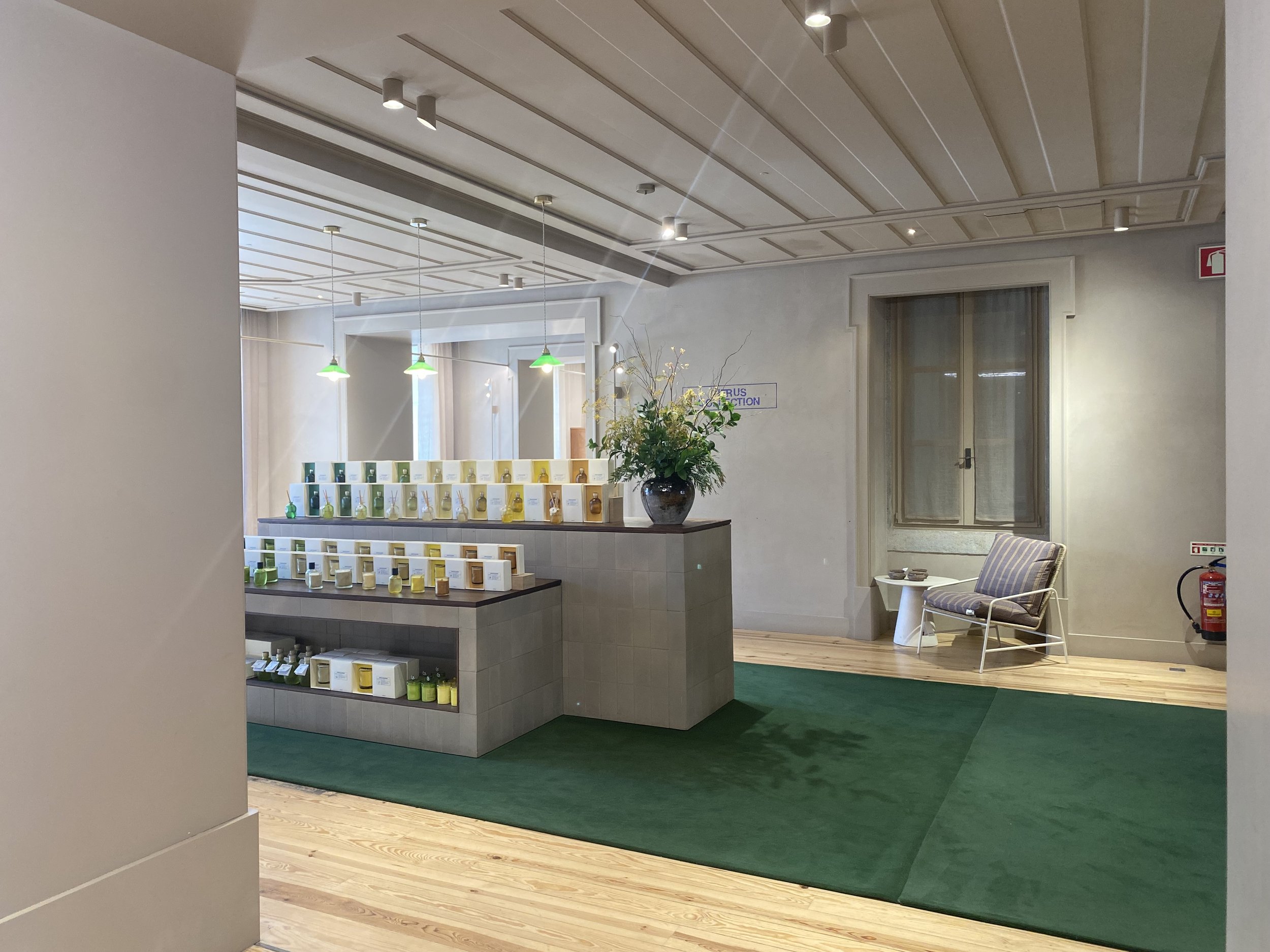
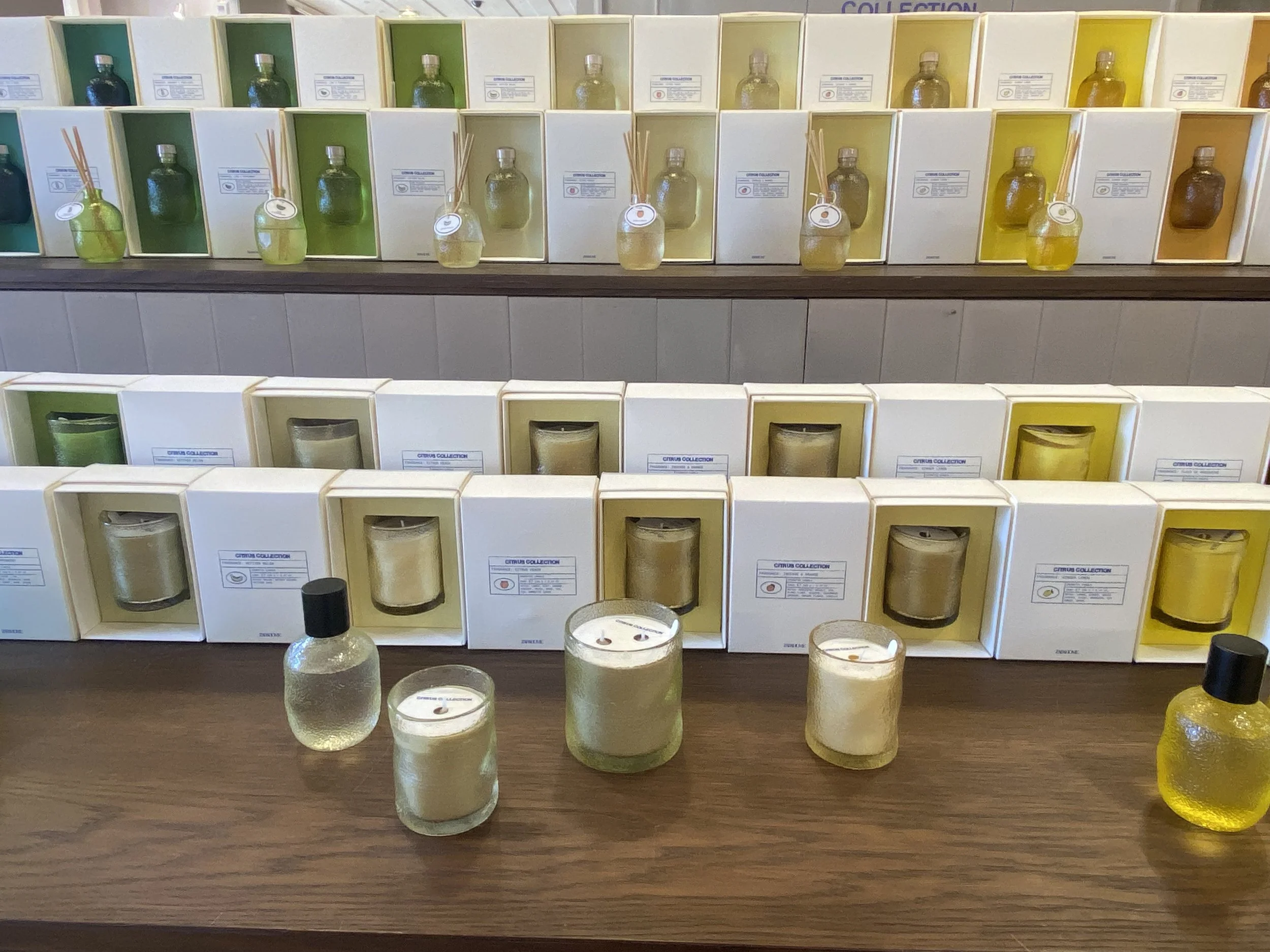
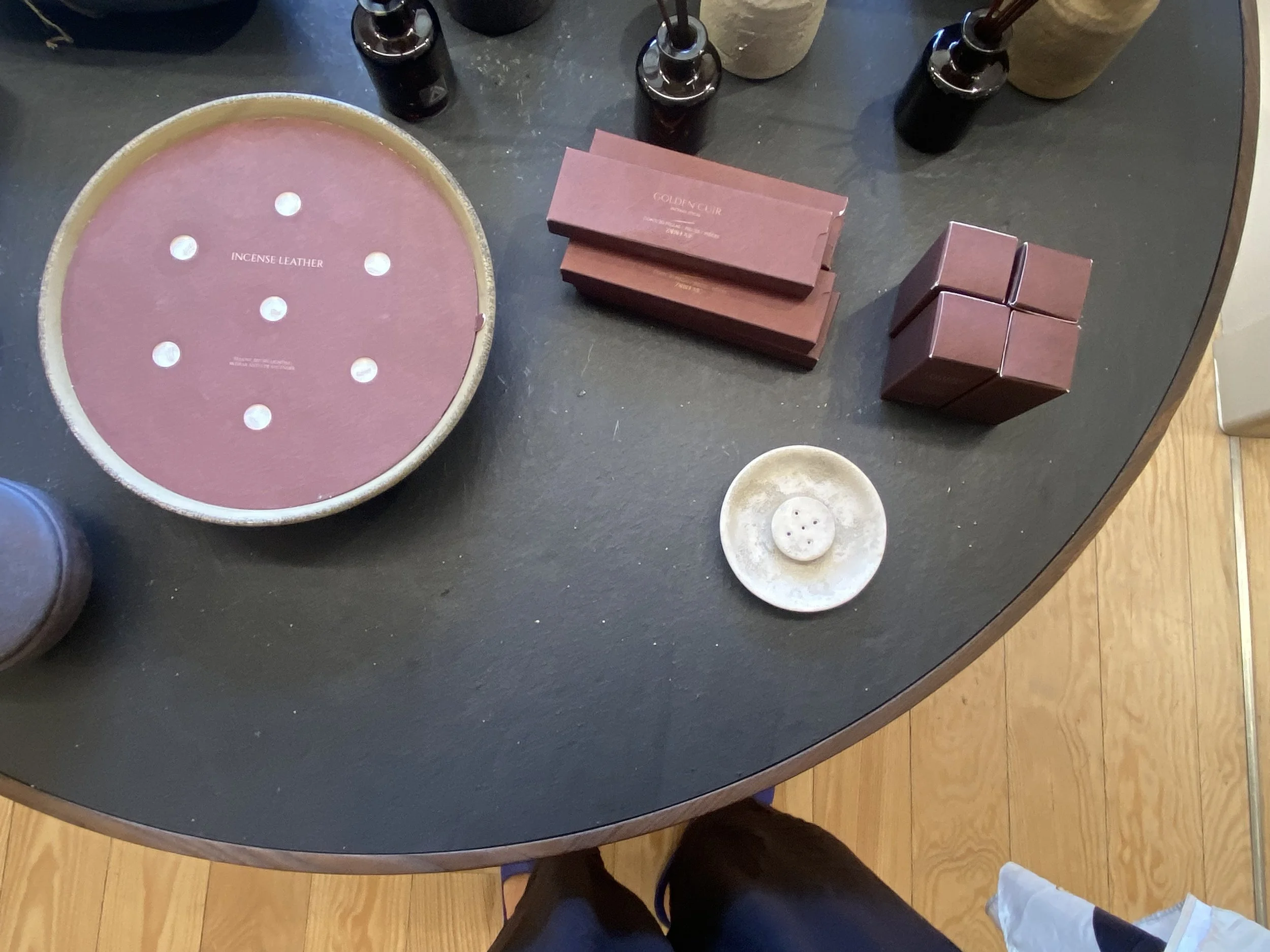
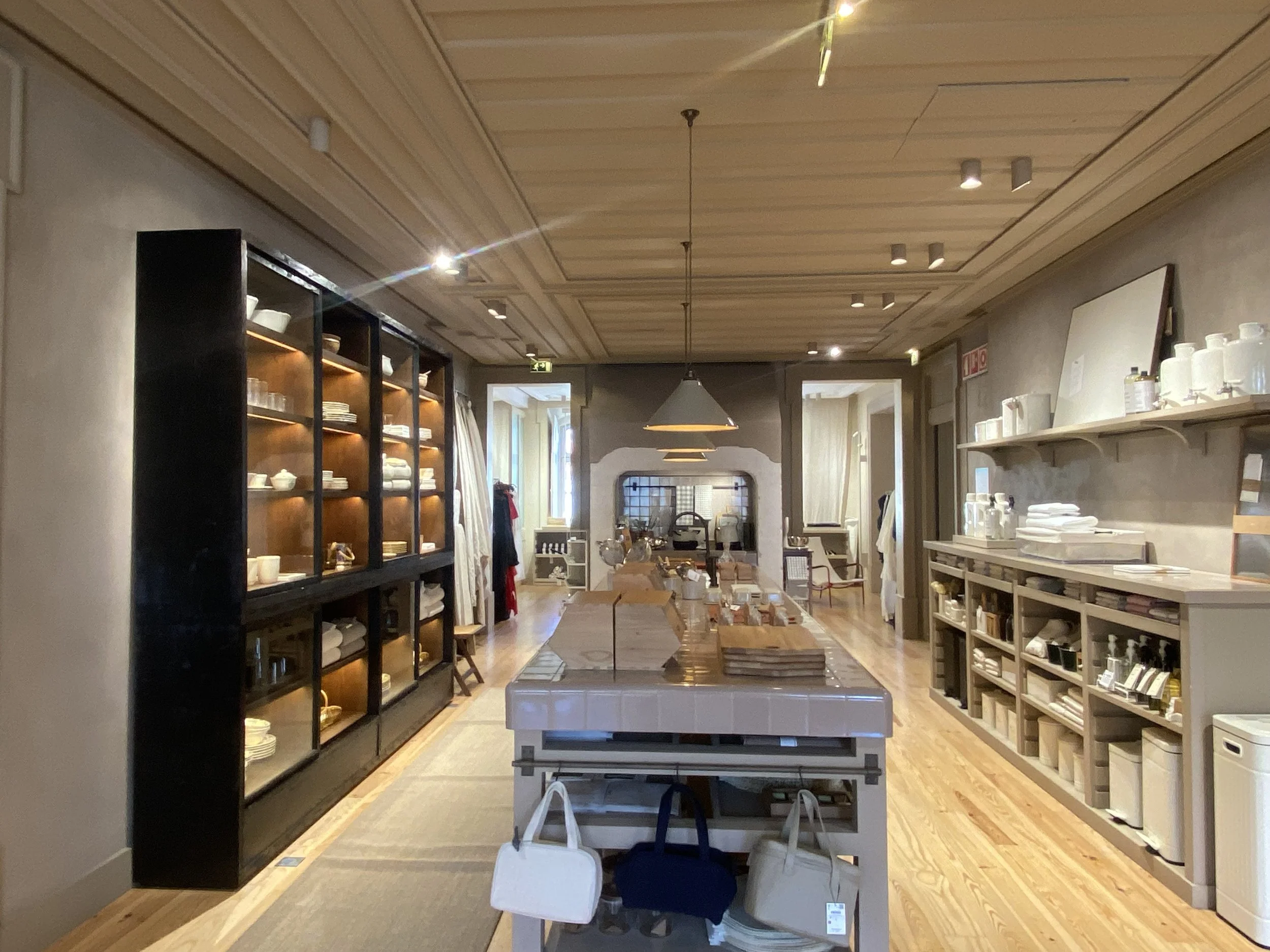
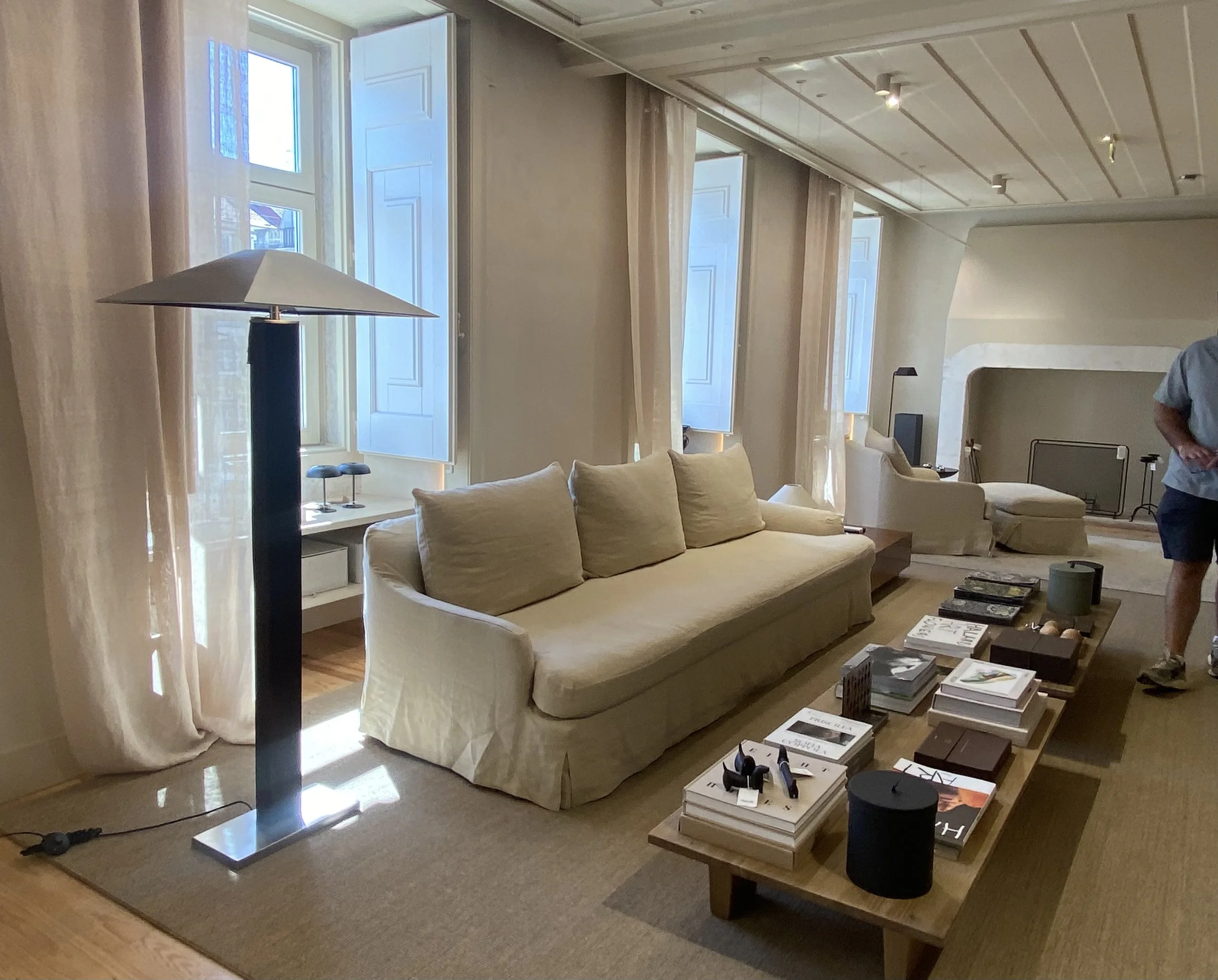
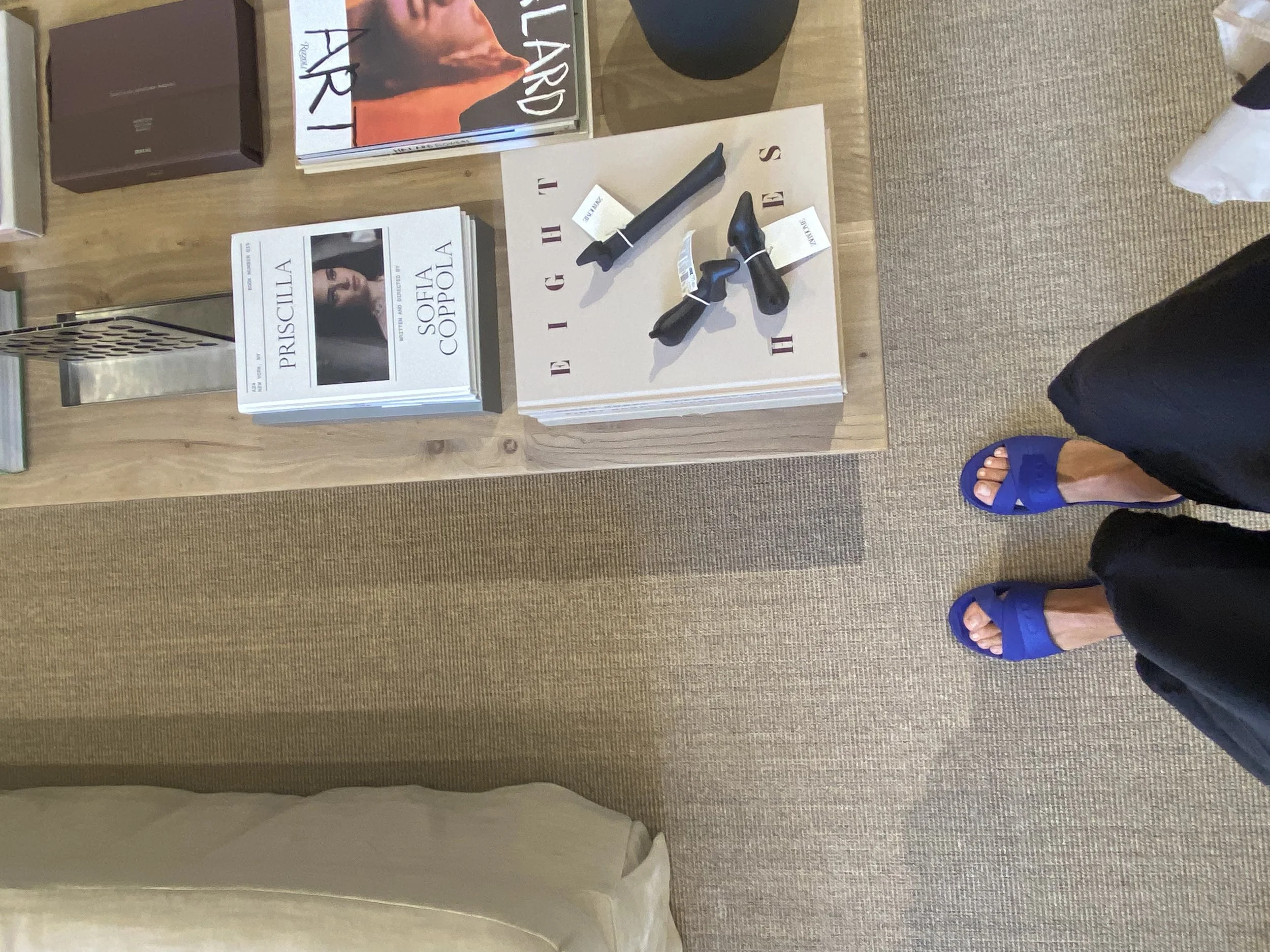
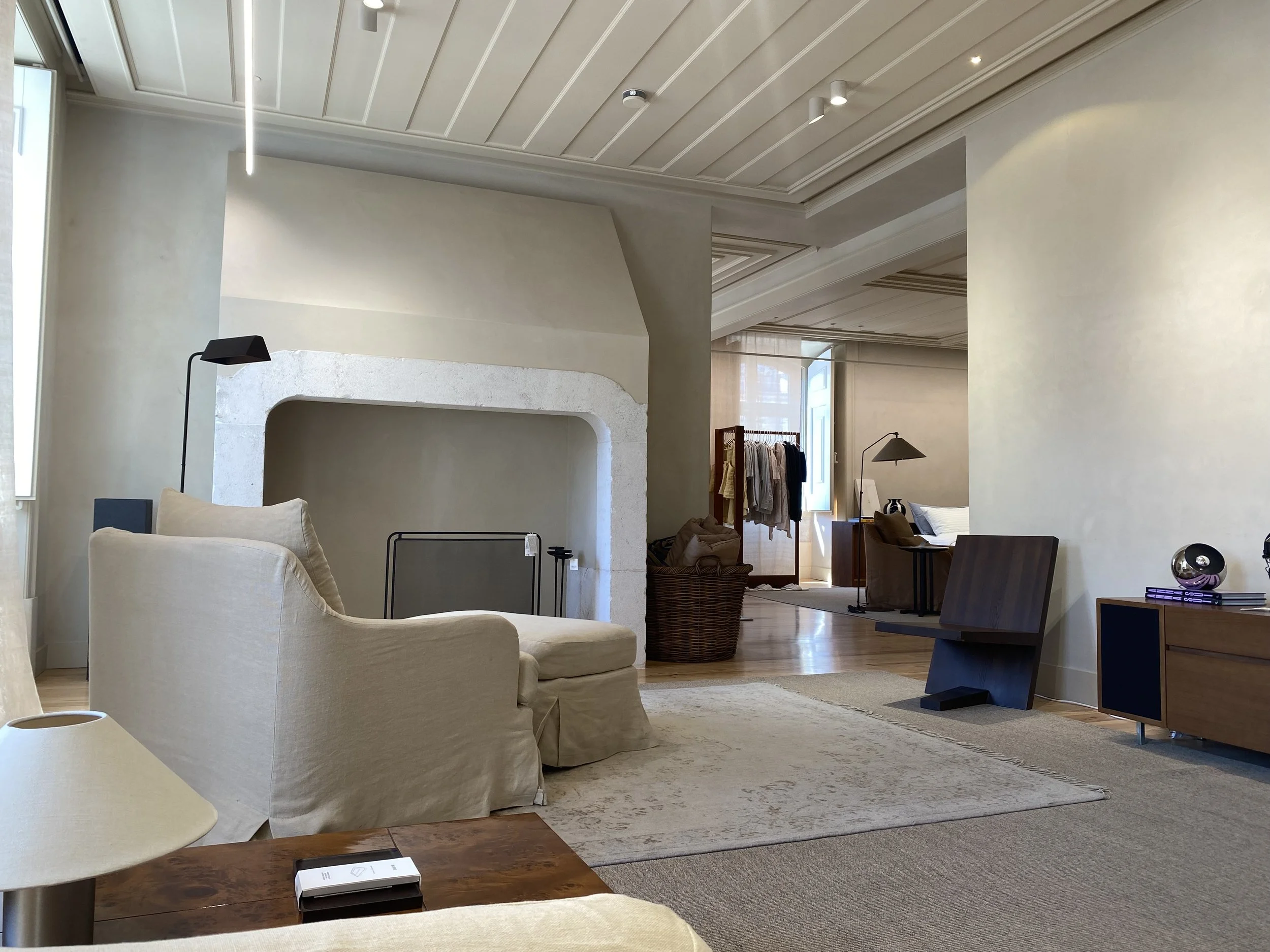
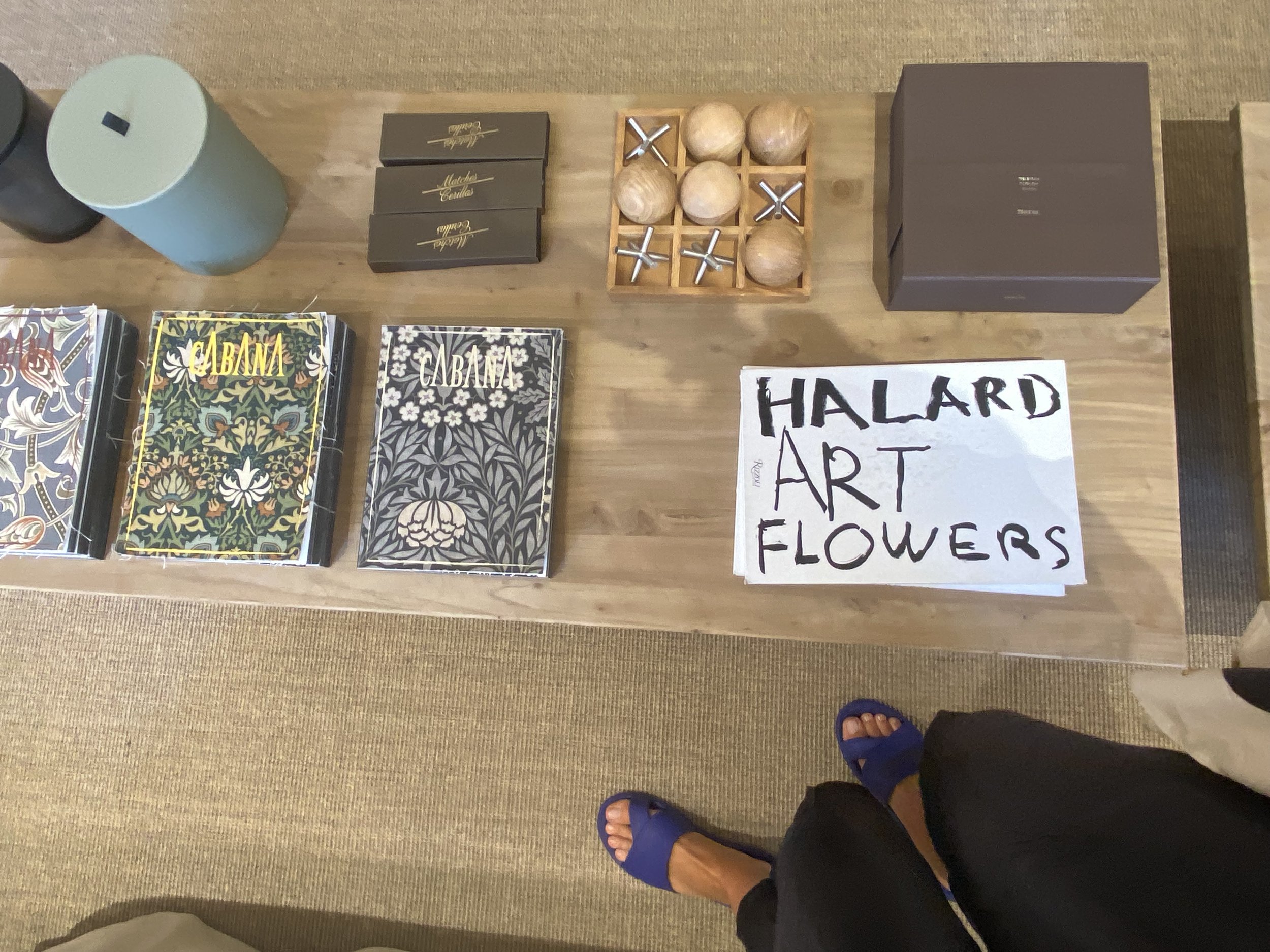
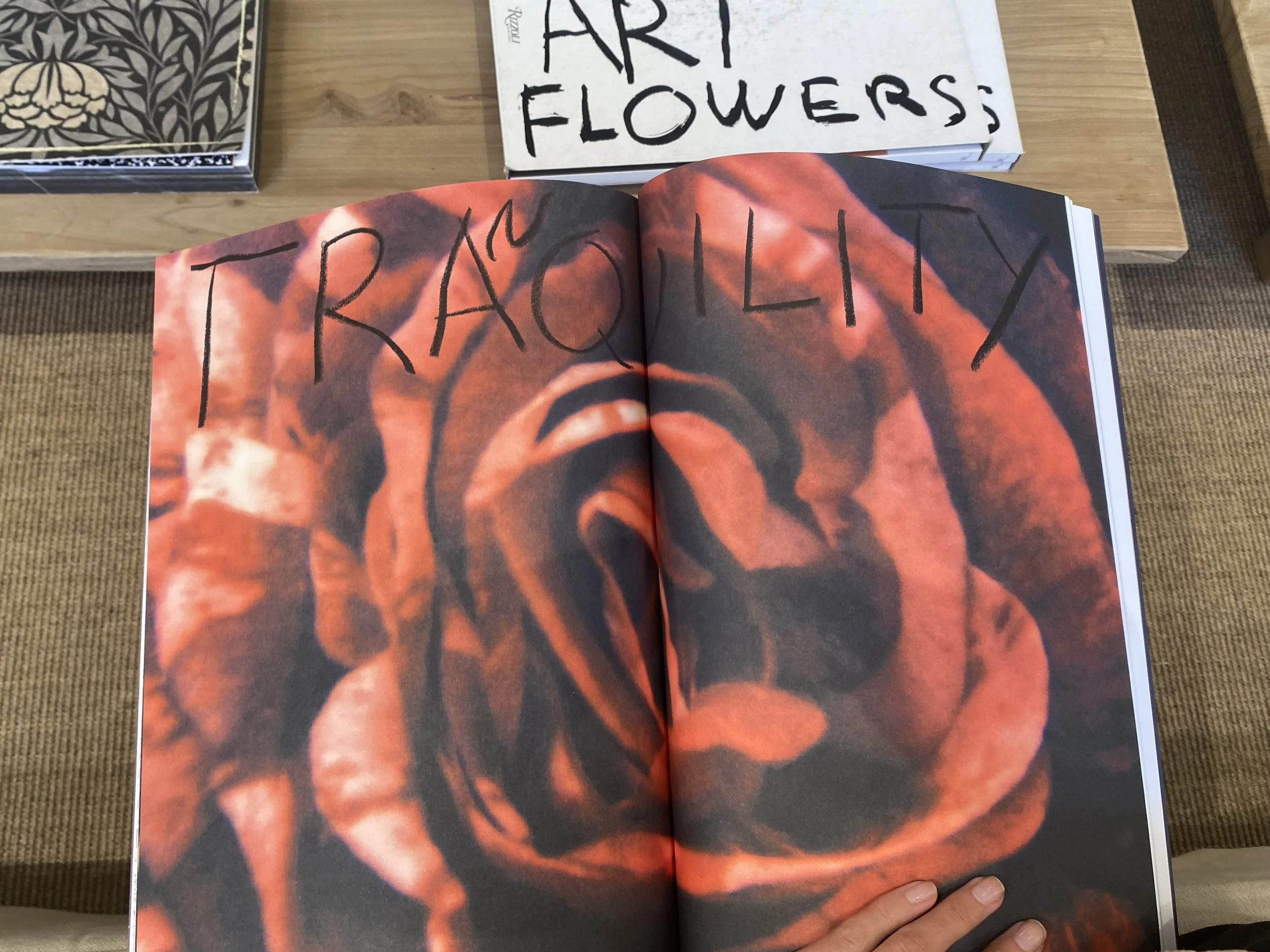
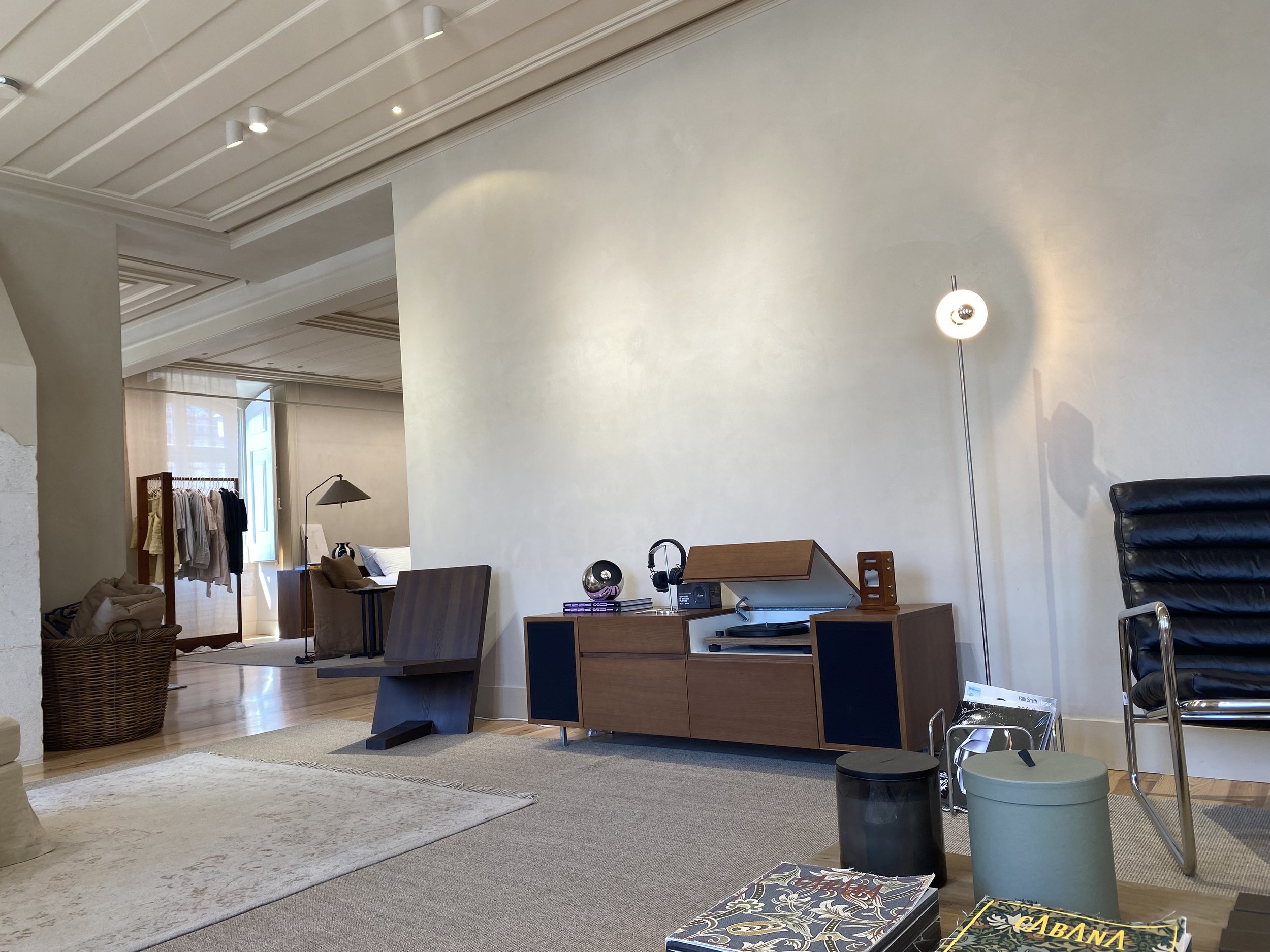
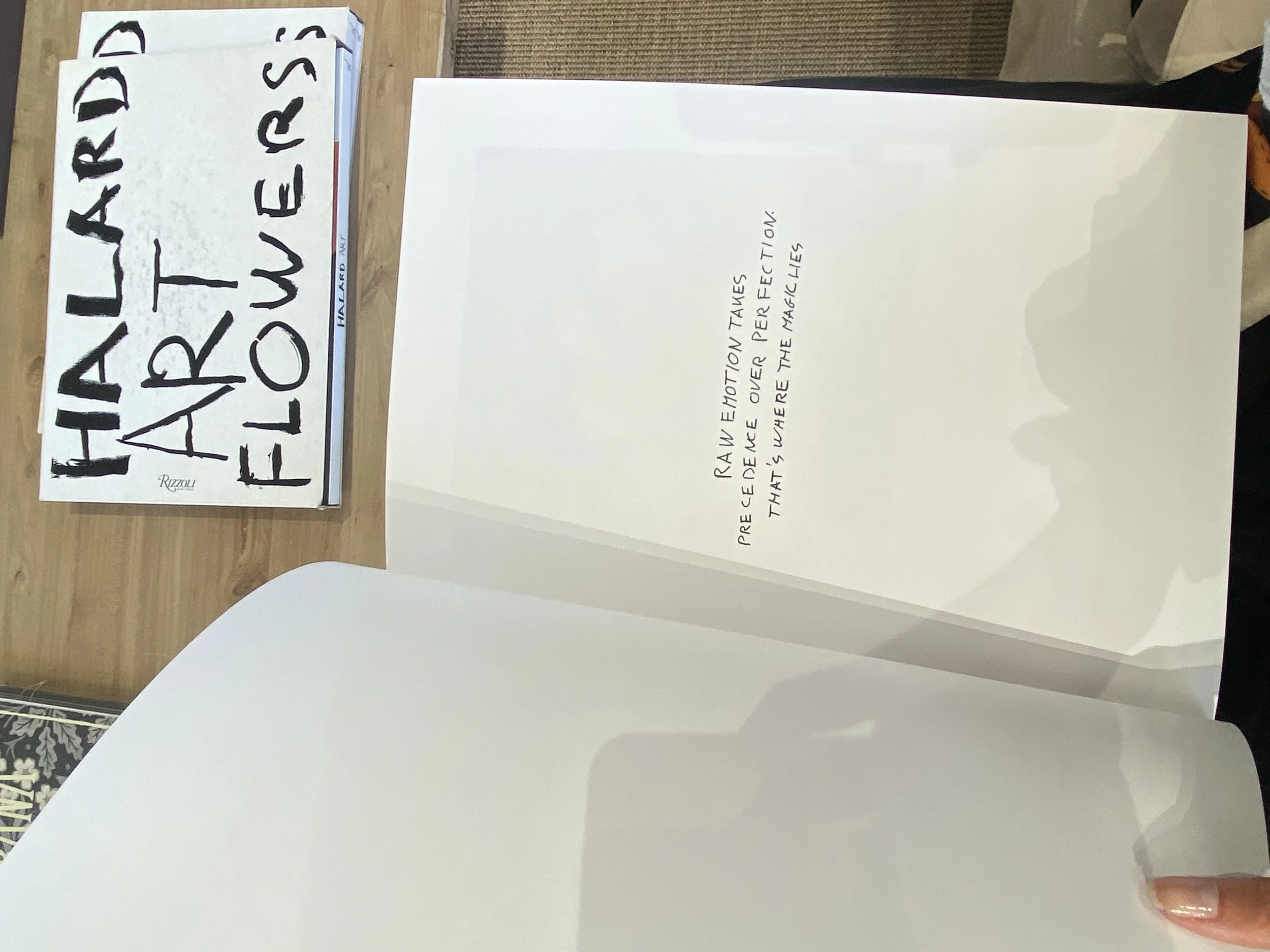
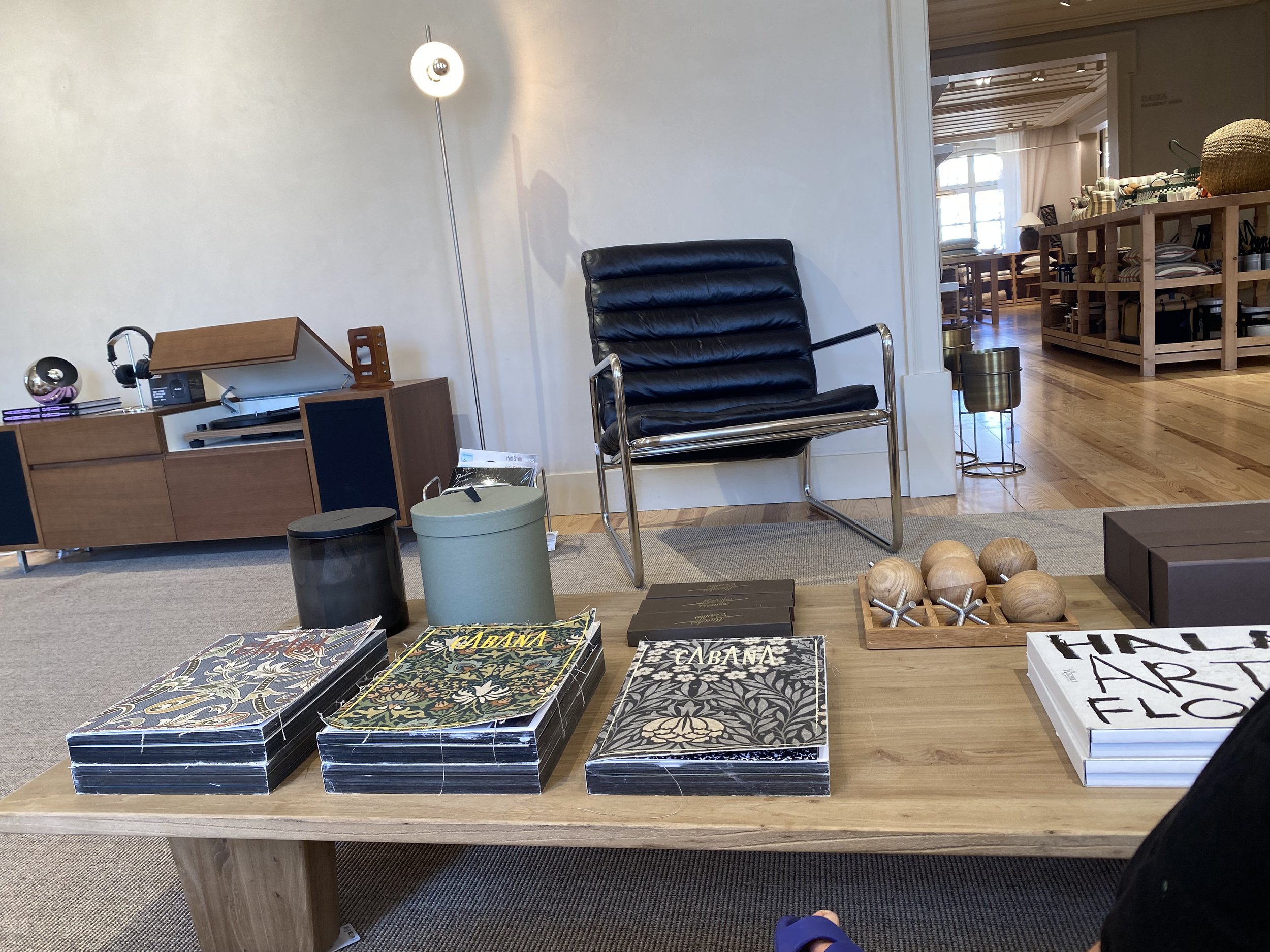
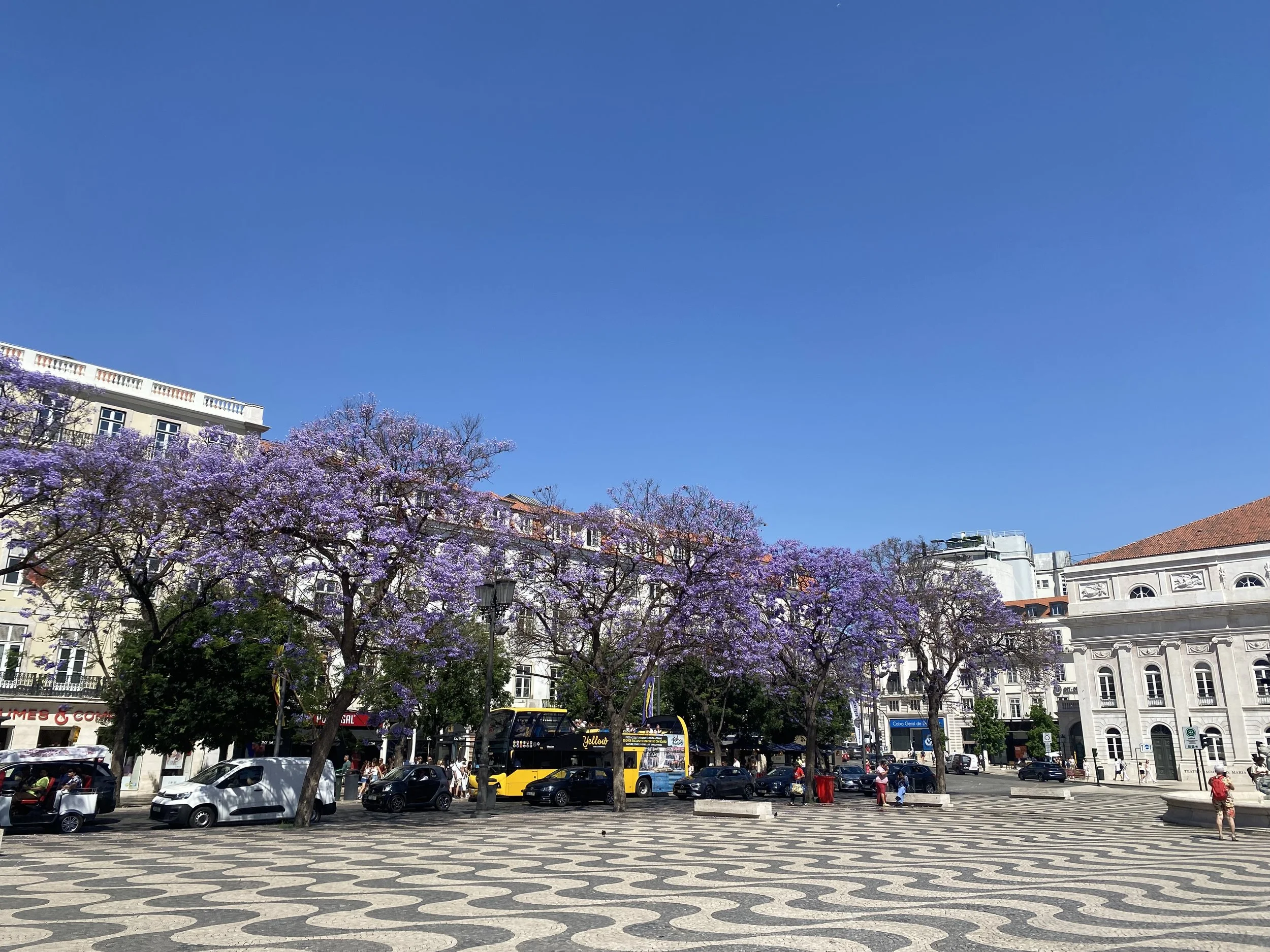
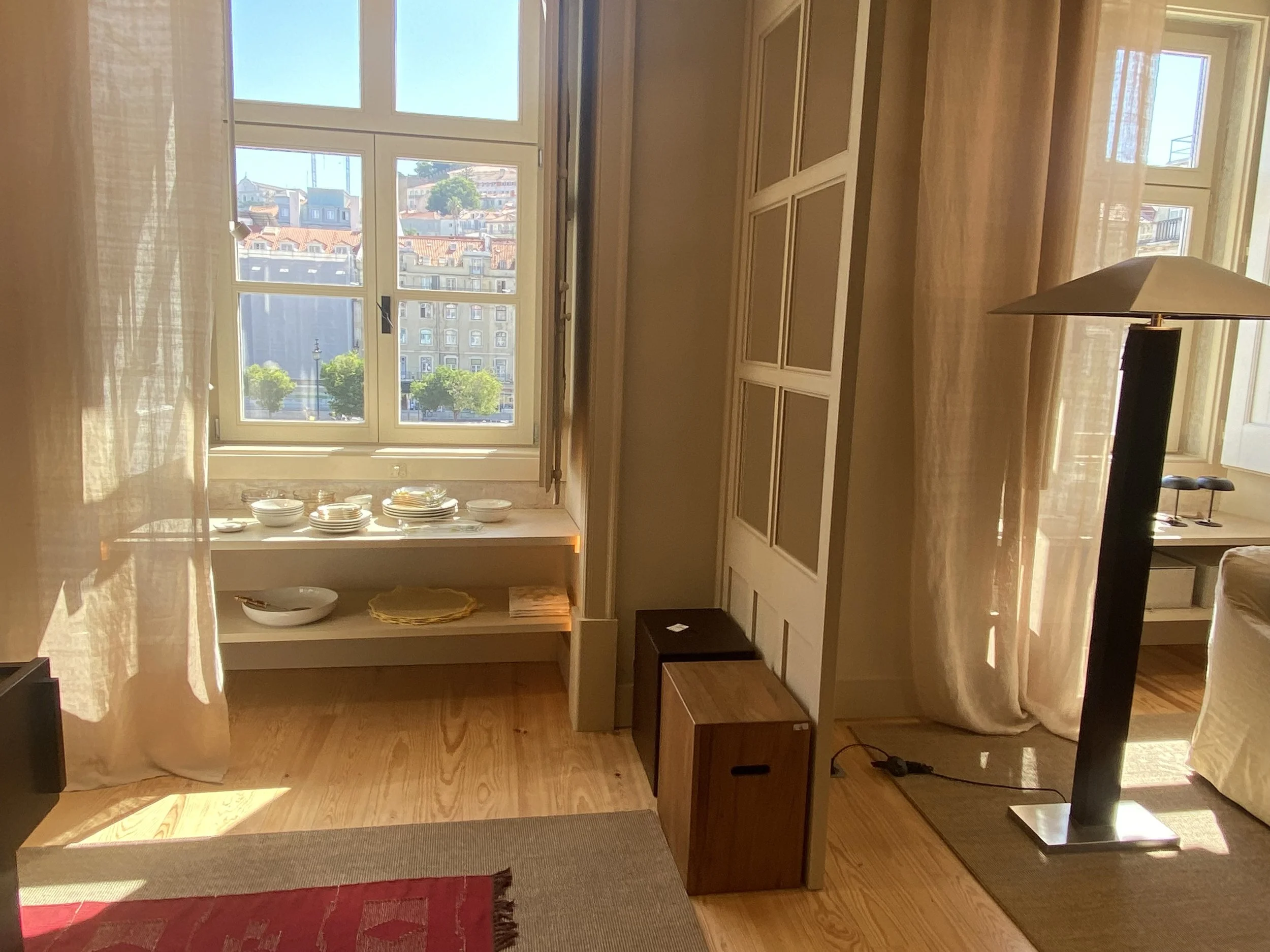
Even with a castle view when you leave the Home floor.
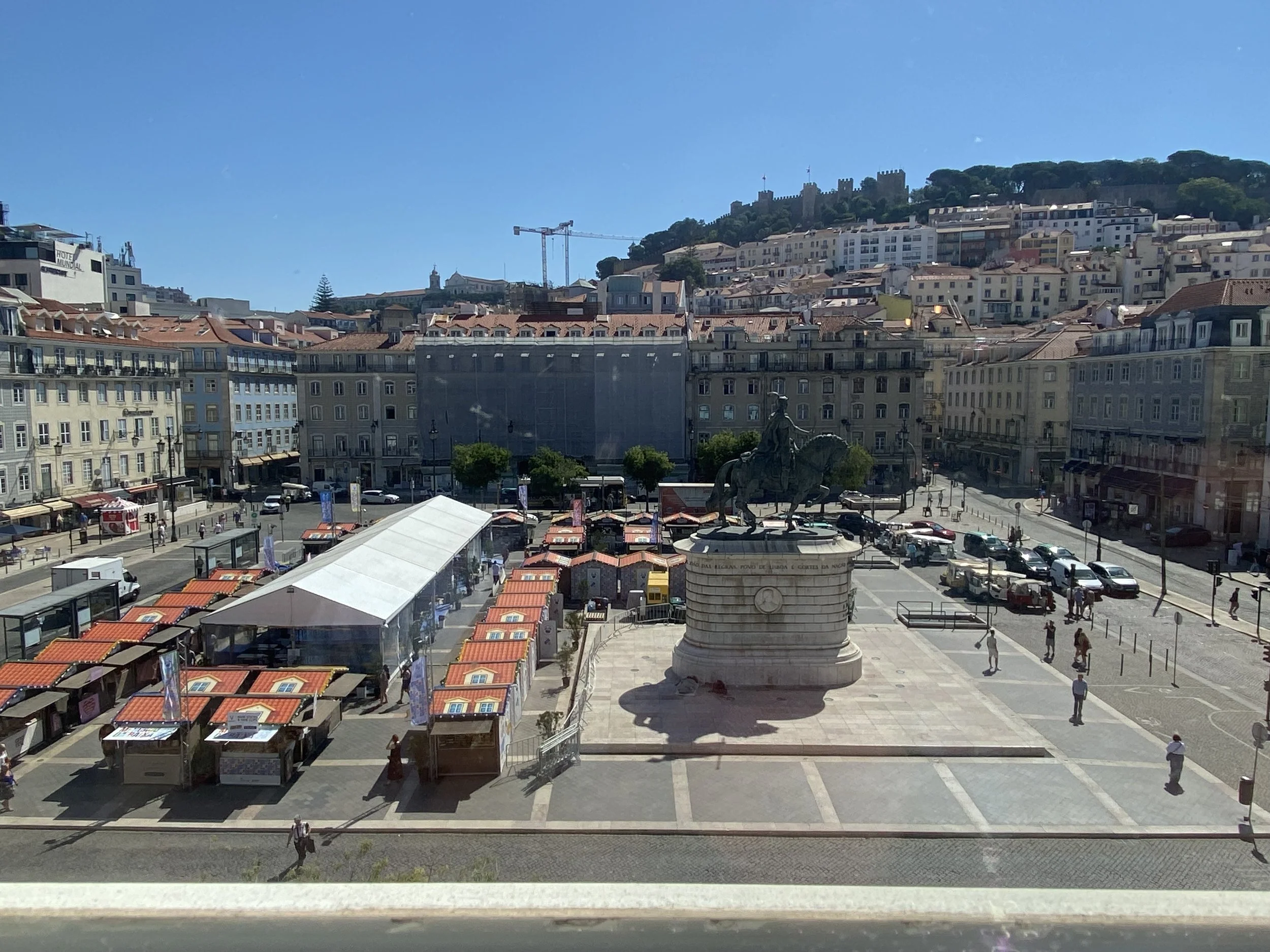
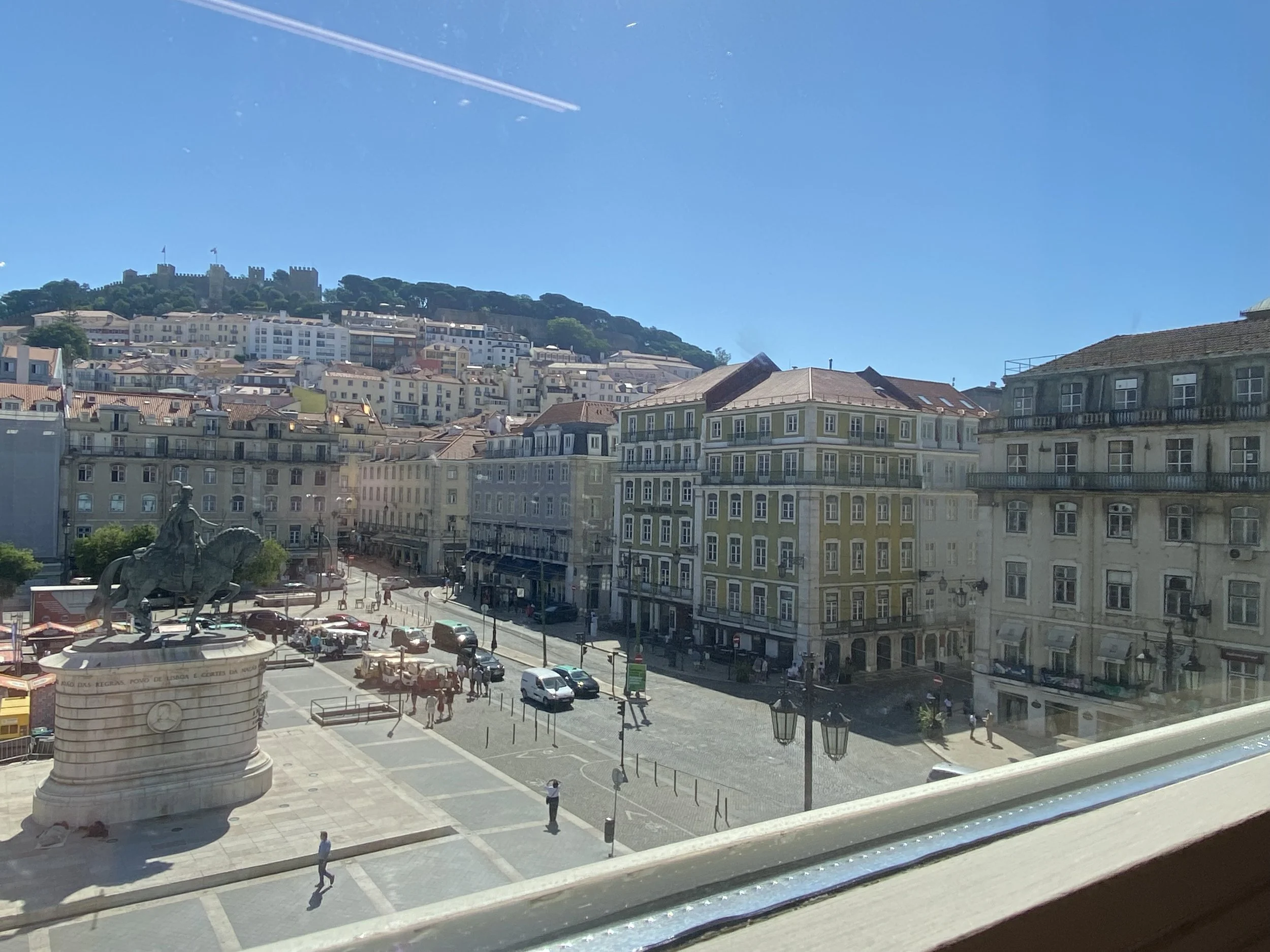
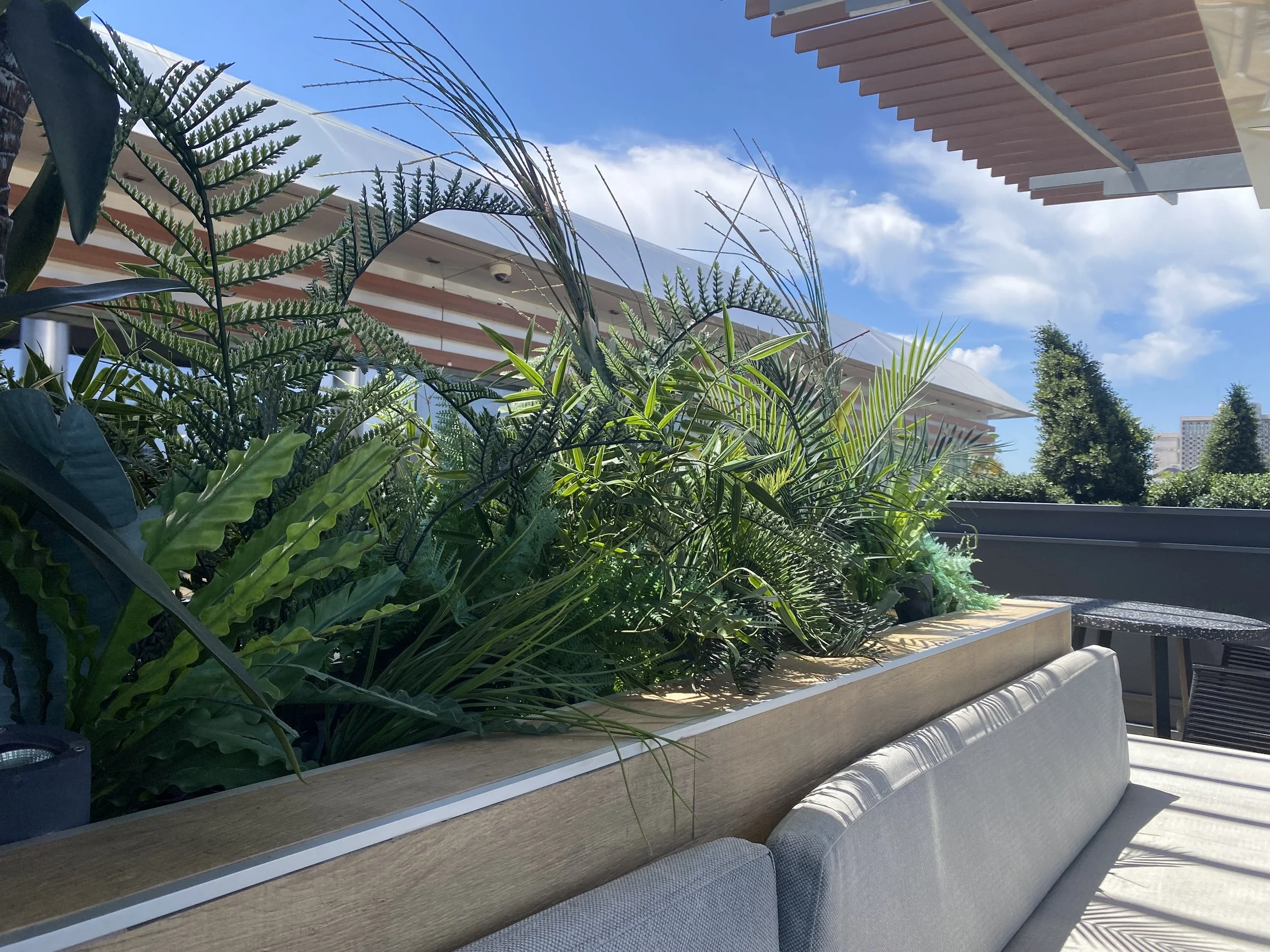
El Corte Ingles 7th Rooftop Indoor & Outdoor Terrace
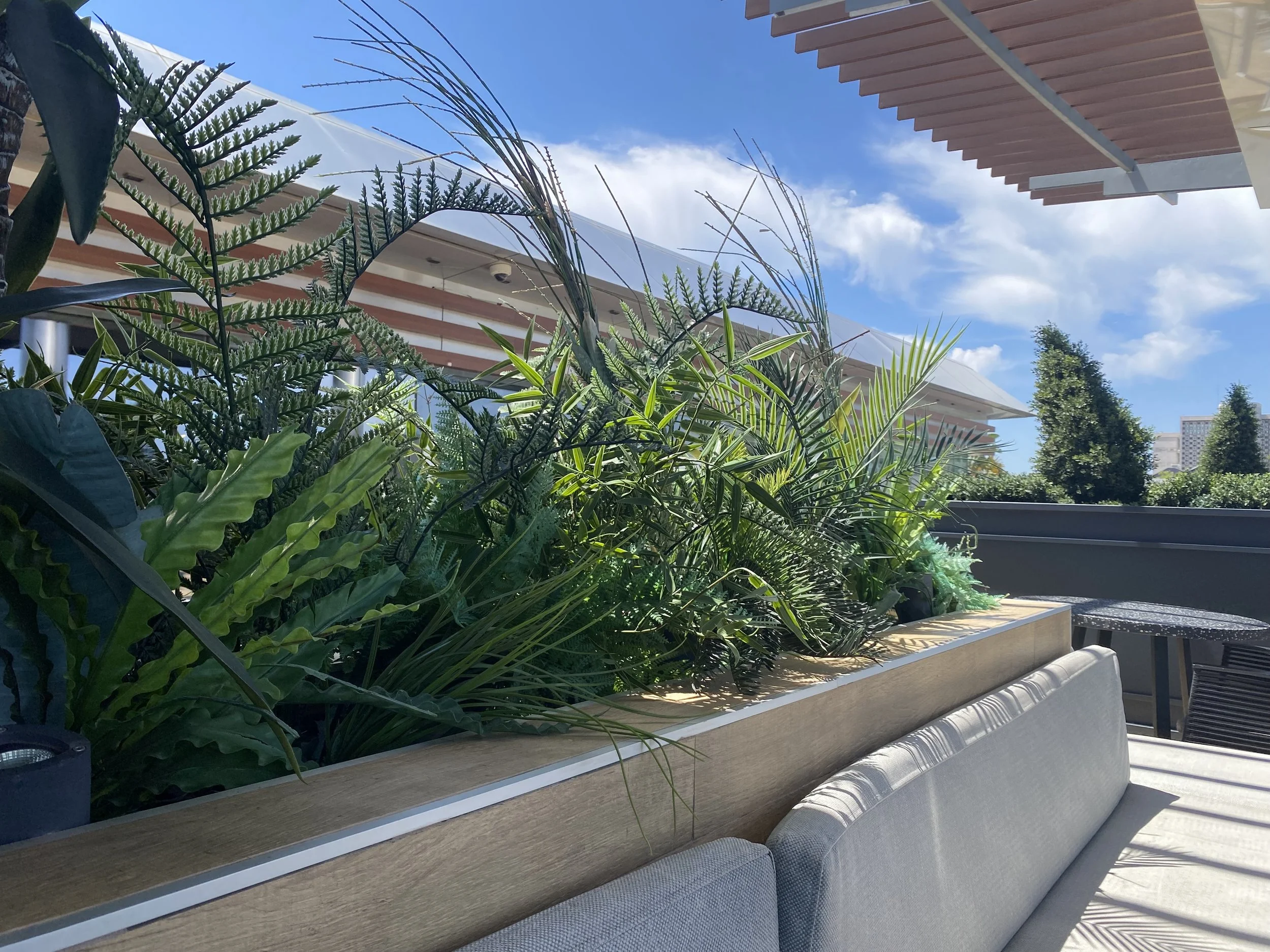
Access Tipp:
Enjoy the terrace with artisanal and best kept secret ice cream of Sao Bento Nannarella
(that location nestled within beautiful surroundings between the steps of the picturesque parliament and the well hidden gem of a park— and locals will probably want it to stay secret— yet here we are it deserves praise— Praca das Flores— both included in the afternoon tour and even if you don’t join, make sure you try their ice cream, it’s worth it— and à small cup isnt really small, it’s a feast of deliciousness) has a second location, or better said home—here on the 7th floor.
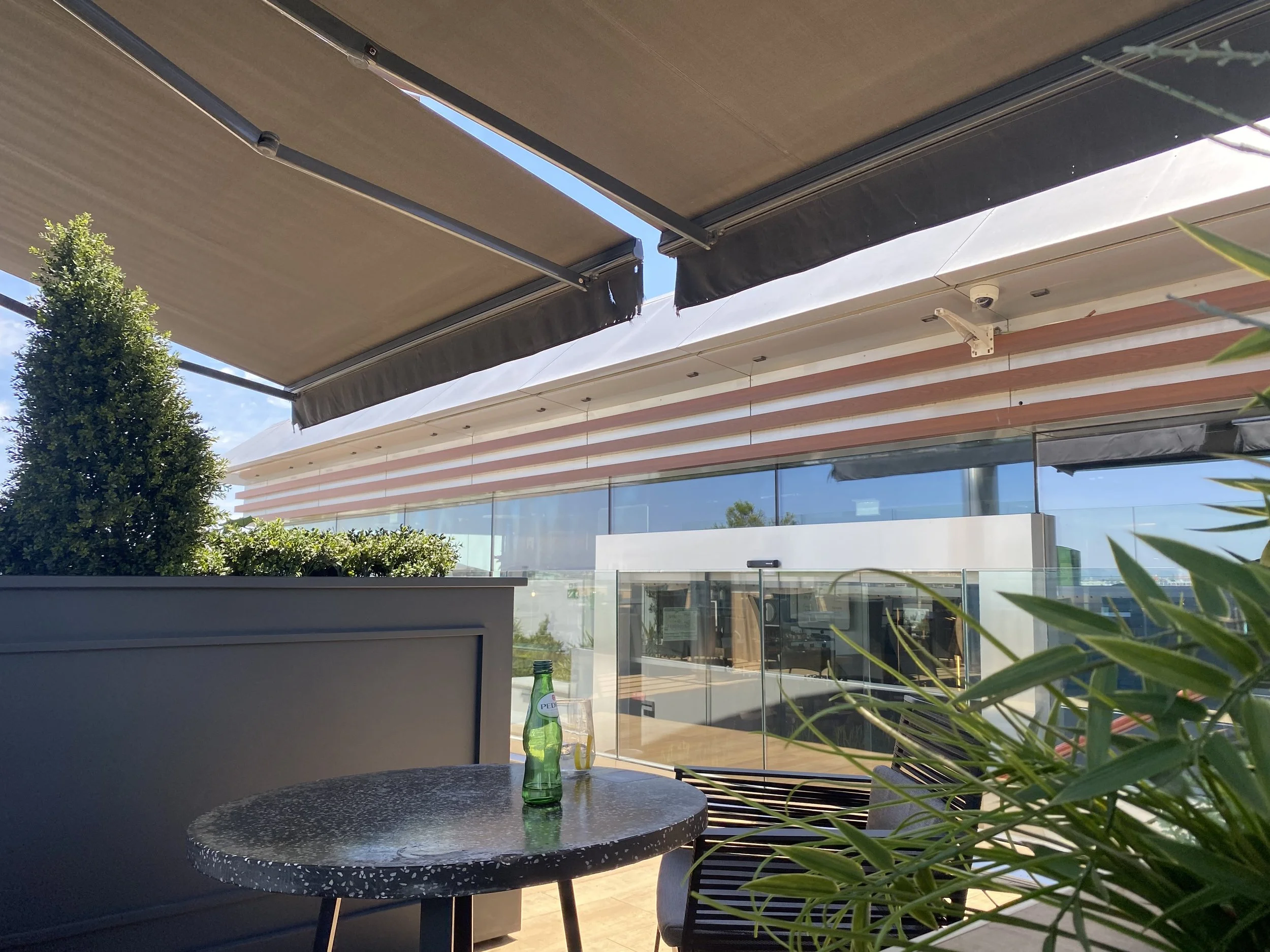
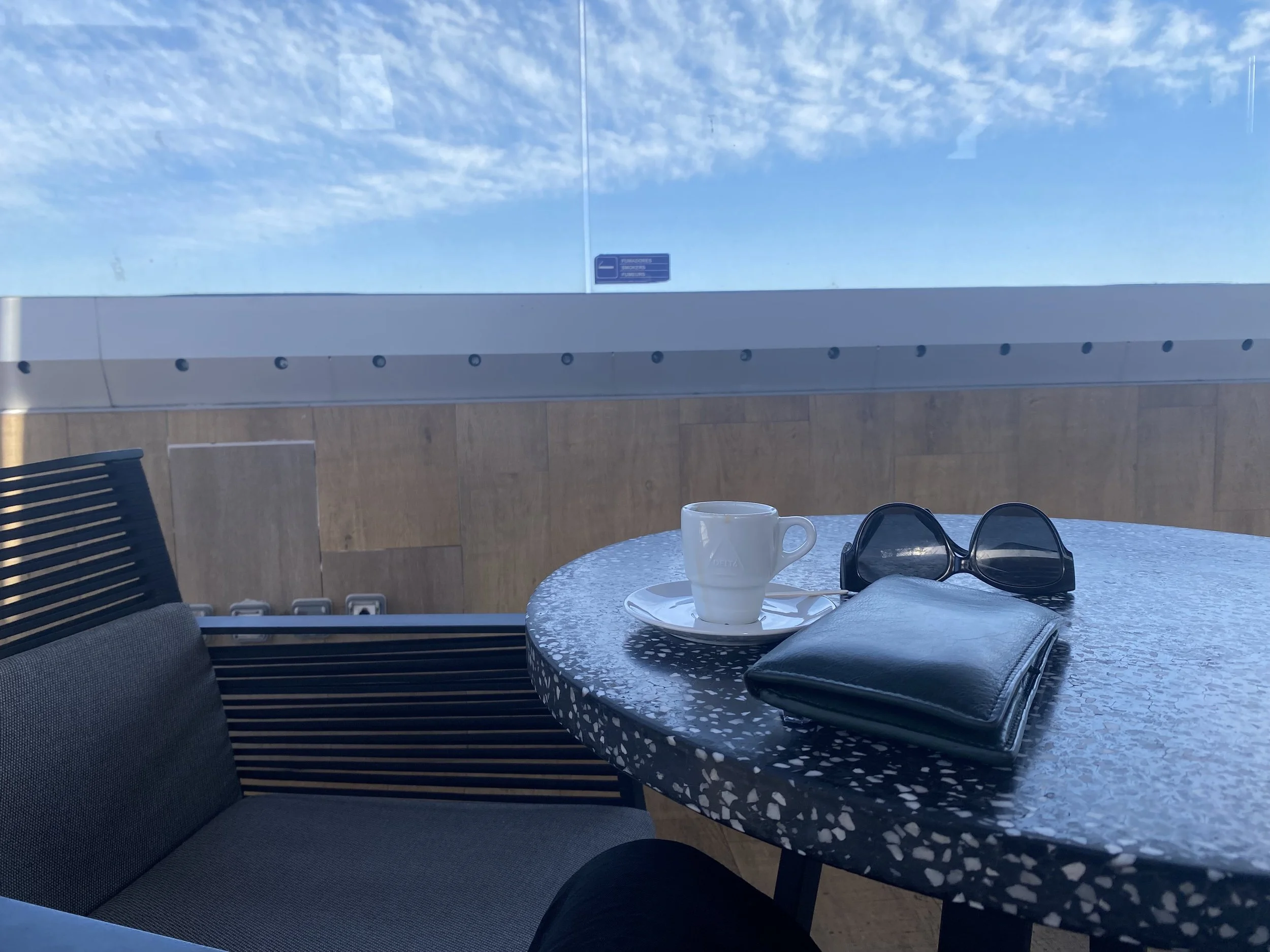
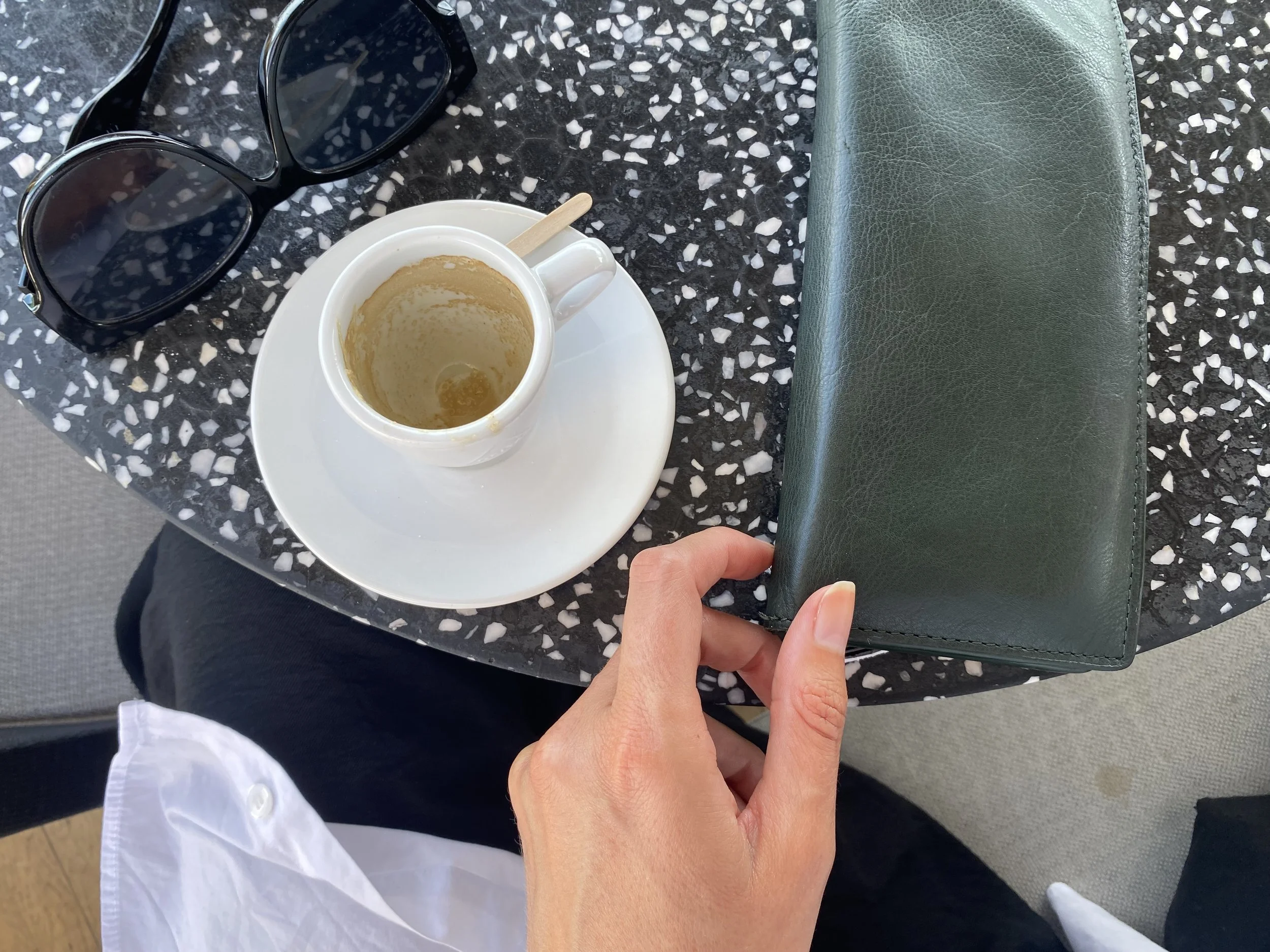
So, essentially beyond the possibly to comfortably
visit one of the restaurants
or to shop in the gourmet supermarket on this floor,
or any of the other floors for electronics, homewear, papeterie, writing instruments, books, beauty, jewelery, luggage, clothes of all price ranges, insurances, travel agencies, and more— all under one roof and with personal shopping services— Ànd à Tesla Showroom In-house and à Starbucks—
simply get some Nannarella ice cream (3,40€) or a coffee àt Alcôa patisserie (1,40€) àn other baked exotic delights in all shapes and forms or some insane chocolate Landeau chocolate cake (5,40€ when I last checked, other location is at Lx Factory, never been)
and enjoy
the terrace.
And view.
Steps from Park & Museums Gulbenkian.
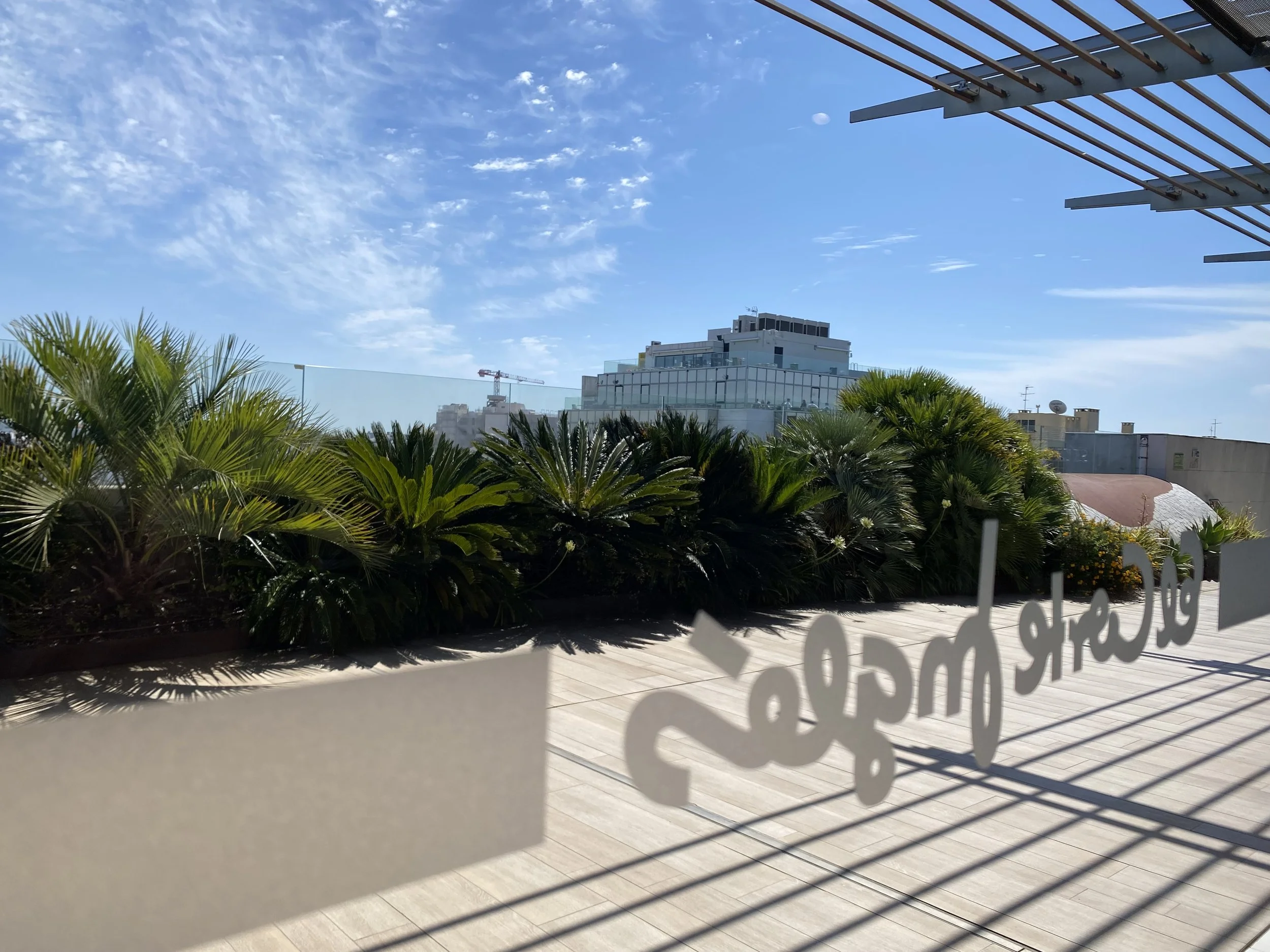
This stop is part of the morning tour.
Here a Spotify playlist to make sure you like the atmosphere
https://open.spotify.com/playlist/14ZGKC4JOhtwExjksCEY99?si=69JR6sWrQmWZpAsBmZzI6A&pi=Y3UR4gj1R2CC9
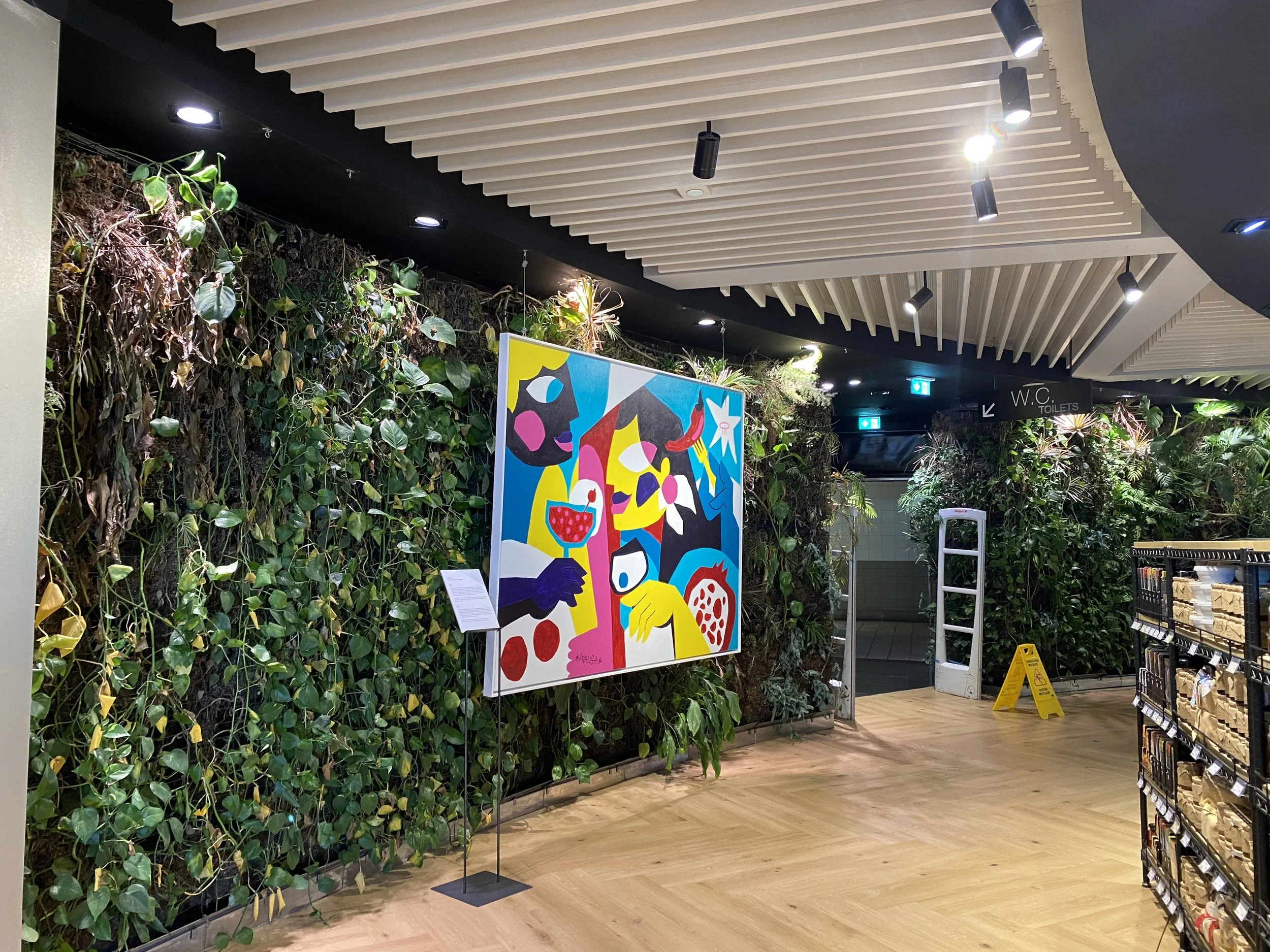
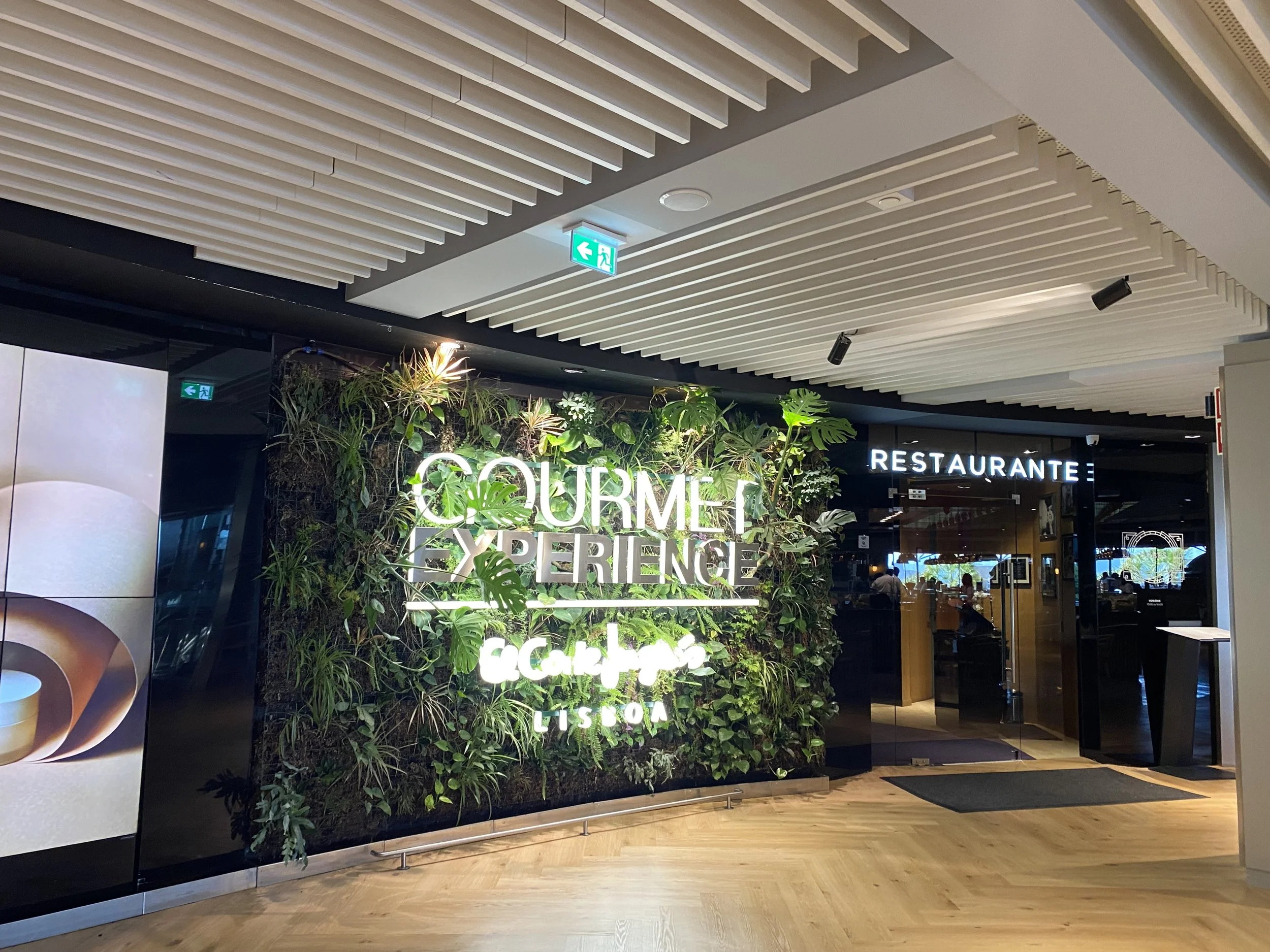
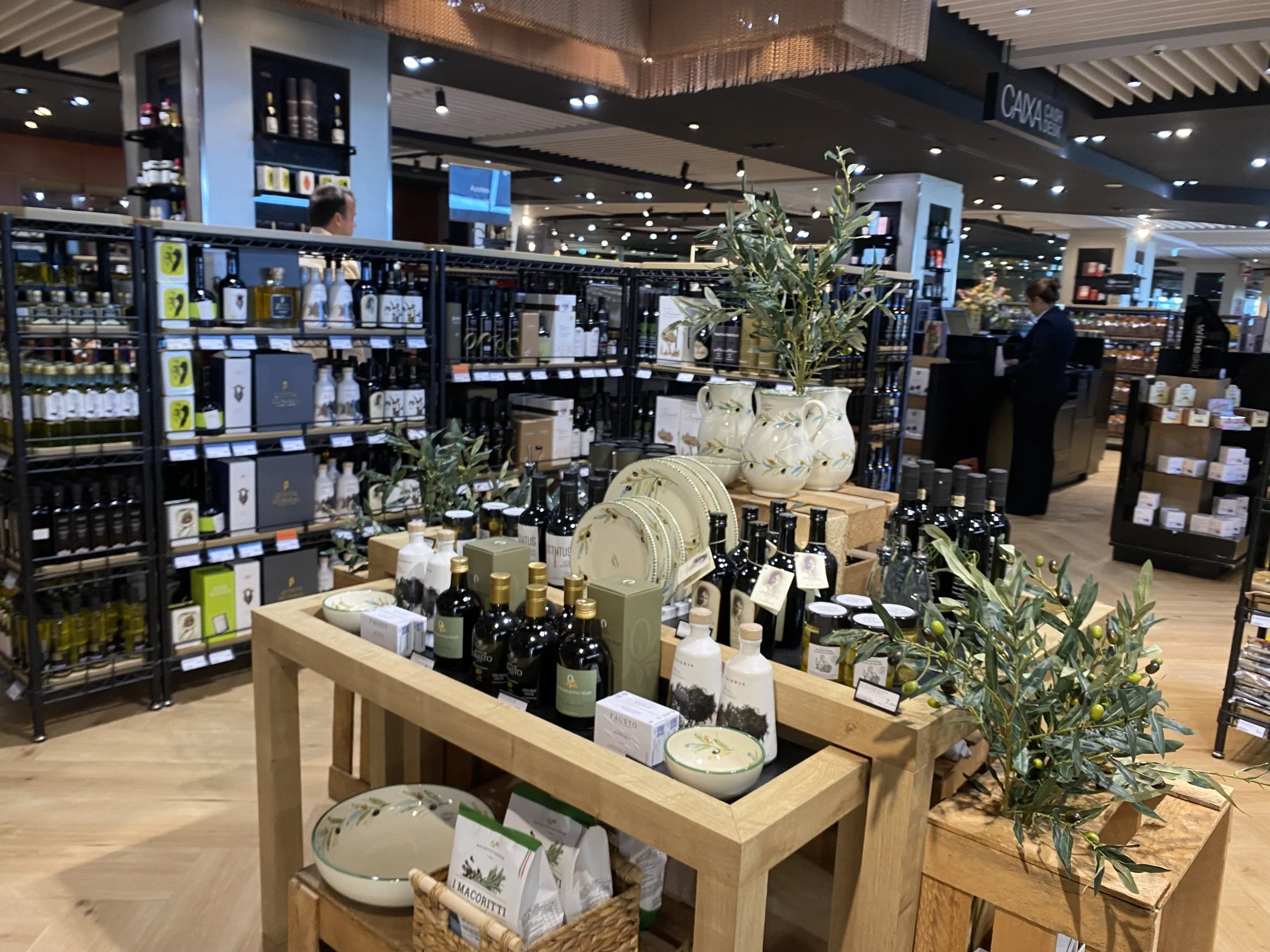
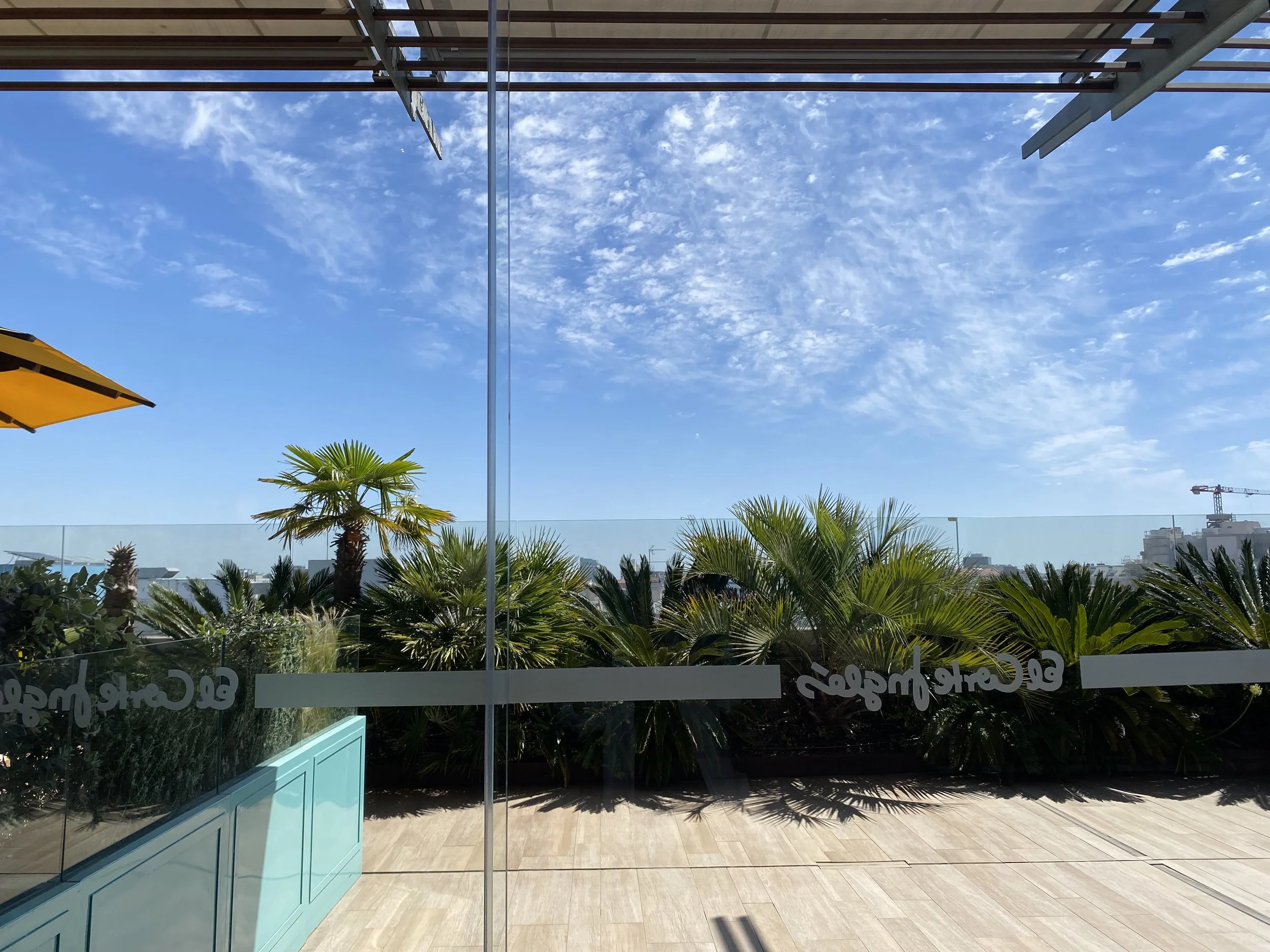
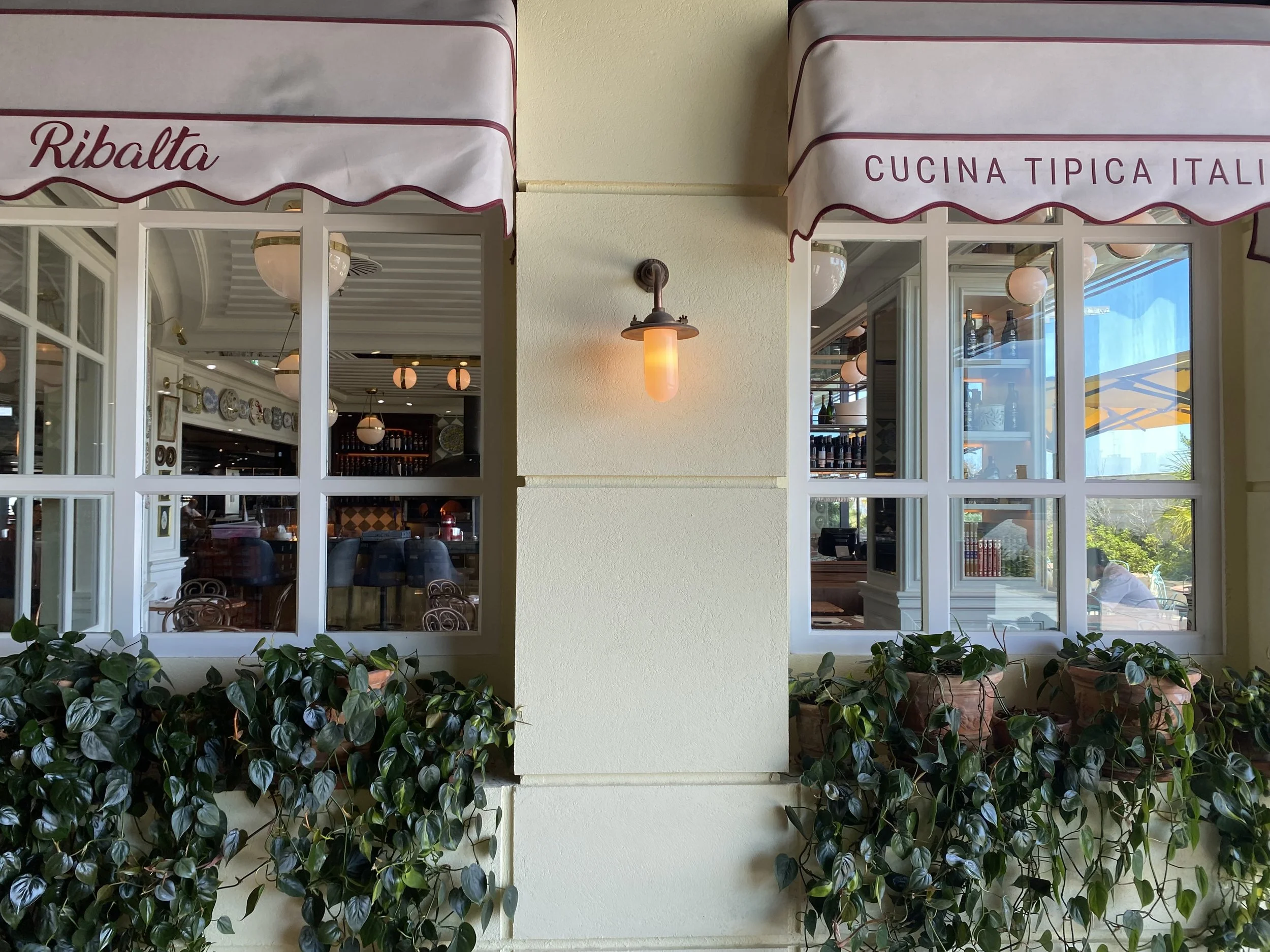
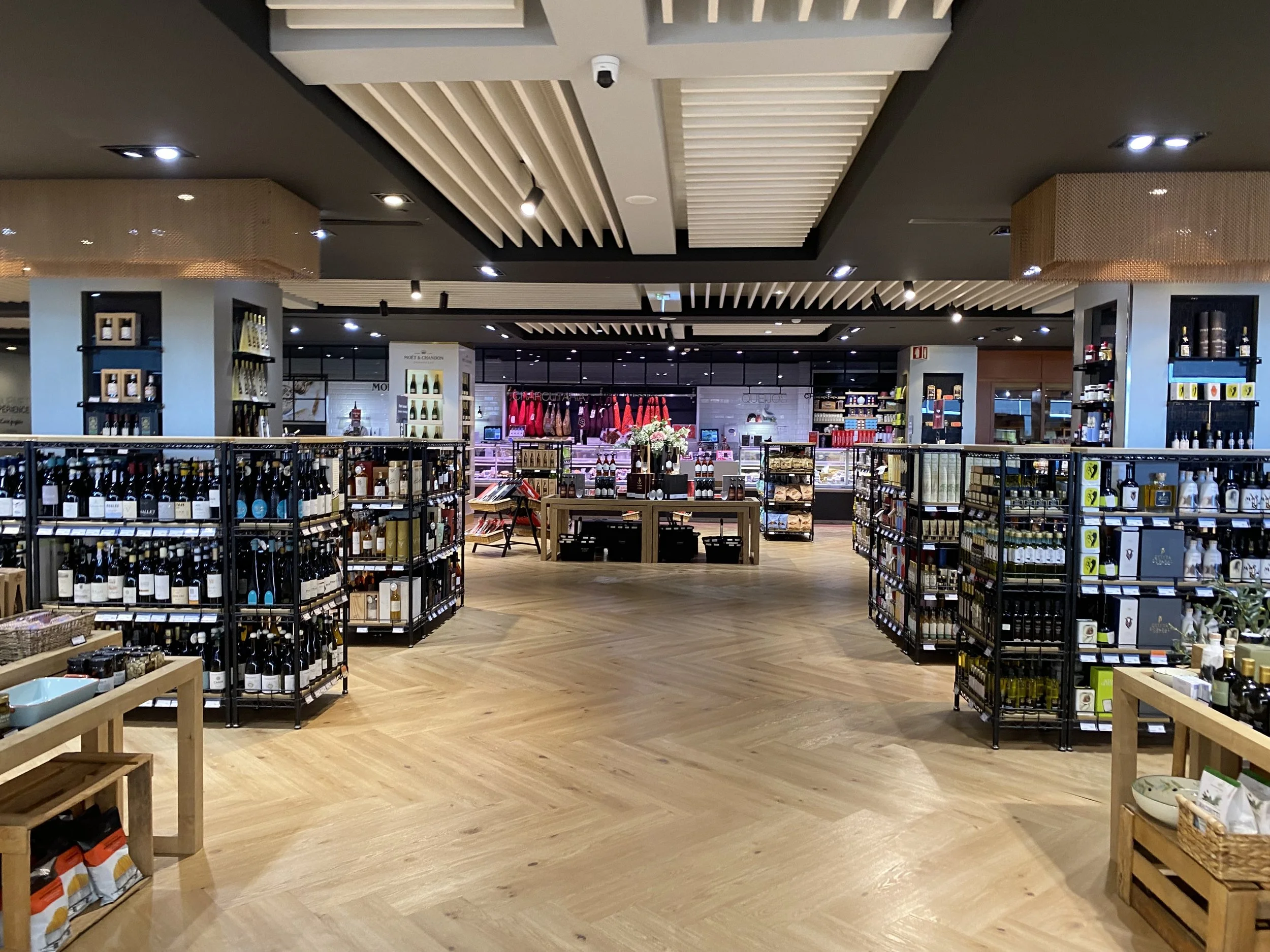
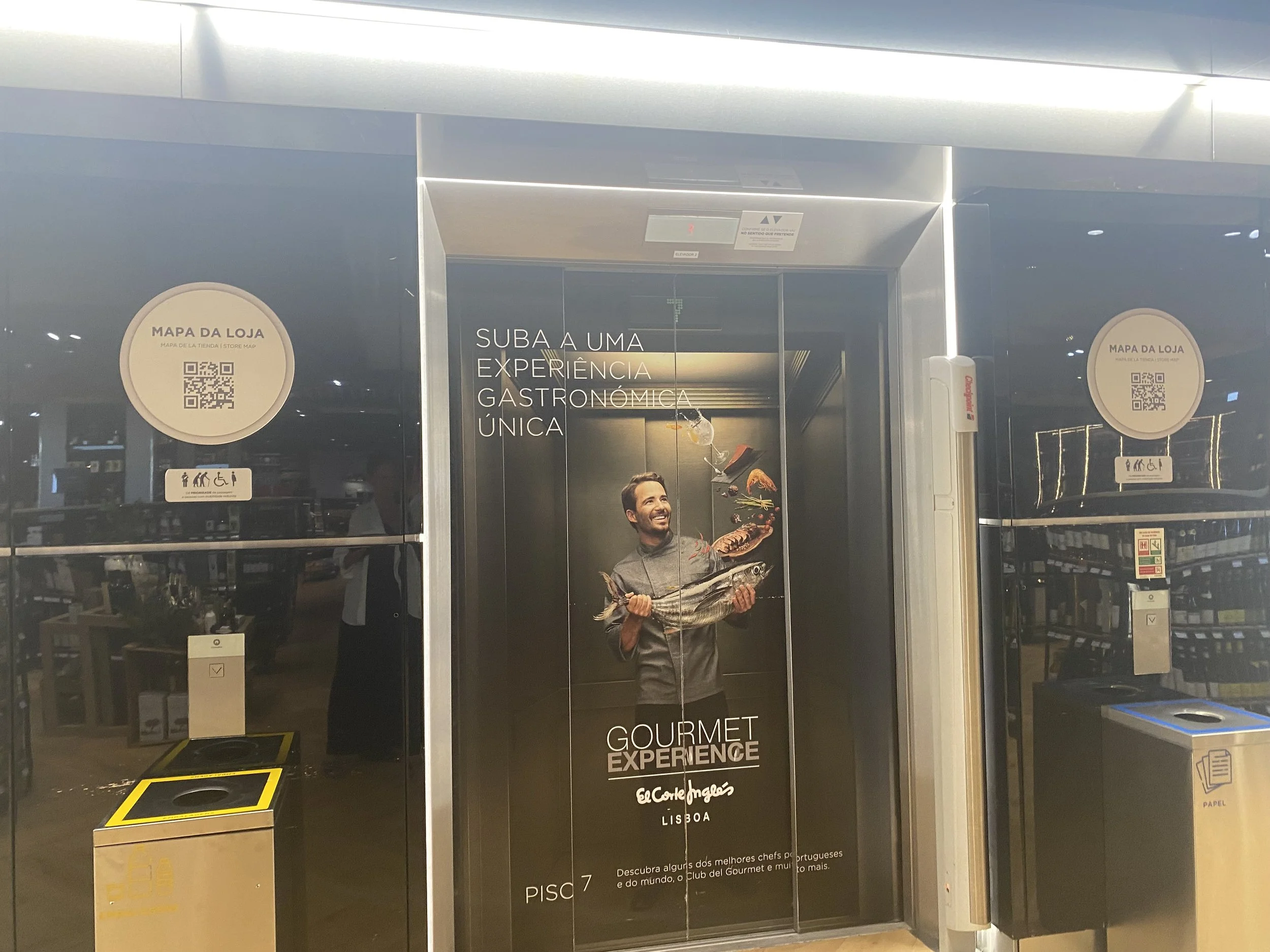
And yes, thats à Tesla Showroom. In-house.
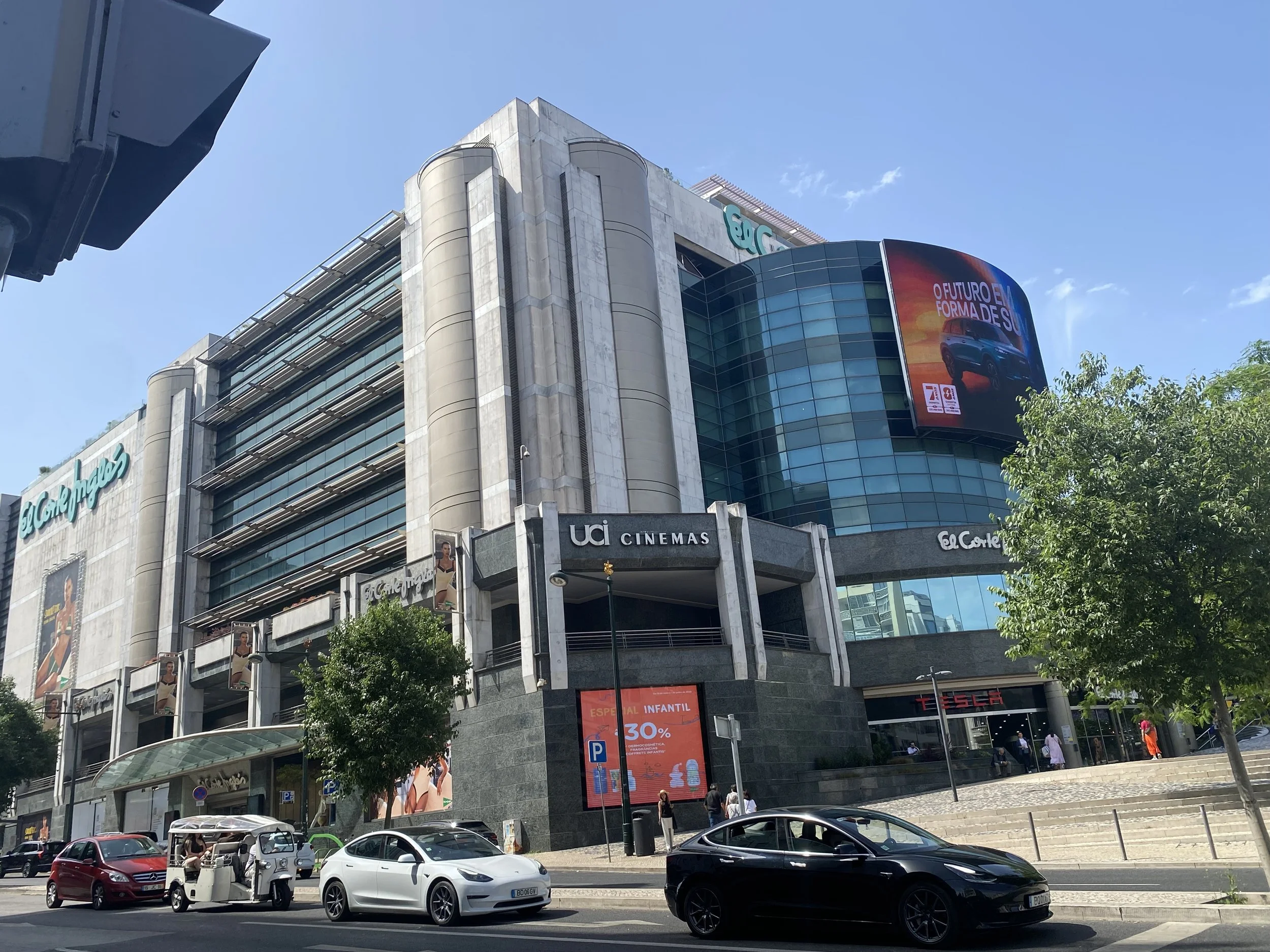
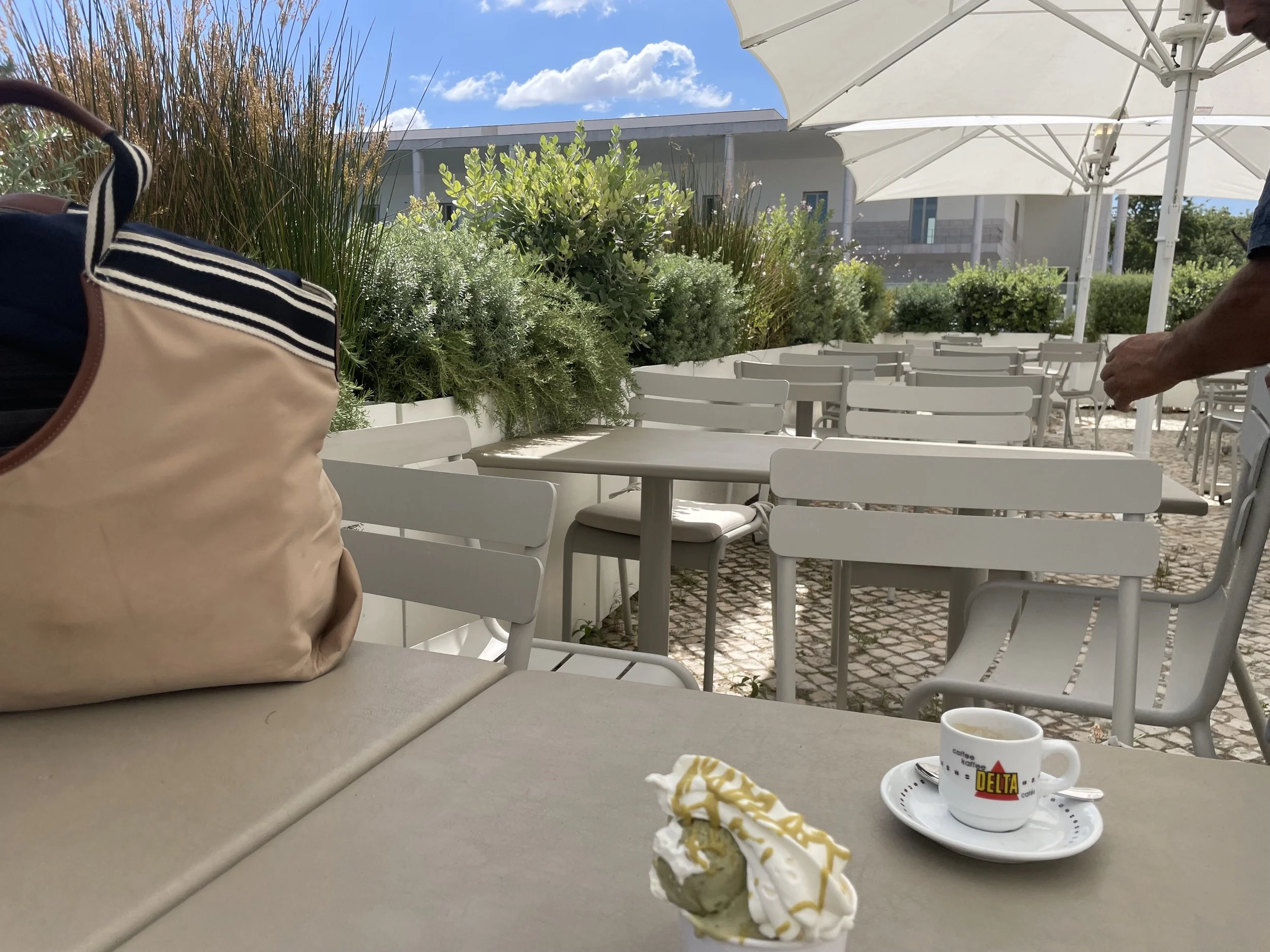
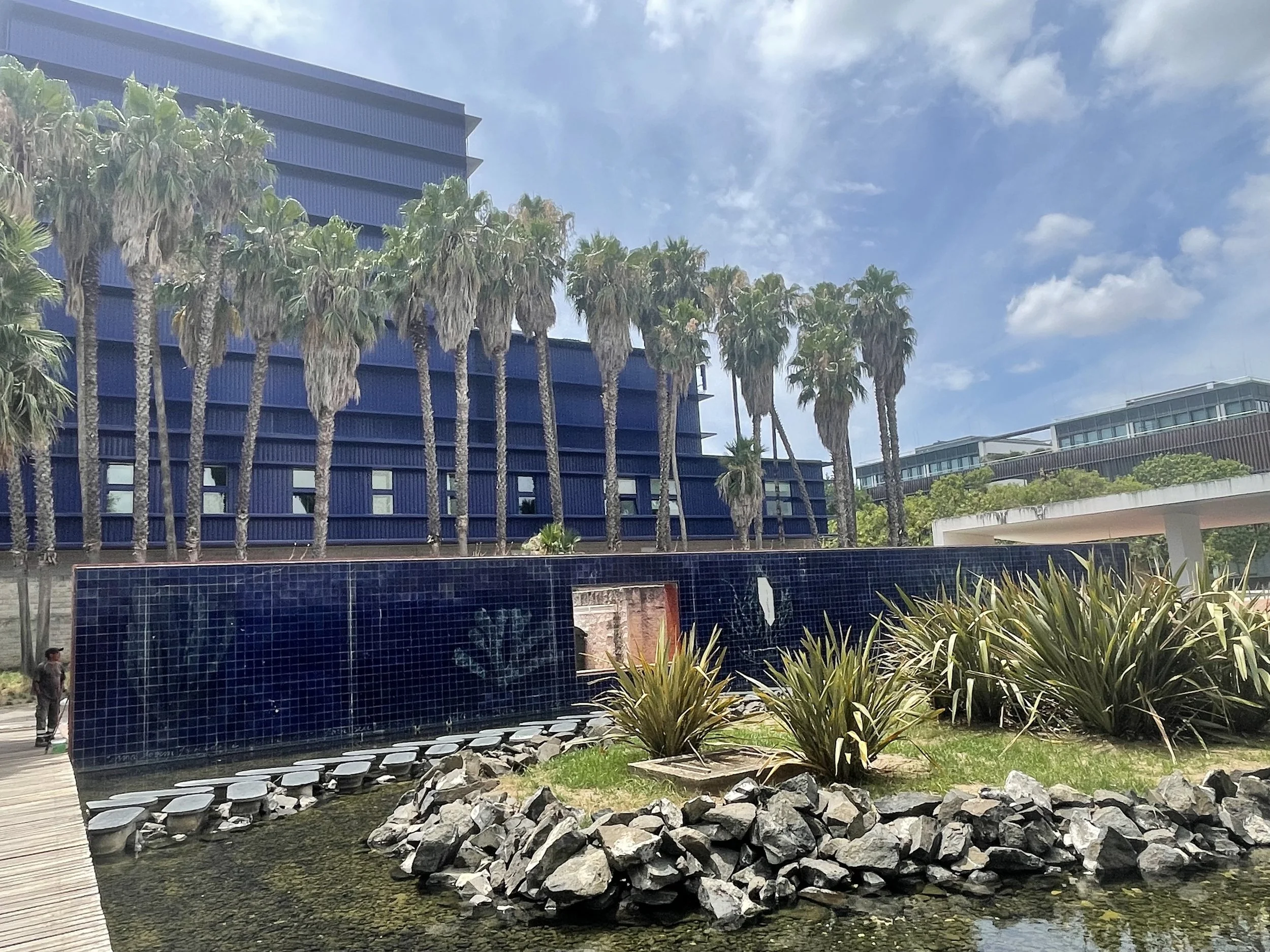
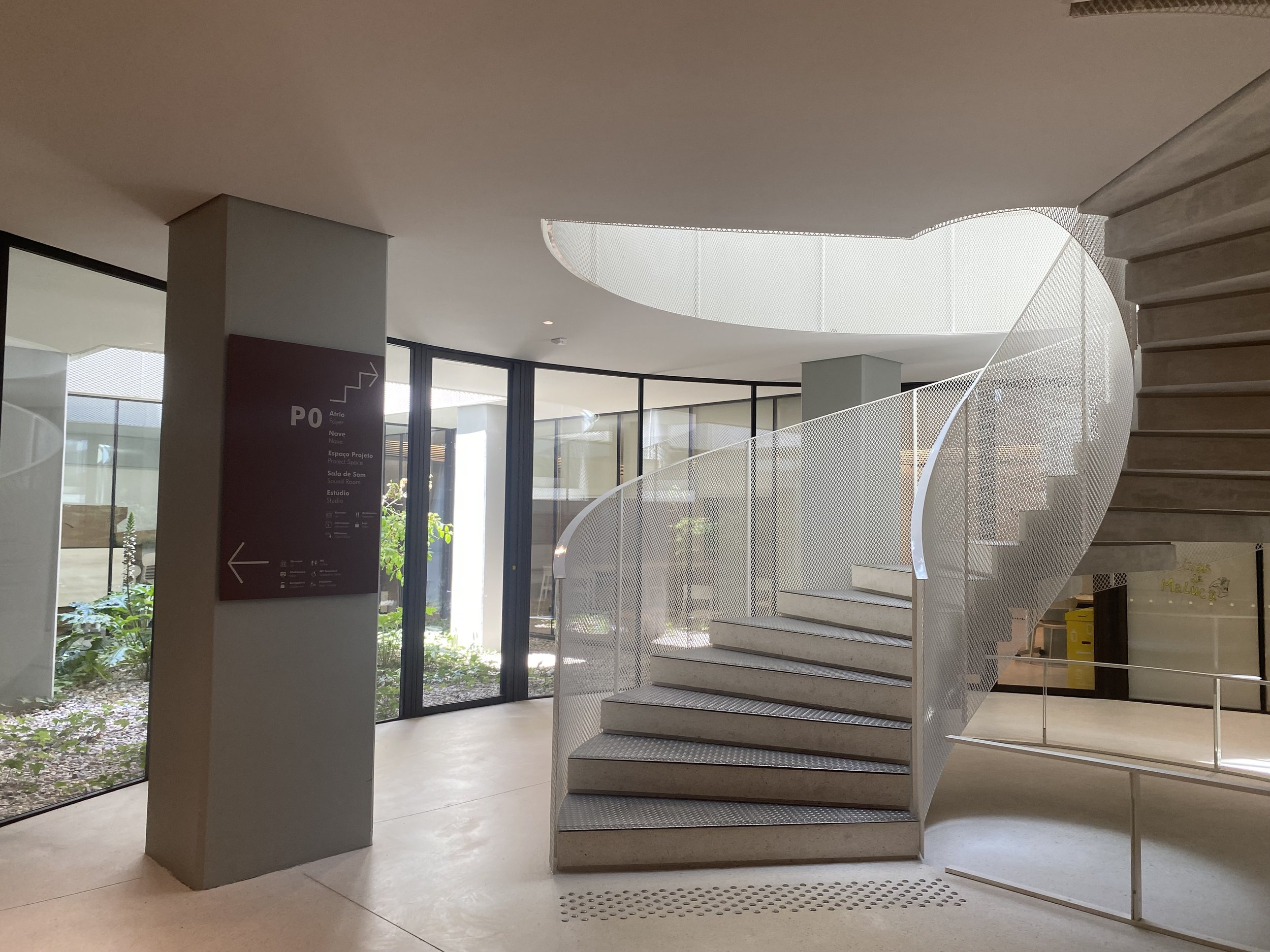
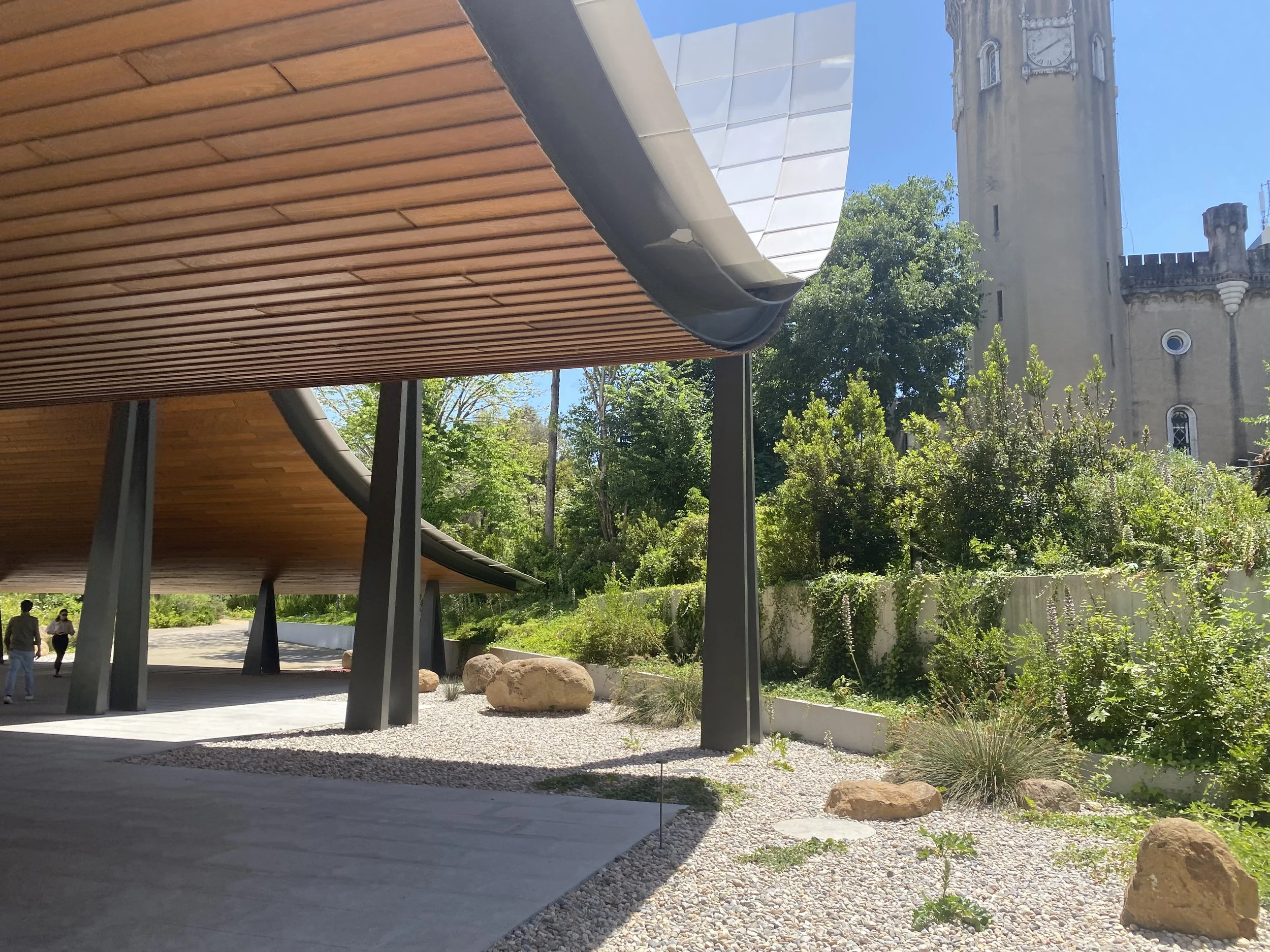
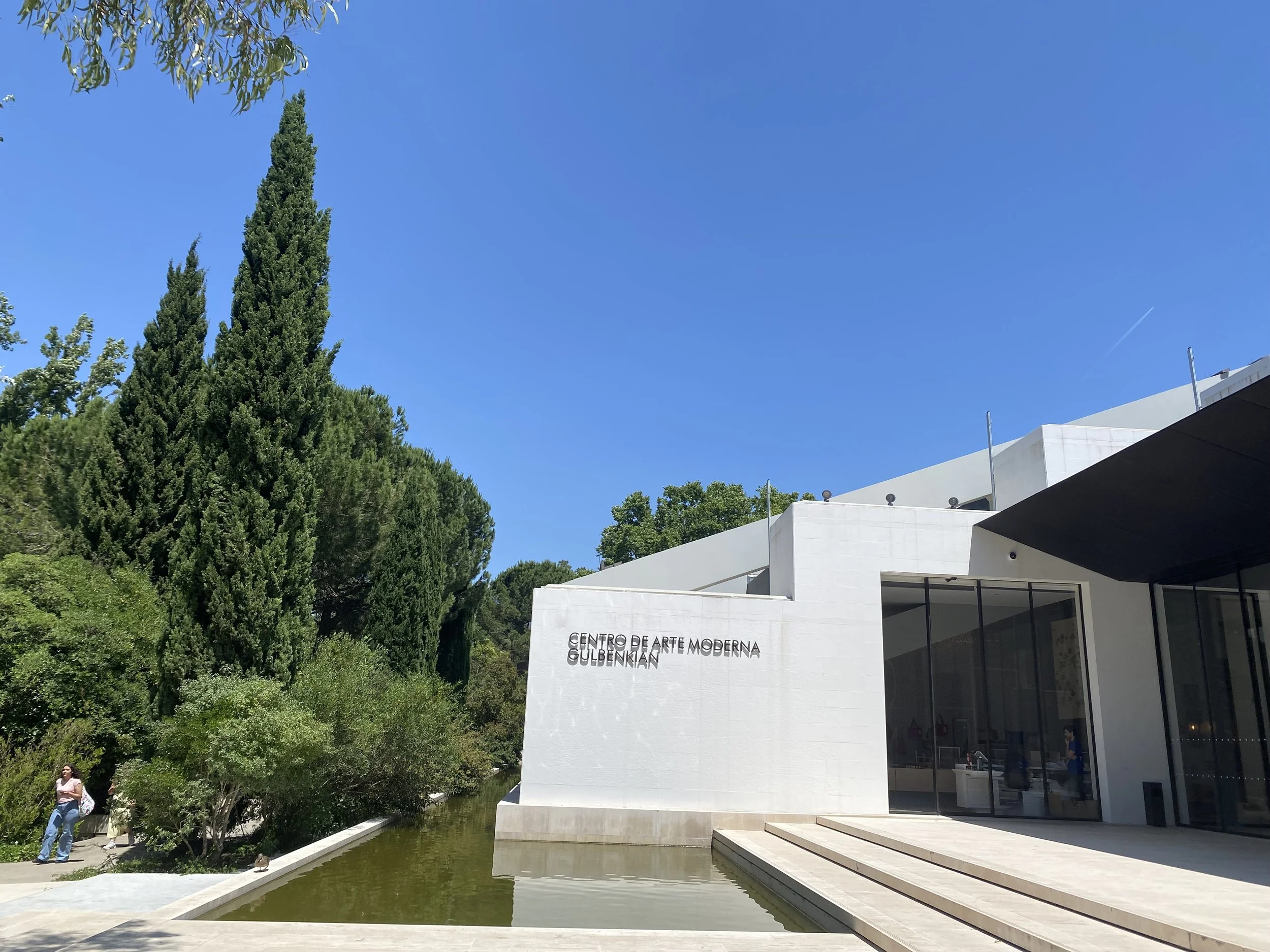
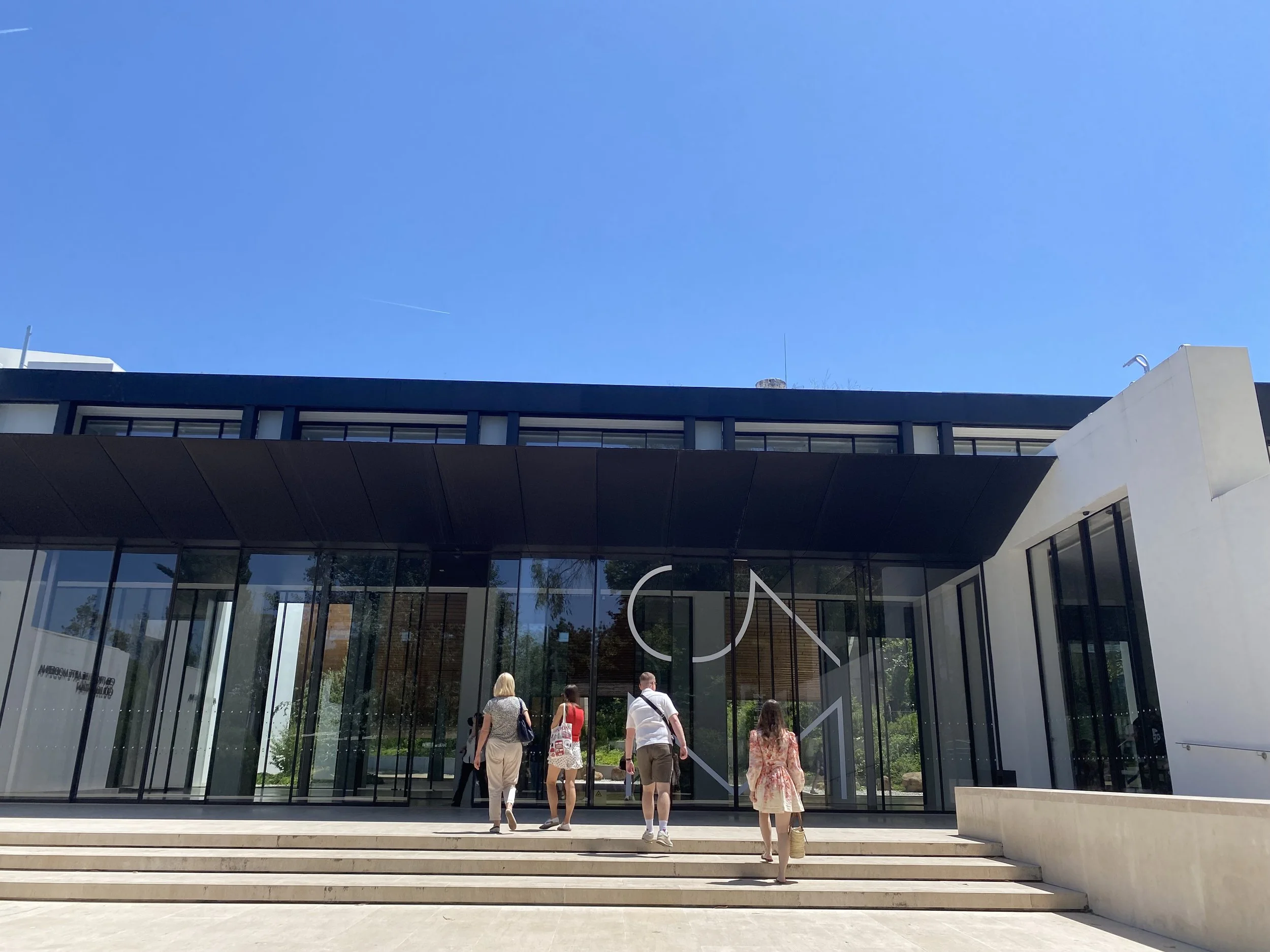
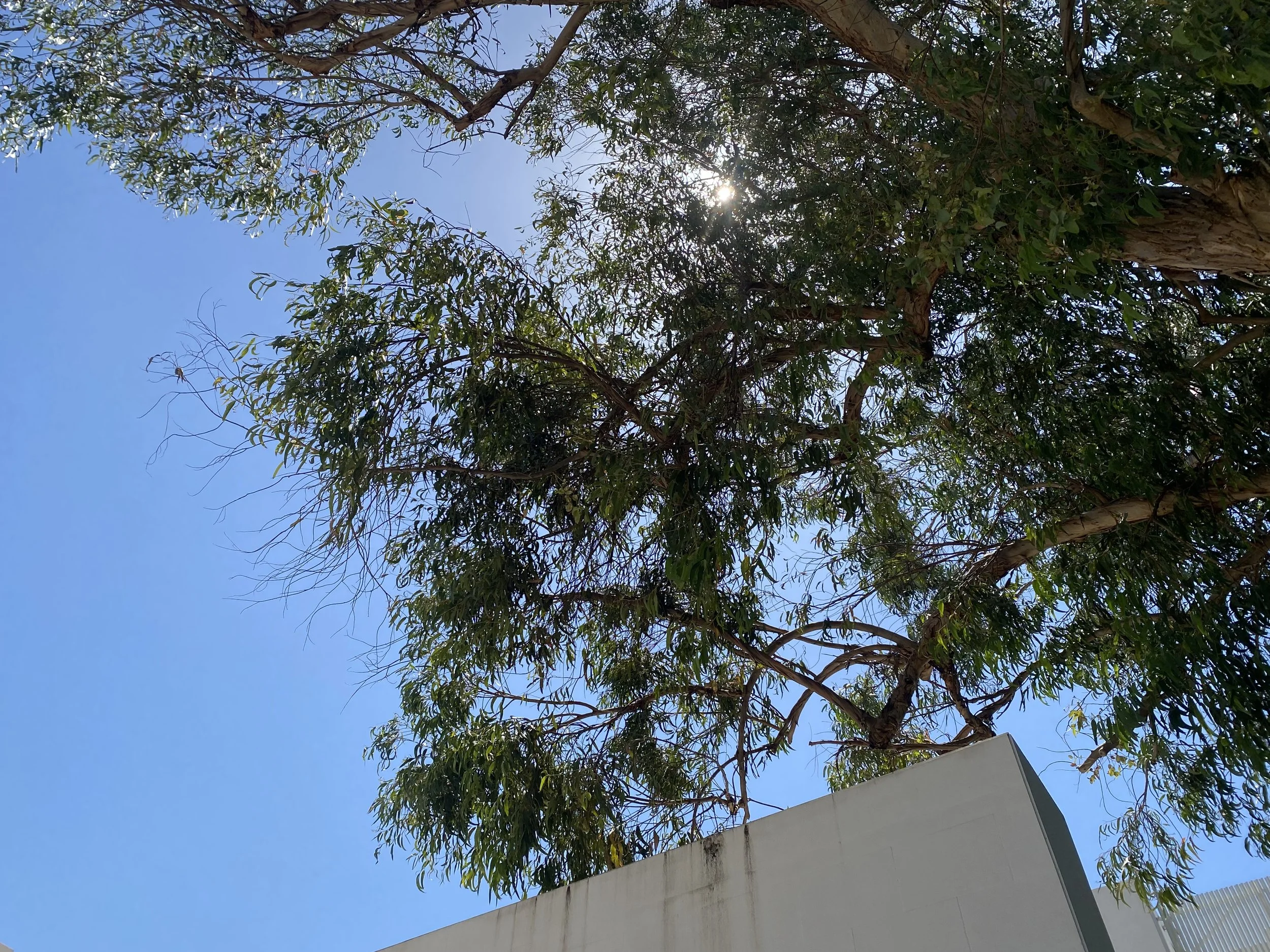
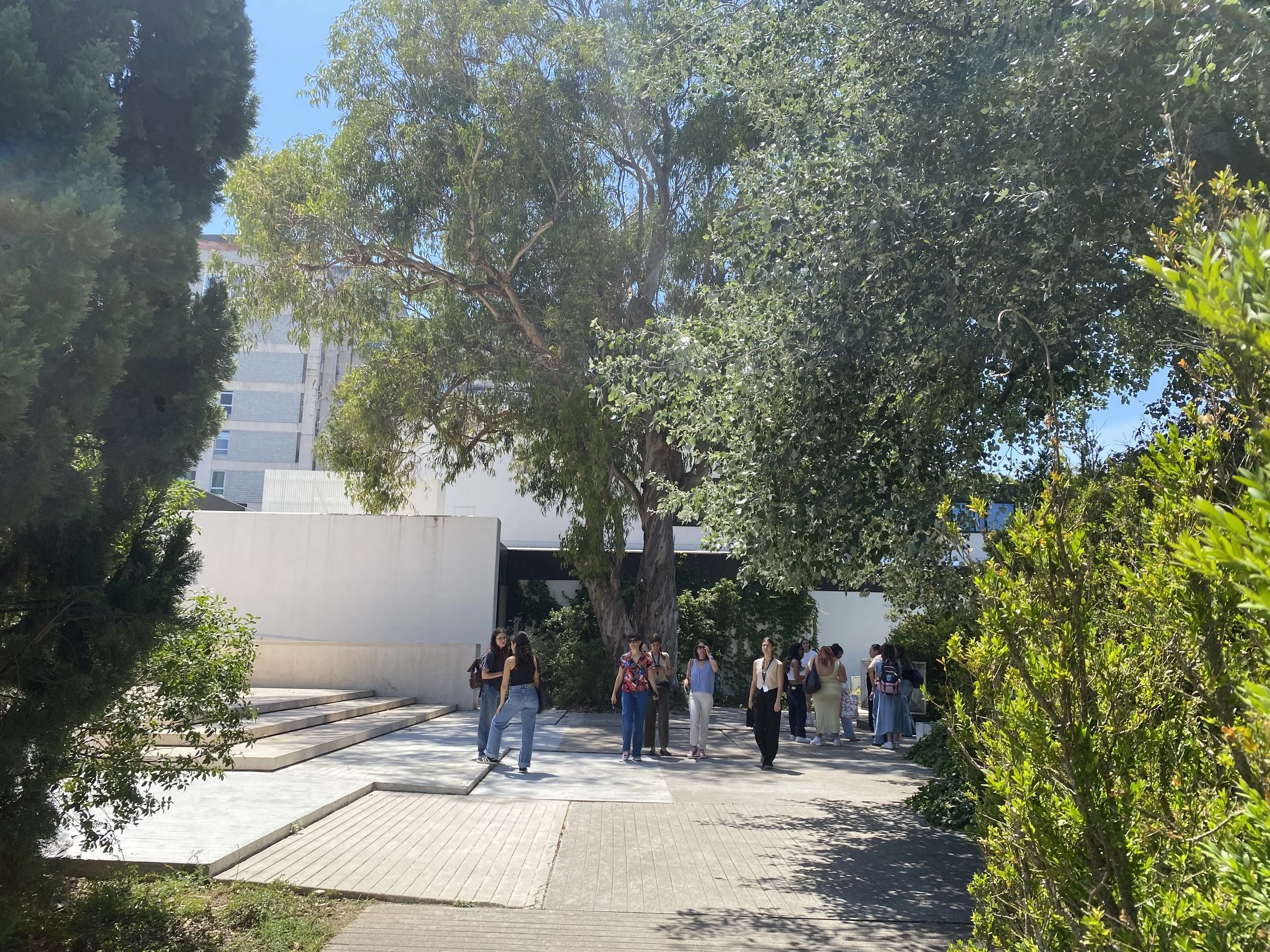
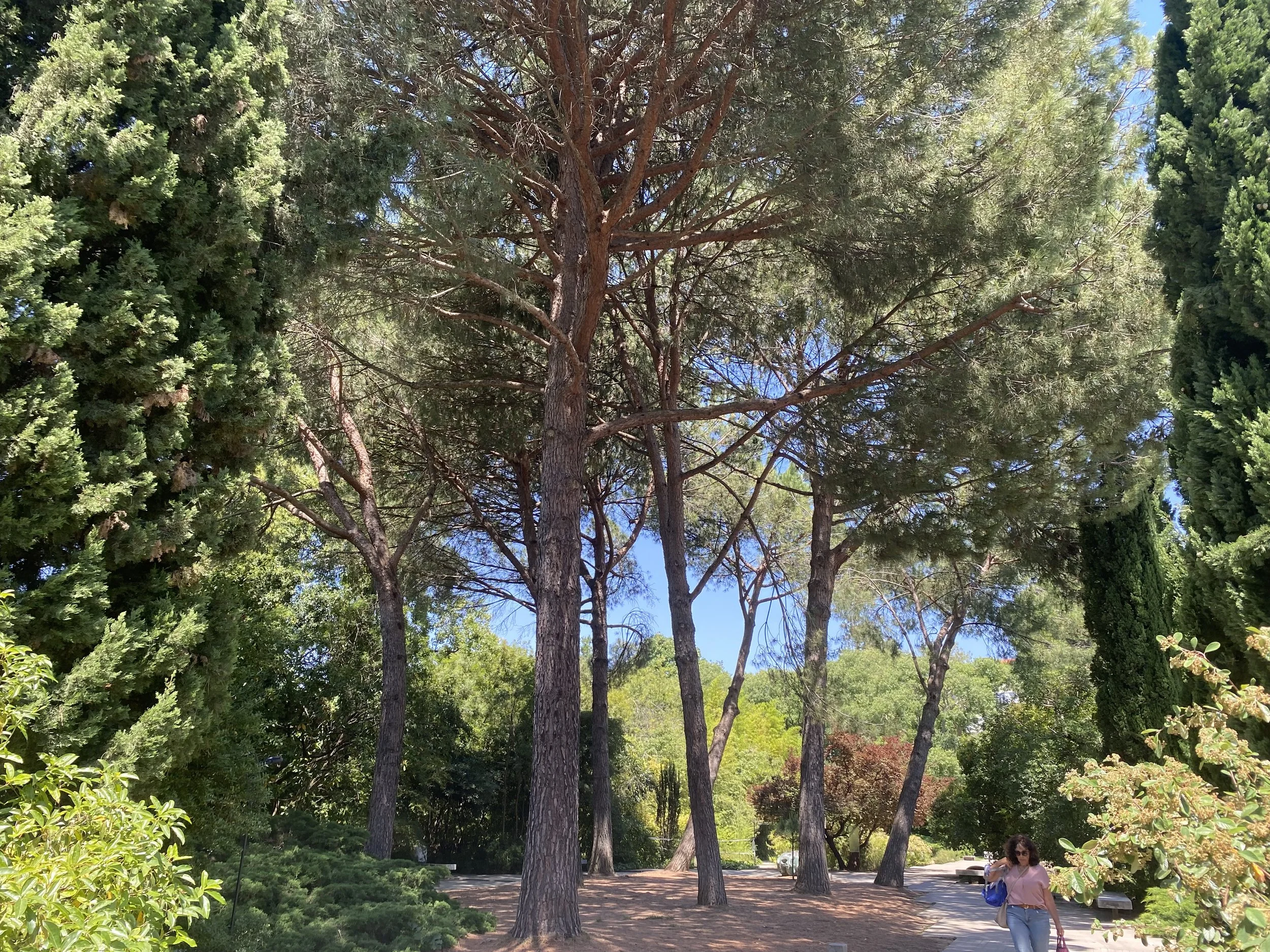
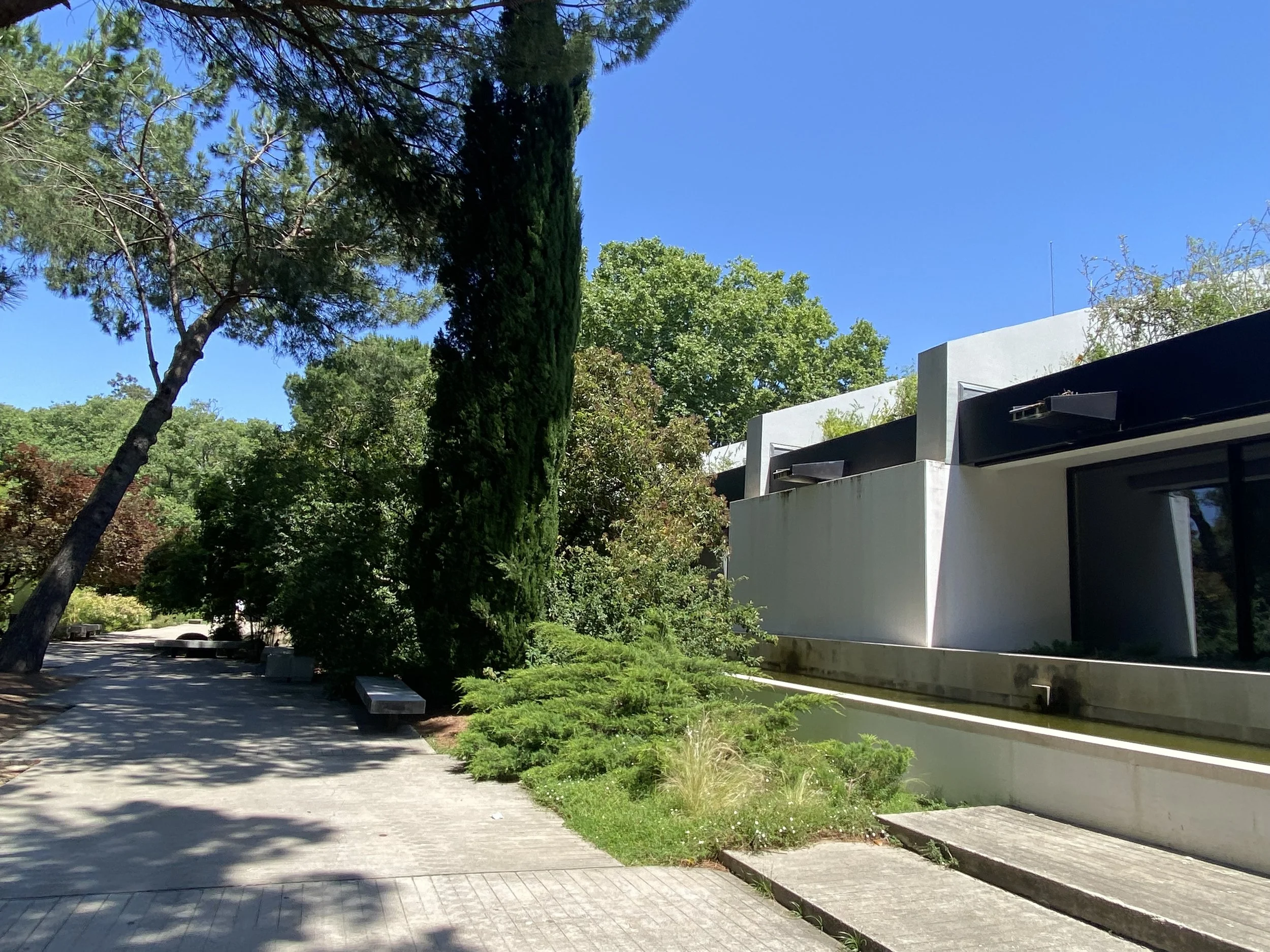
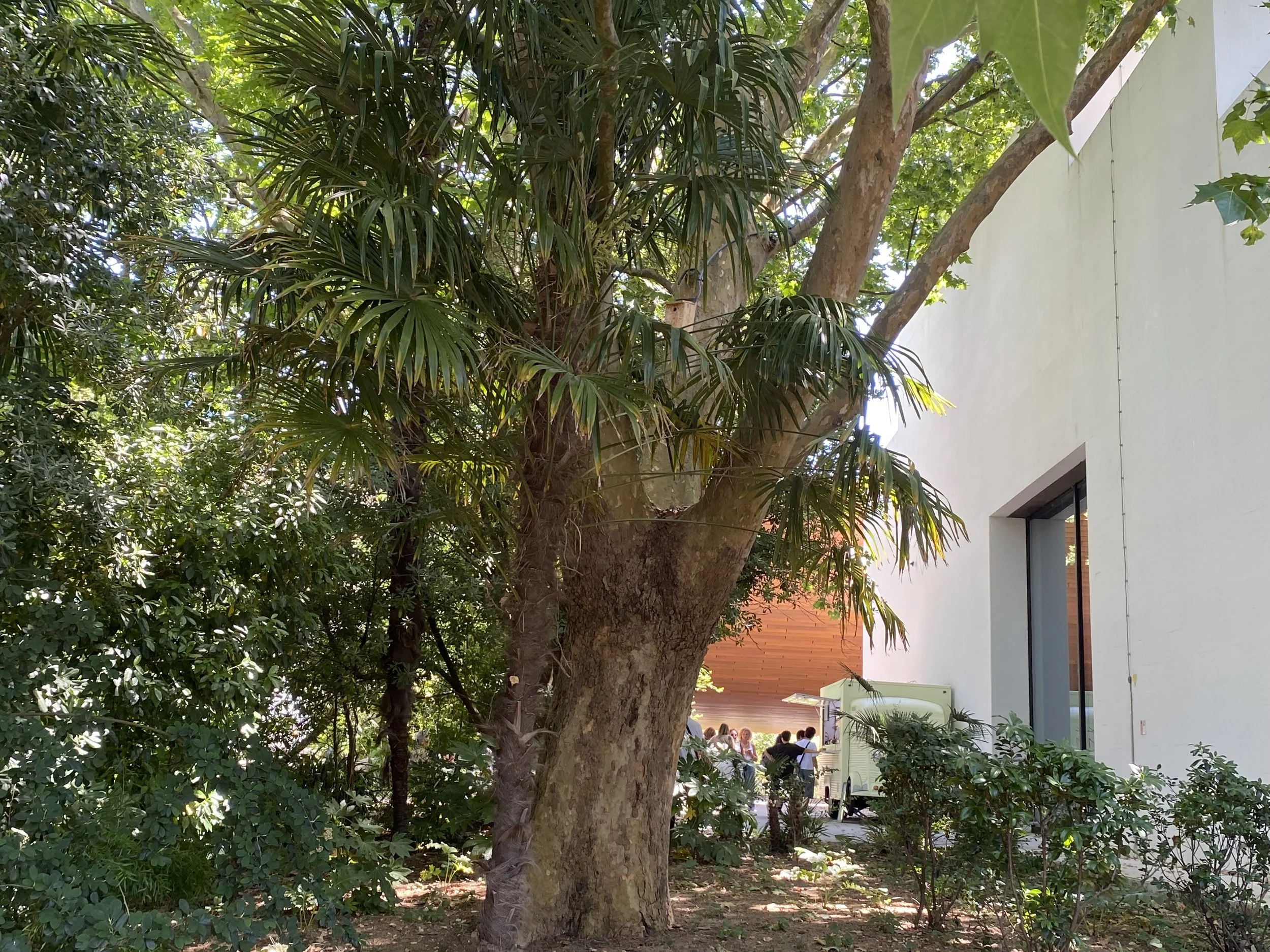
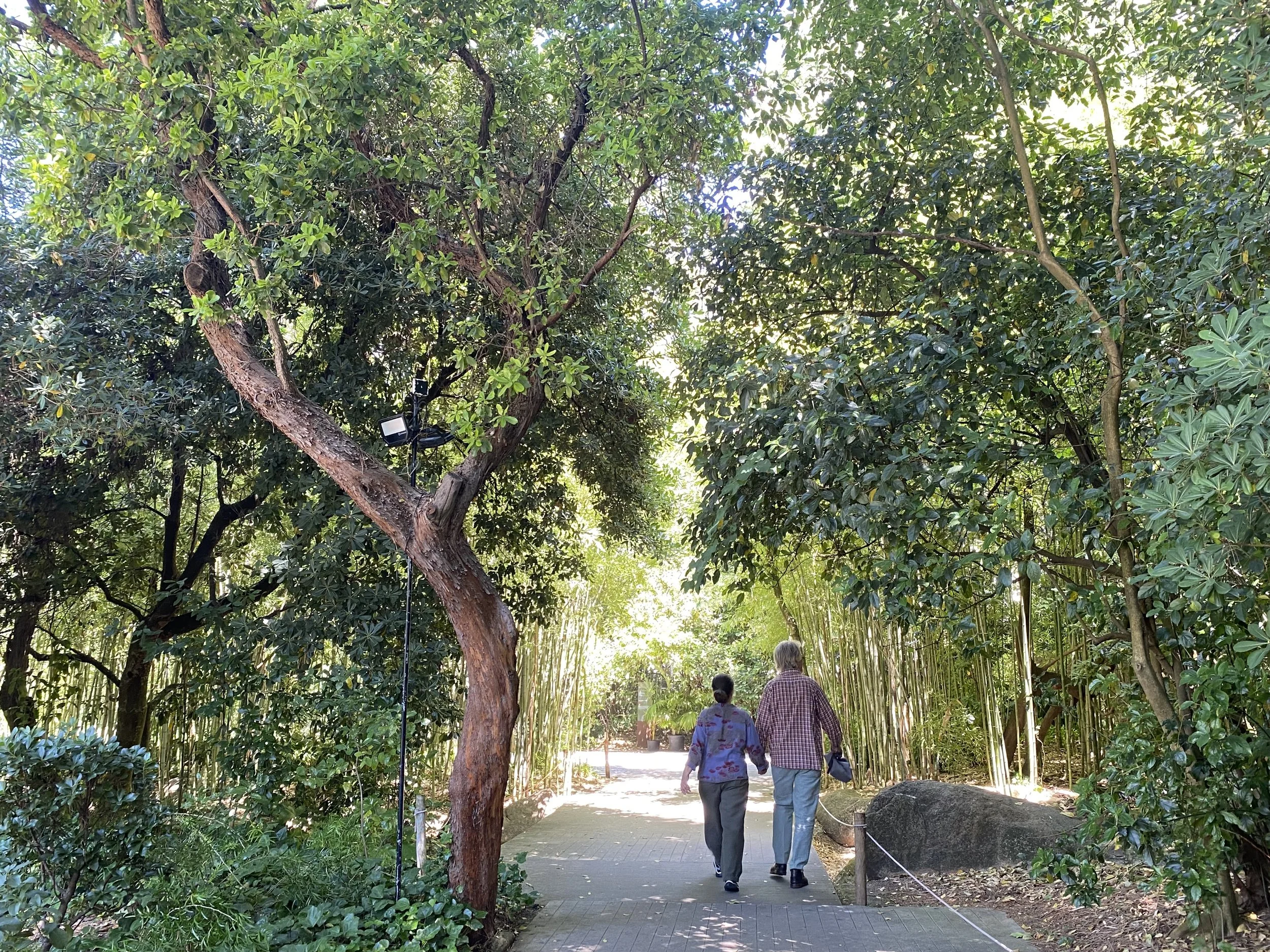
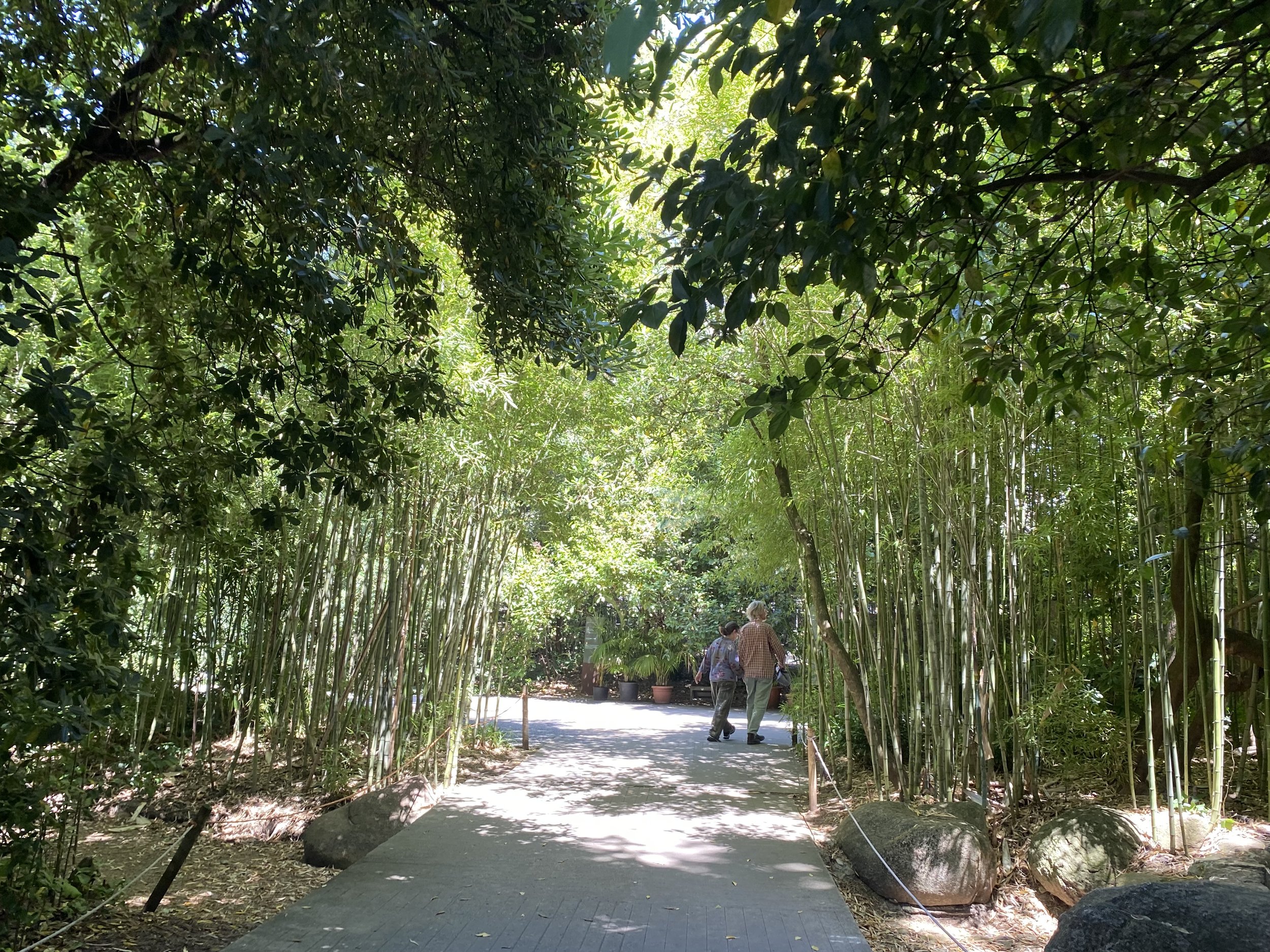
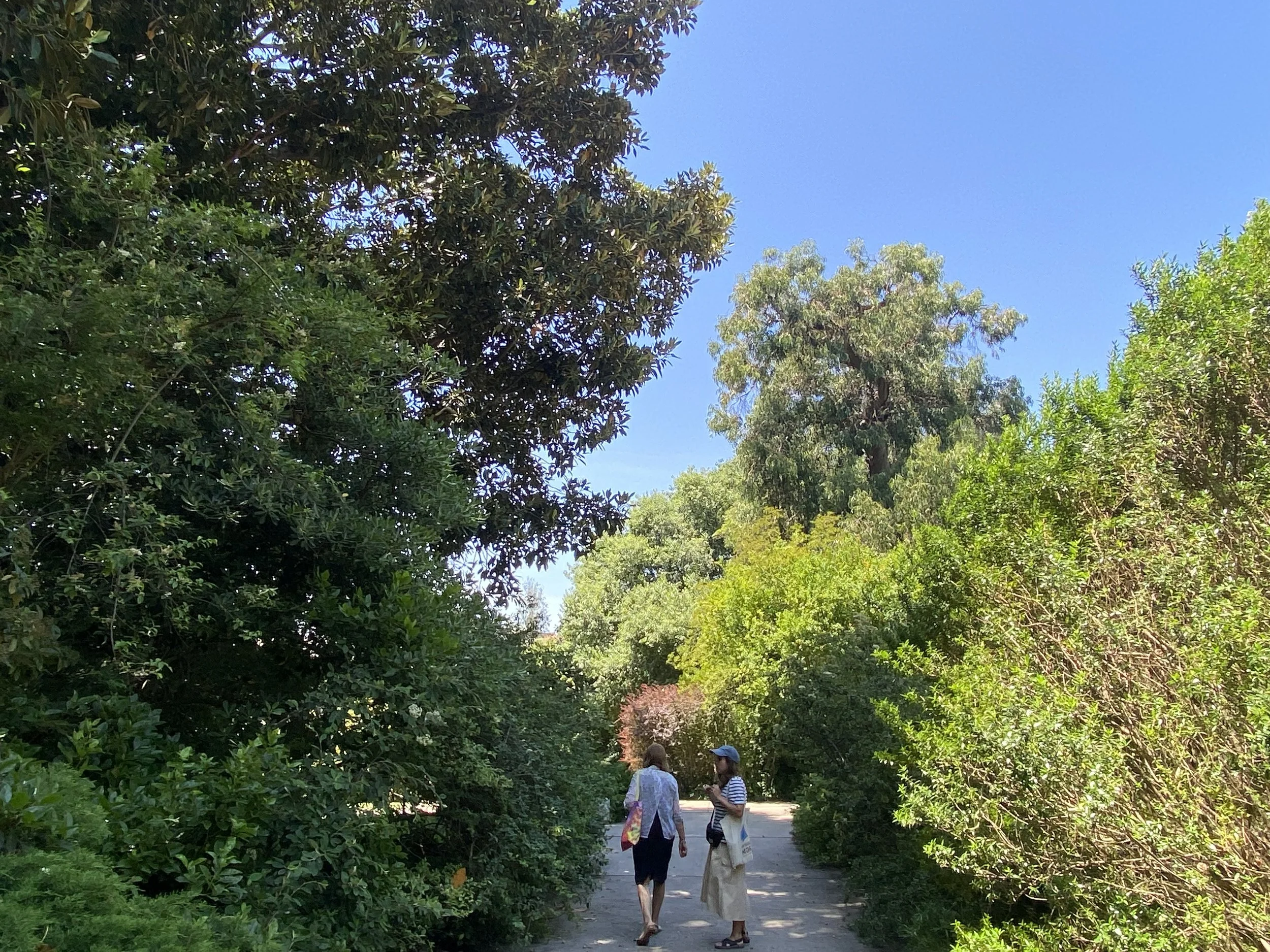
Park & Museums Gulbenkian
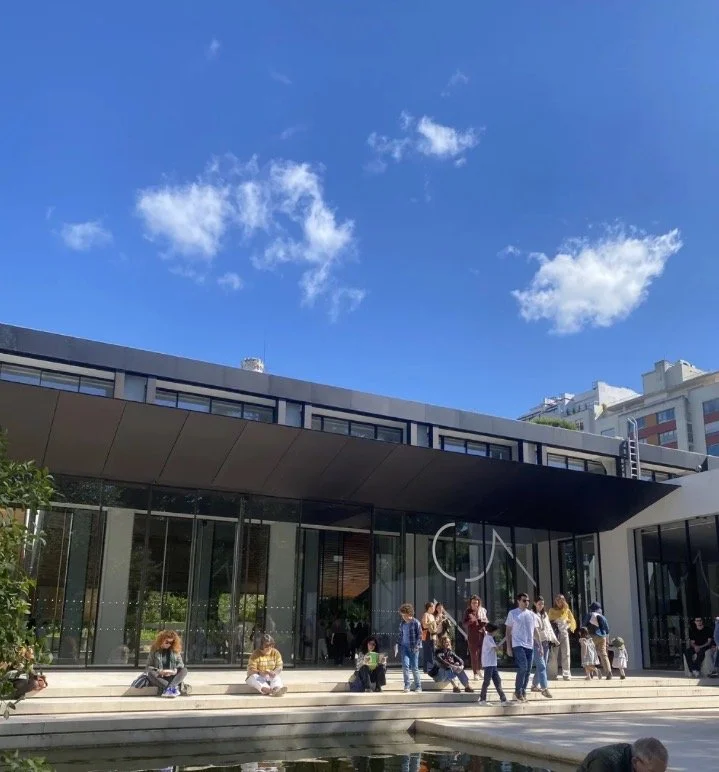
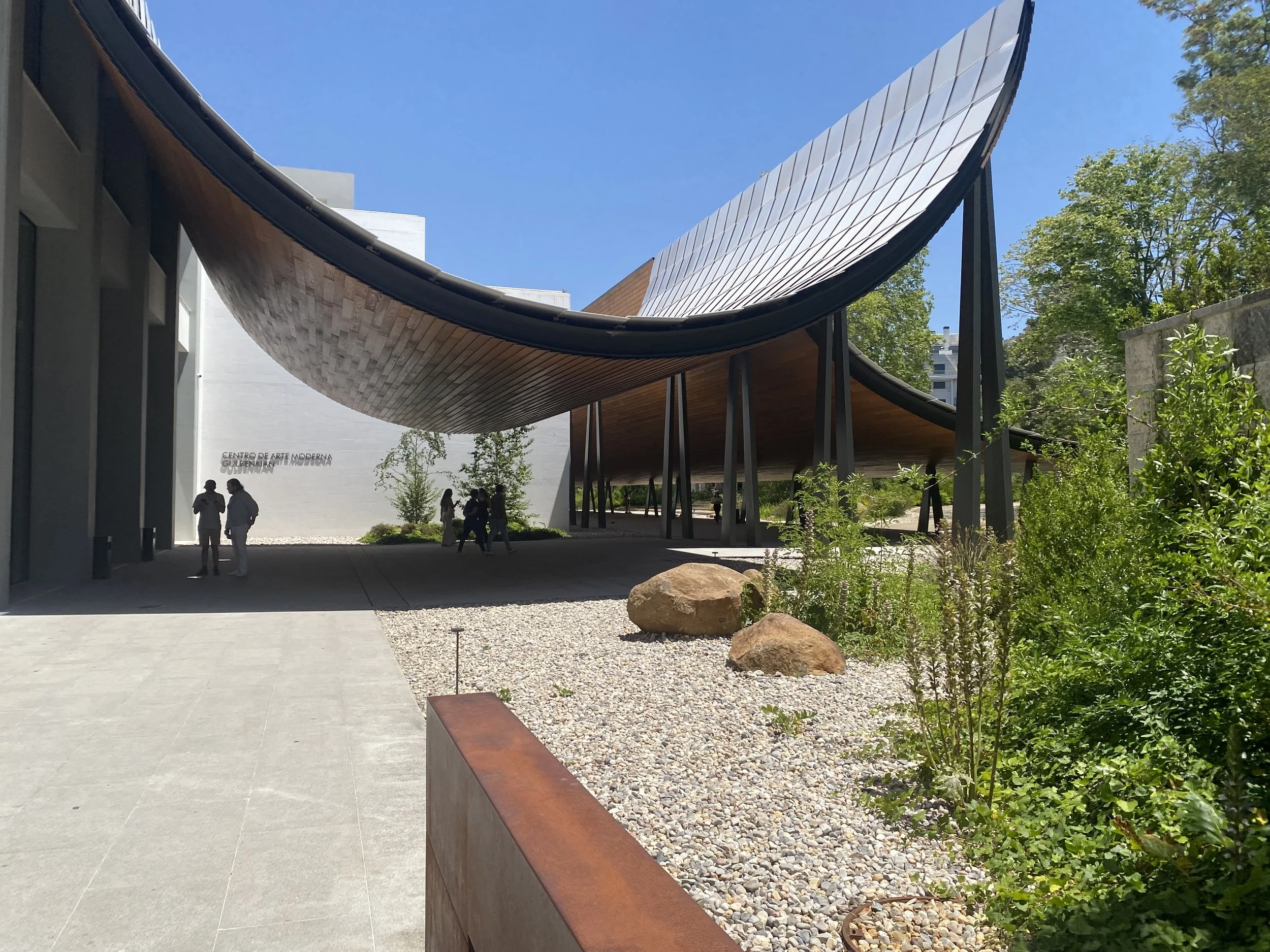
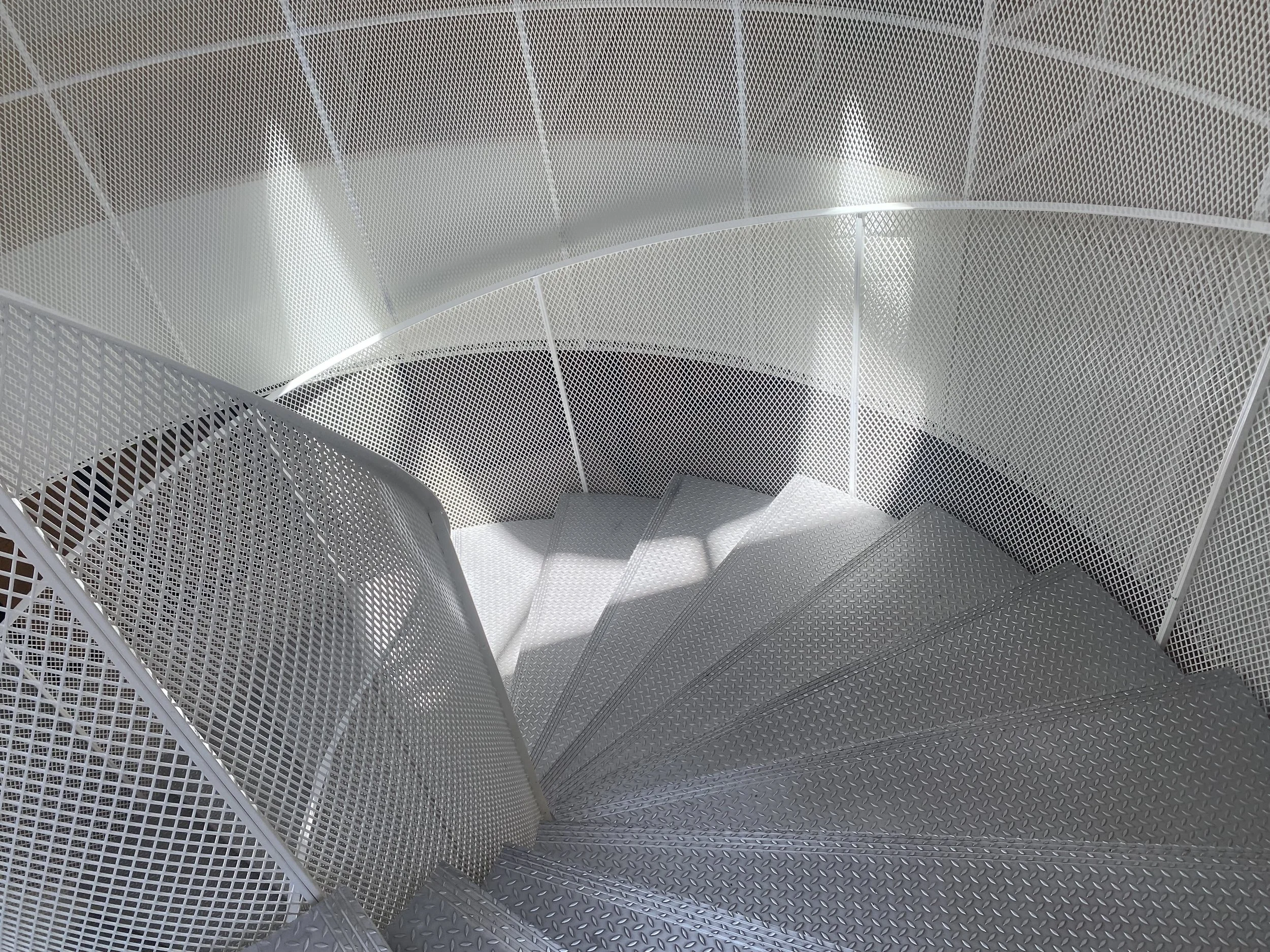
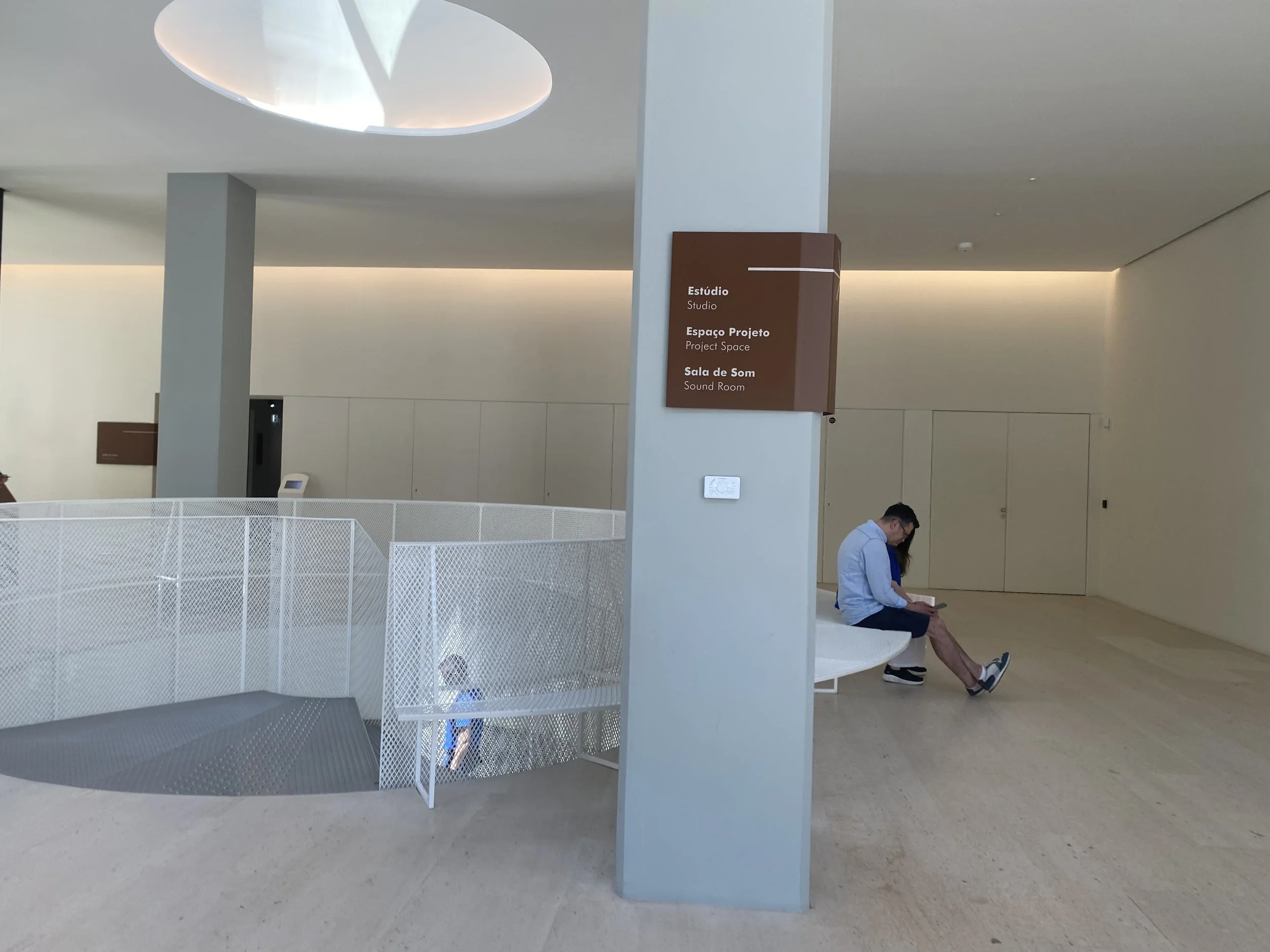
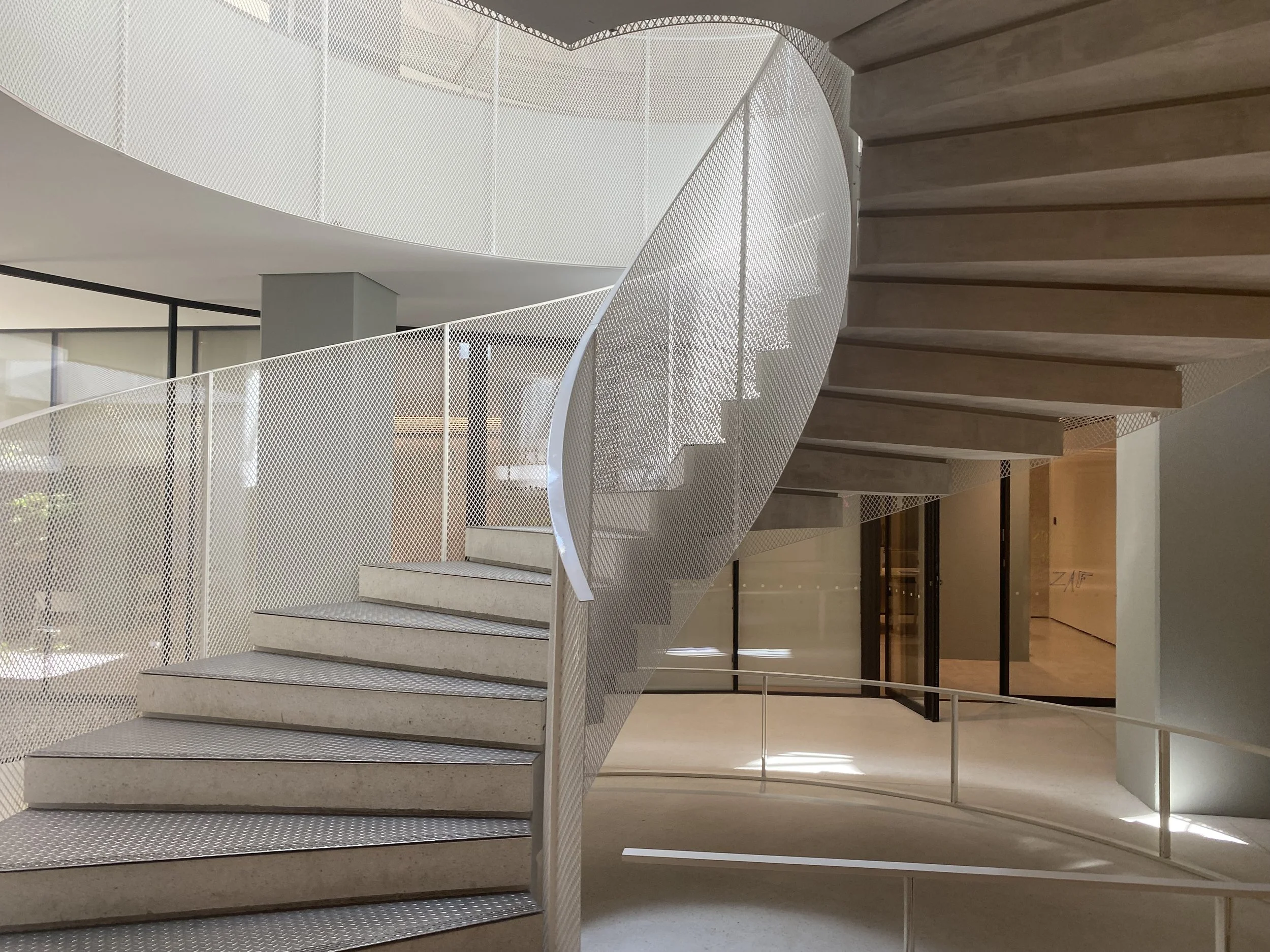
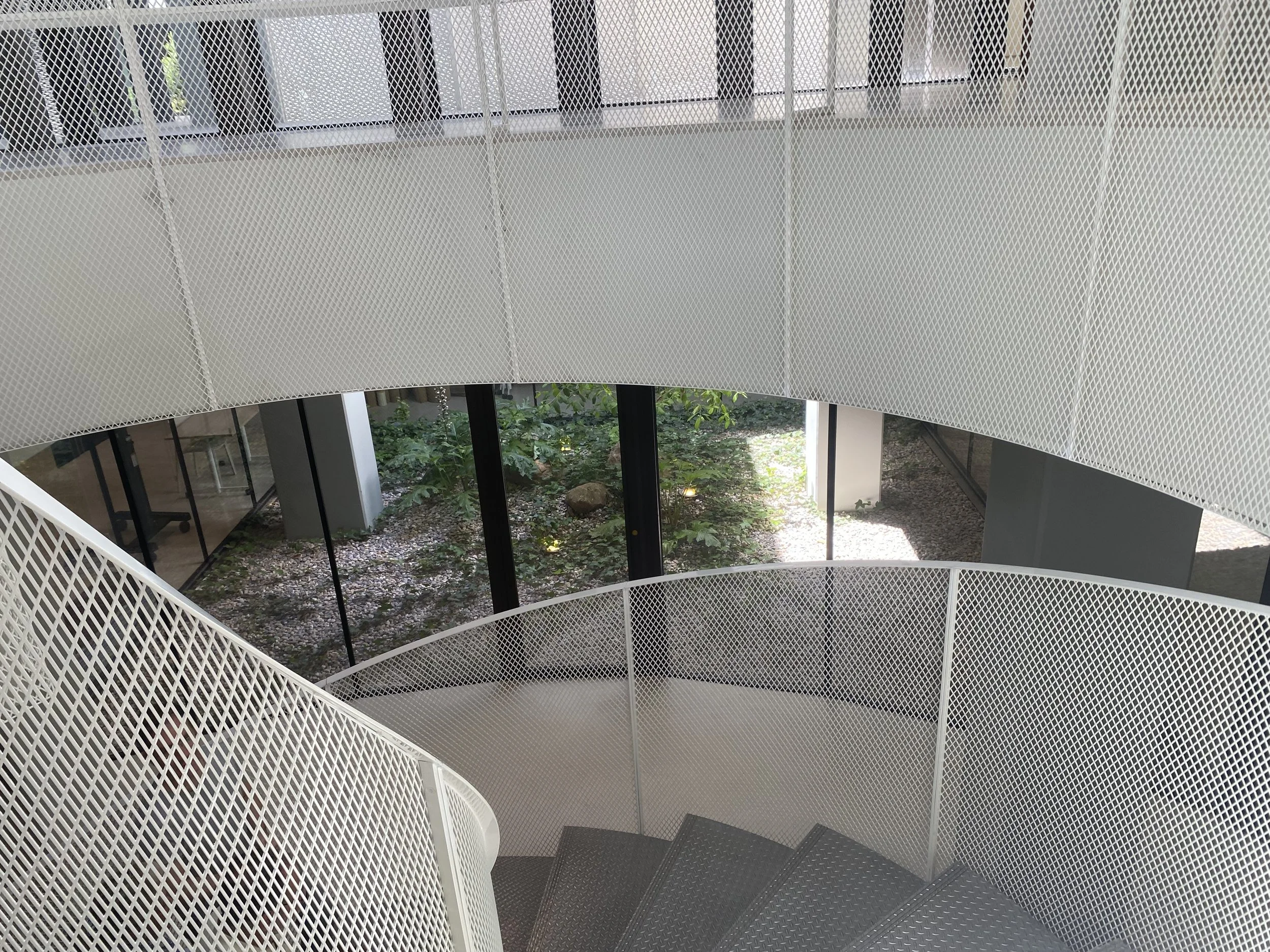
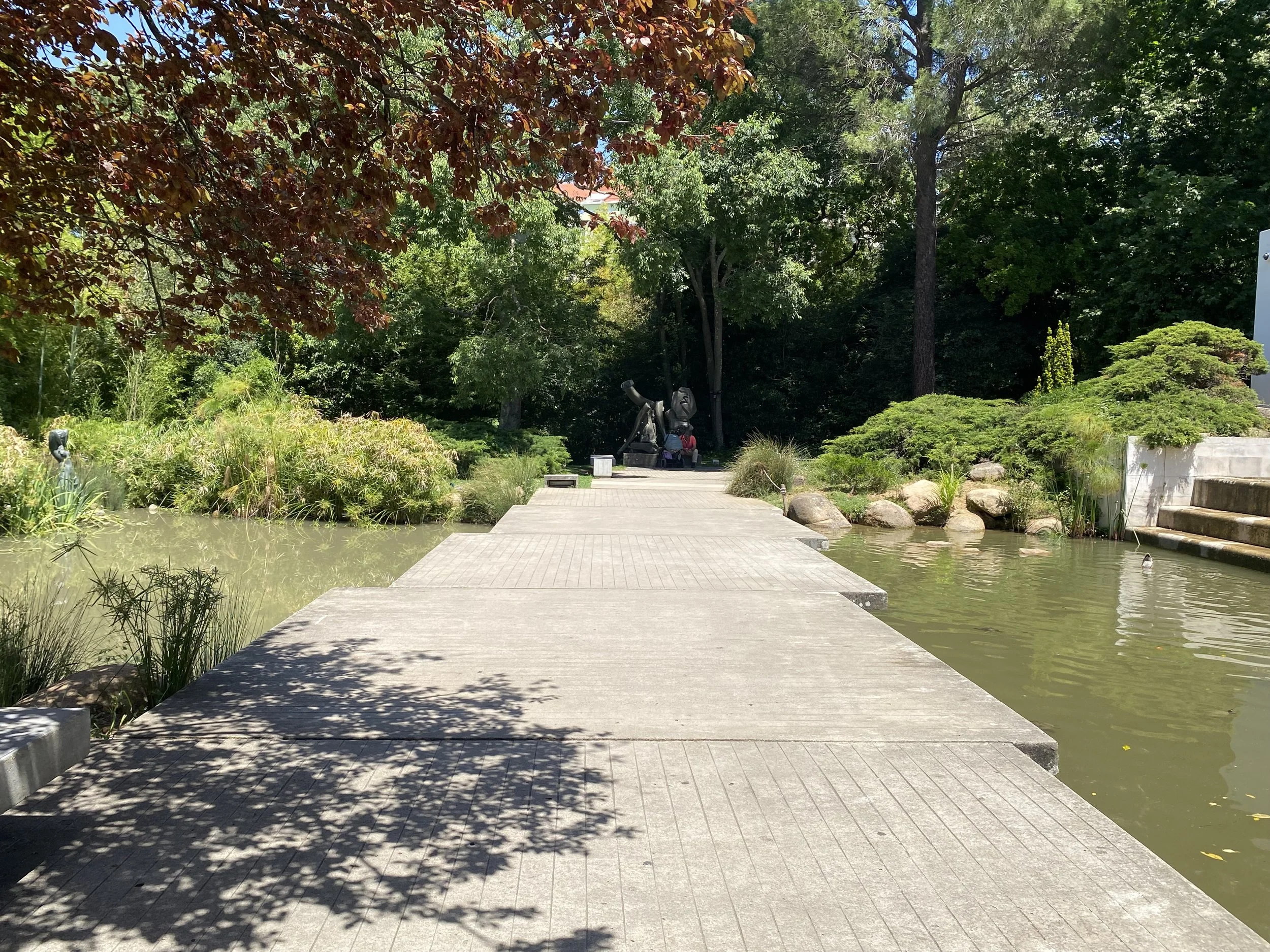
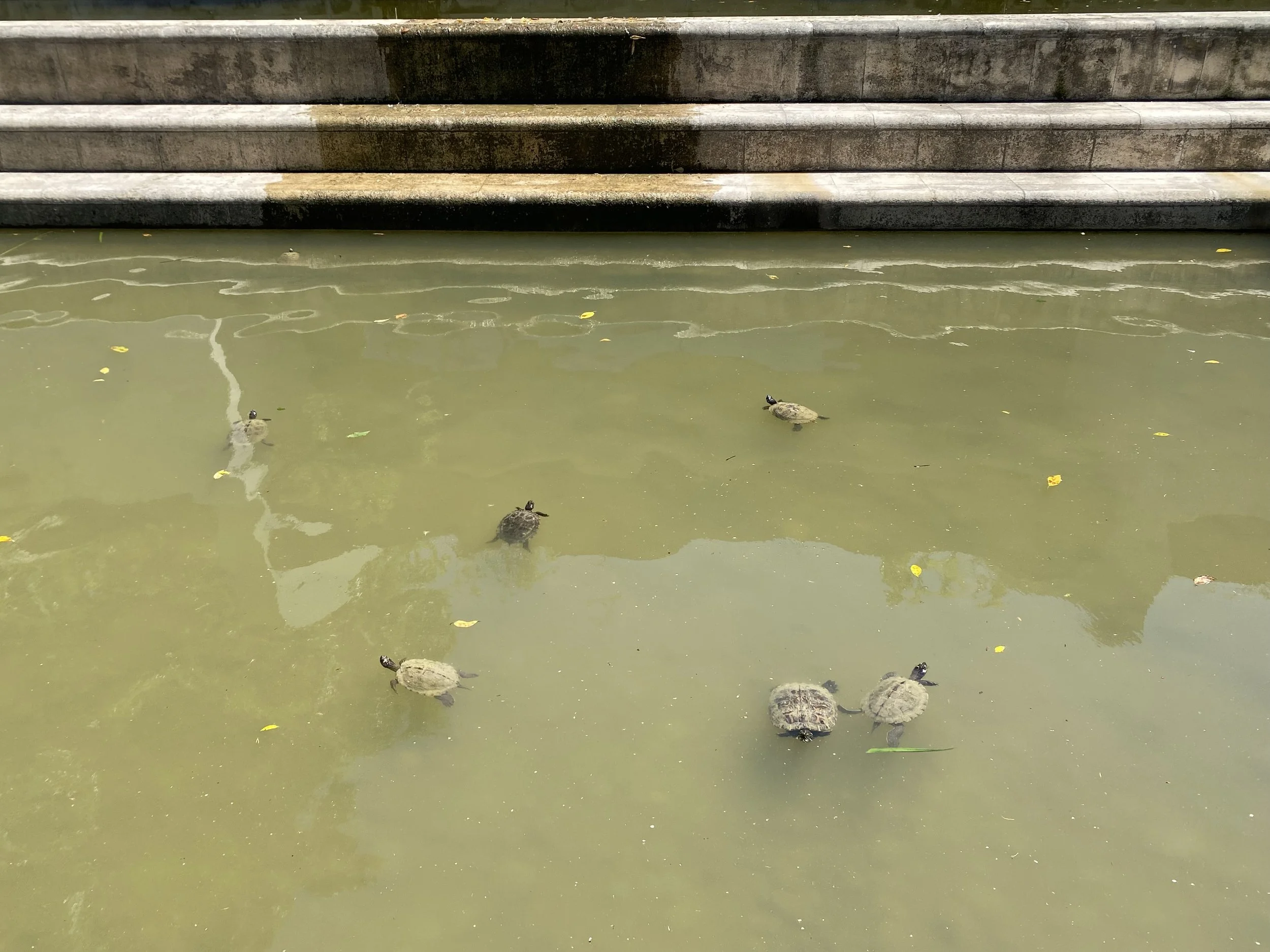
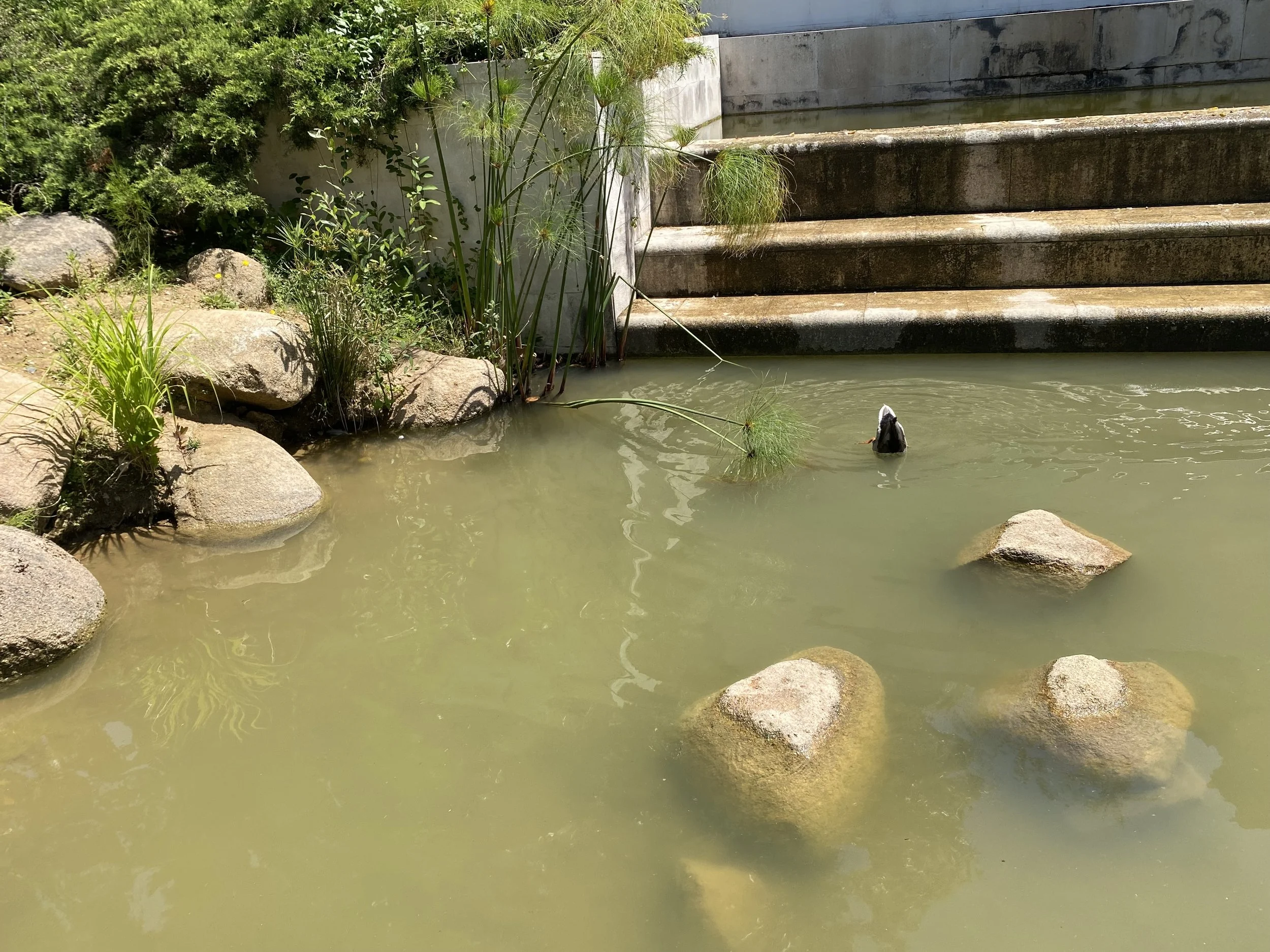
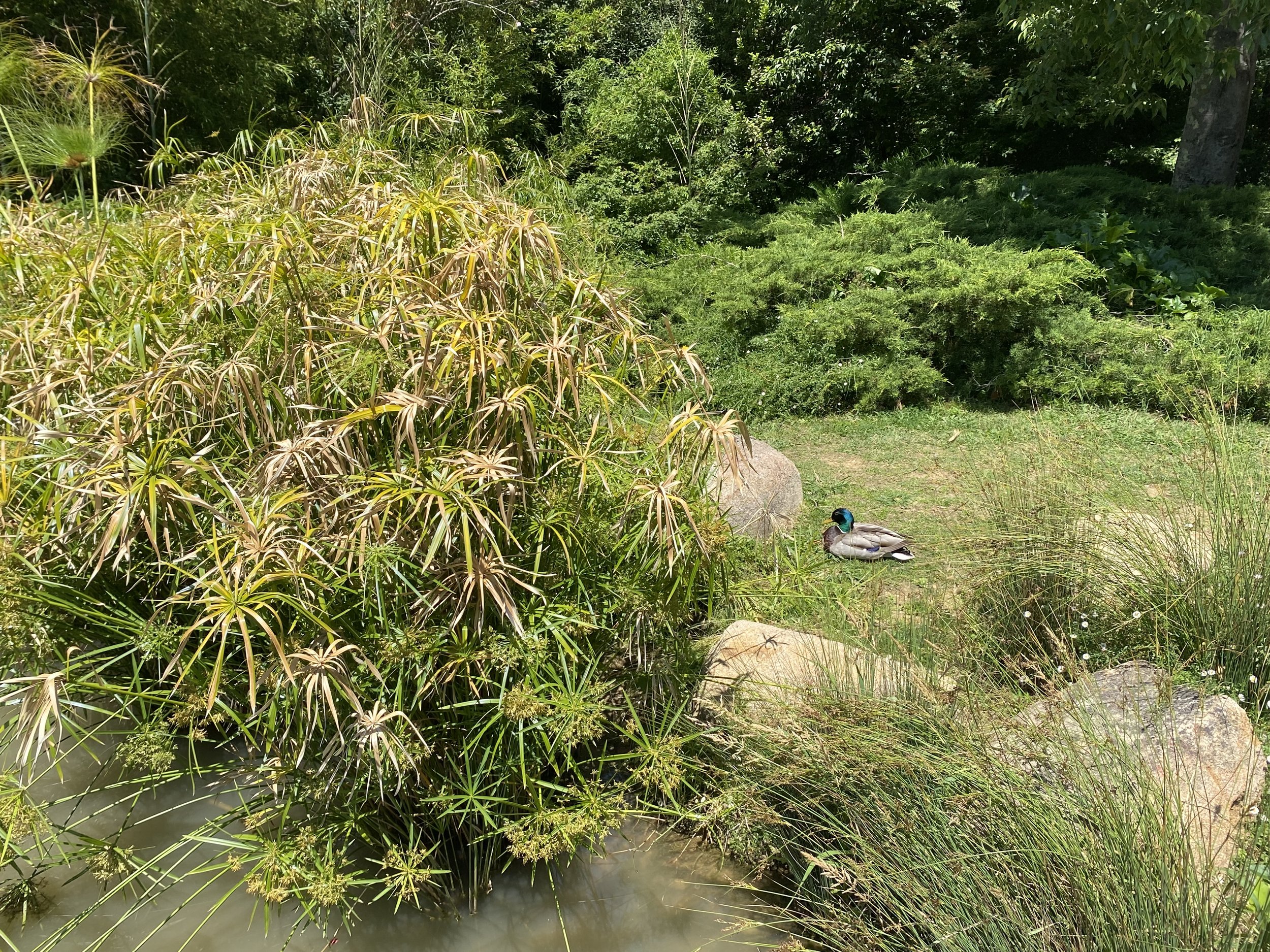
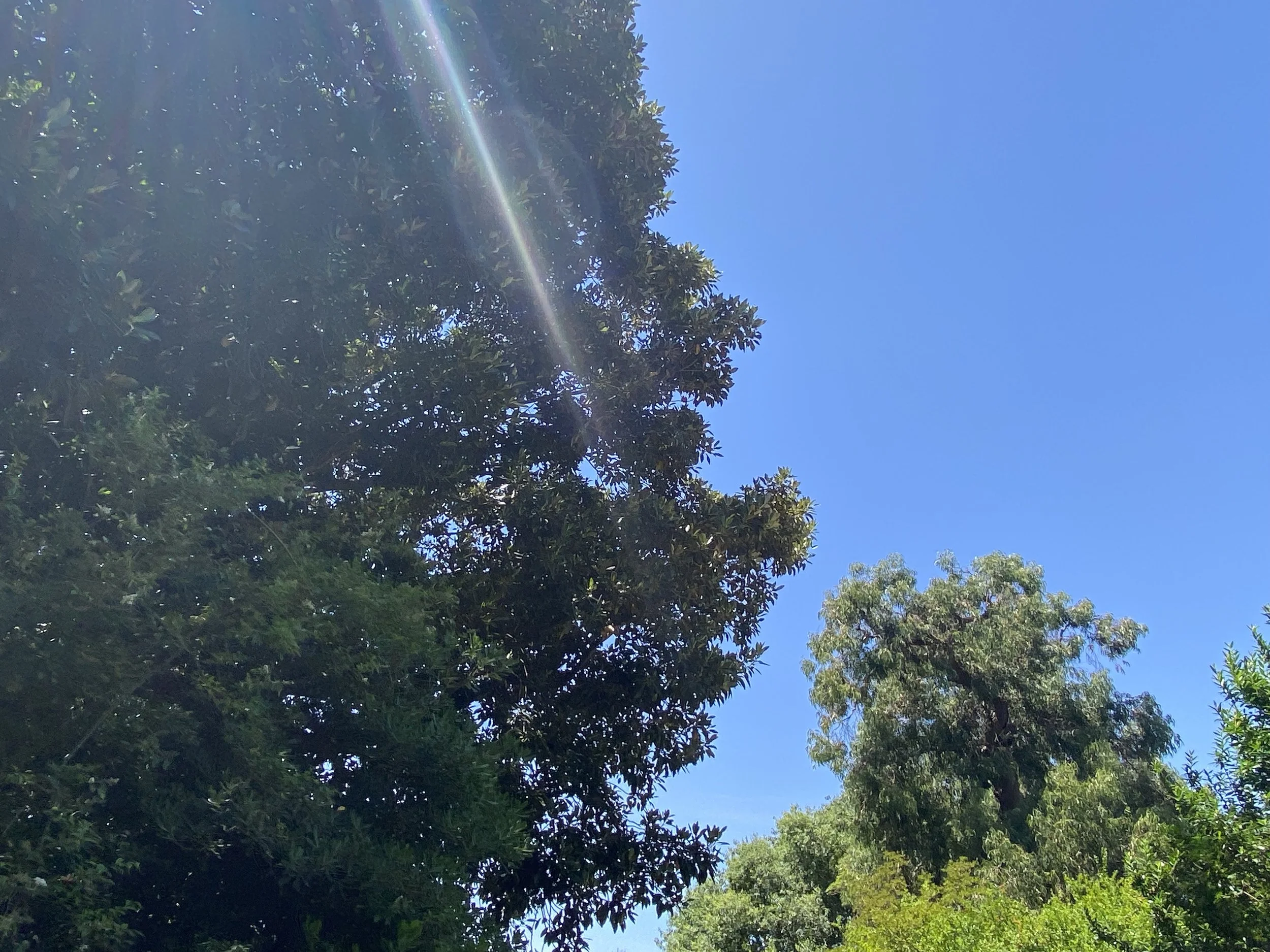
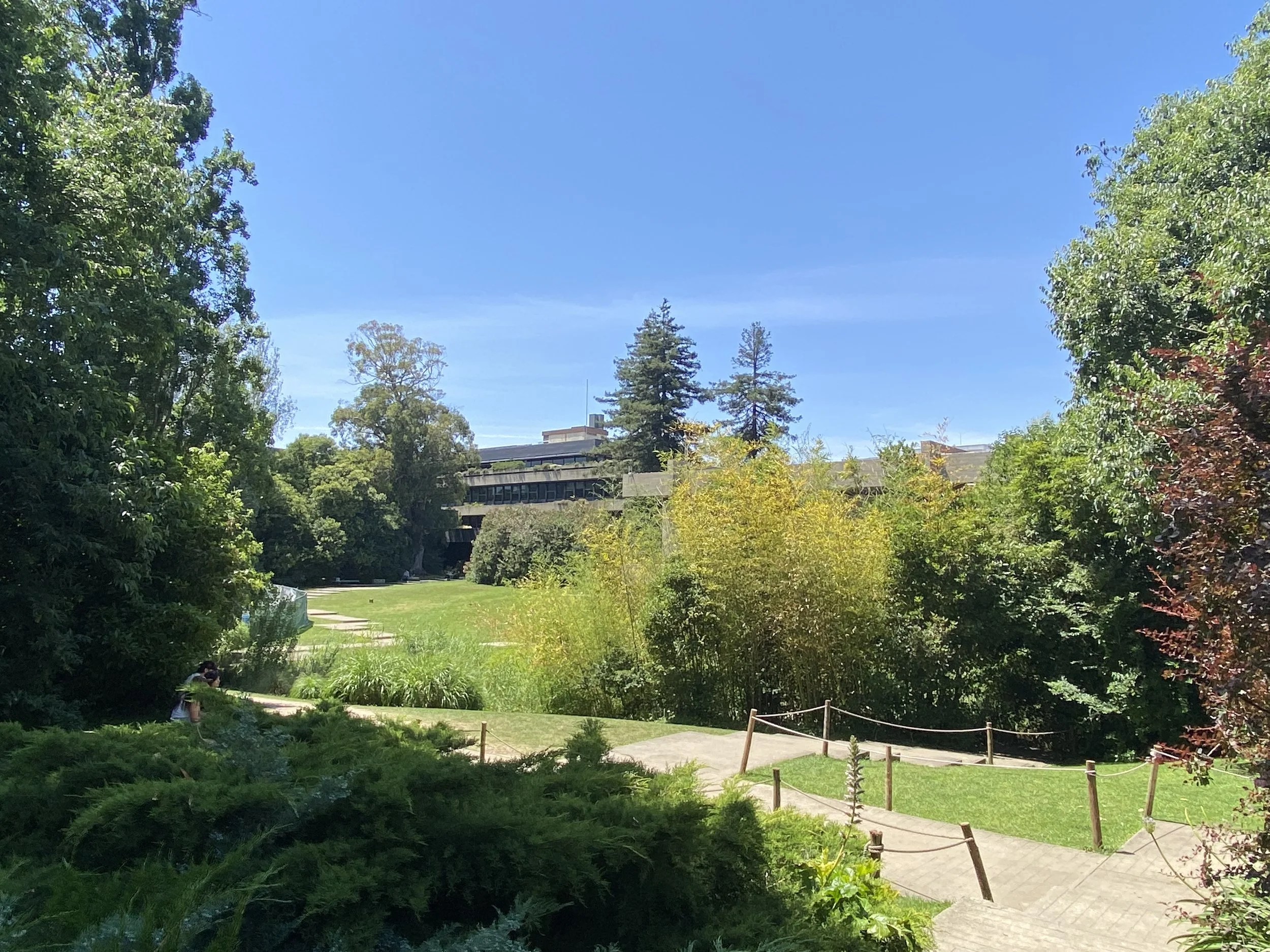
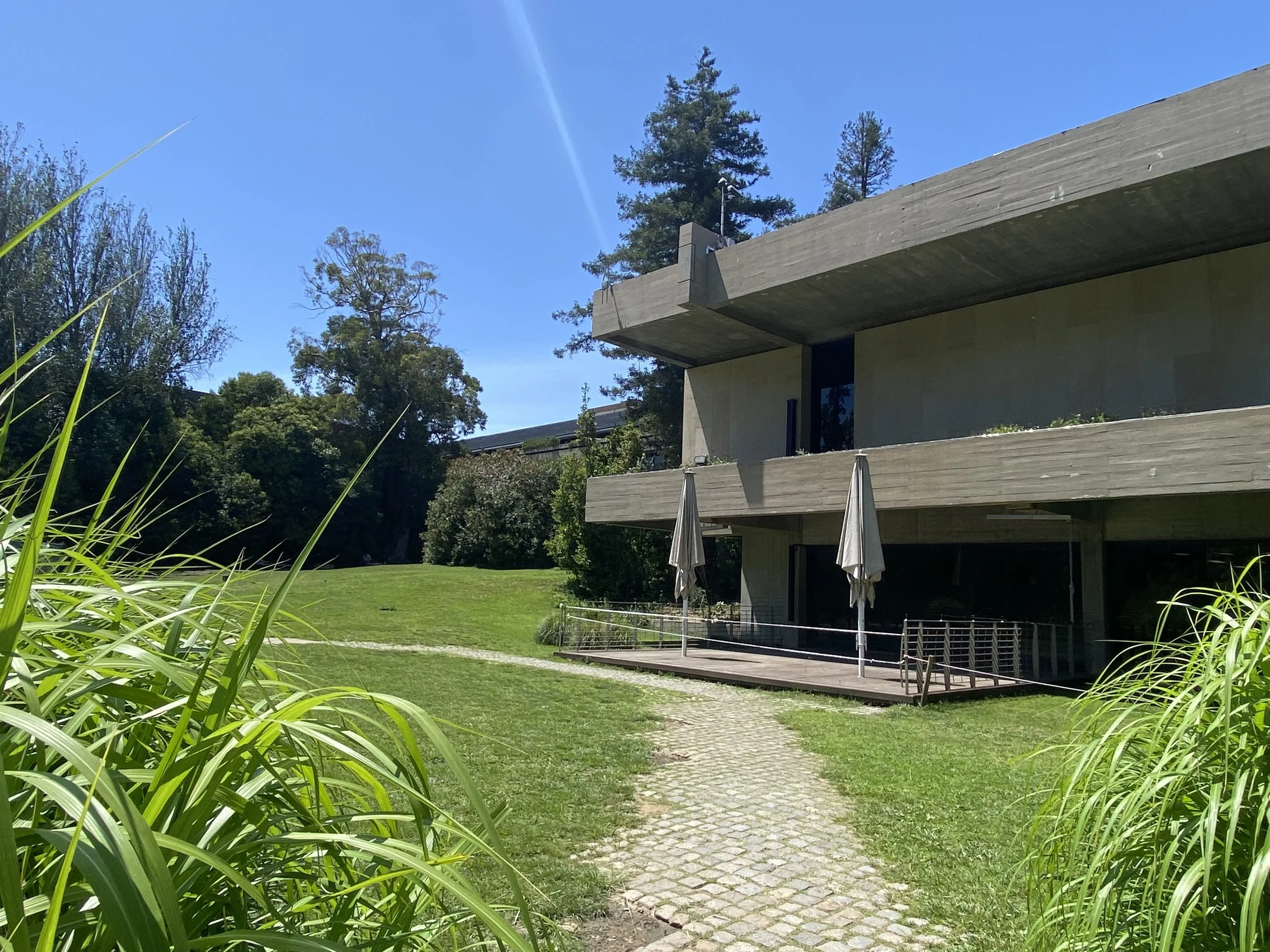
Warning:
The old part of the park (waterfalls, large lake, two cafes located in and àt the original building) are currently under construction.
Let me know if you still like to see it in the morning and Sunday tour, or whether we shall stay in the by nature of à construction site quiet parts of the park, the laat year finished new part of the park and CAM (Modern Museum of Gulbenkian).
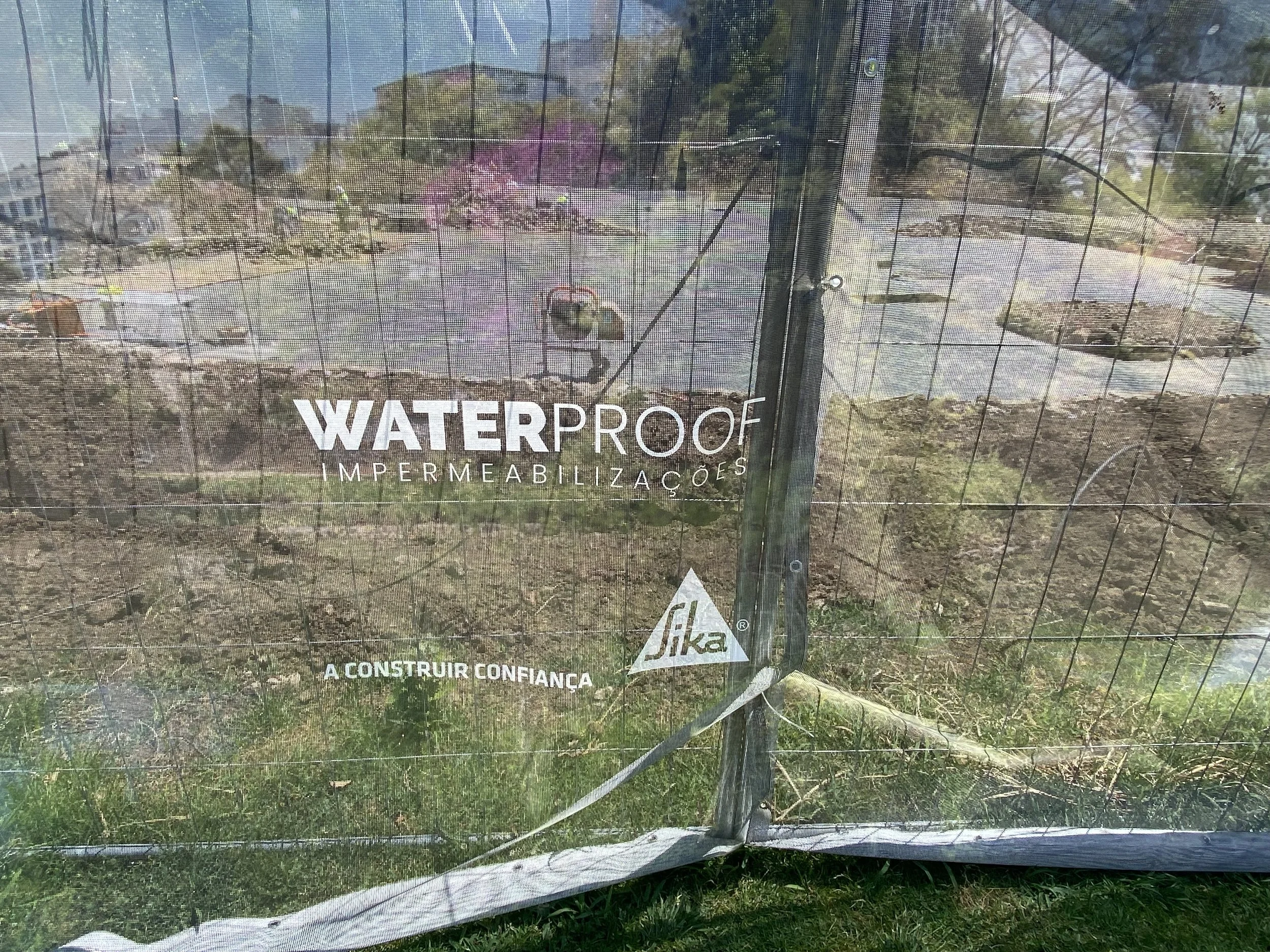
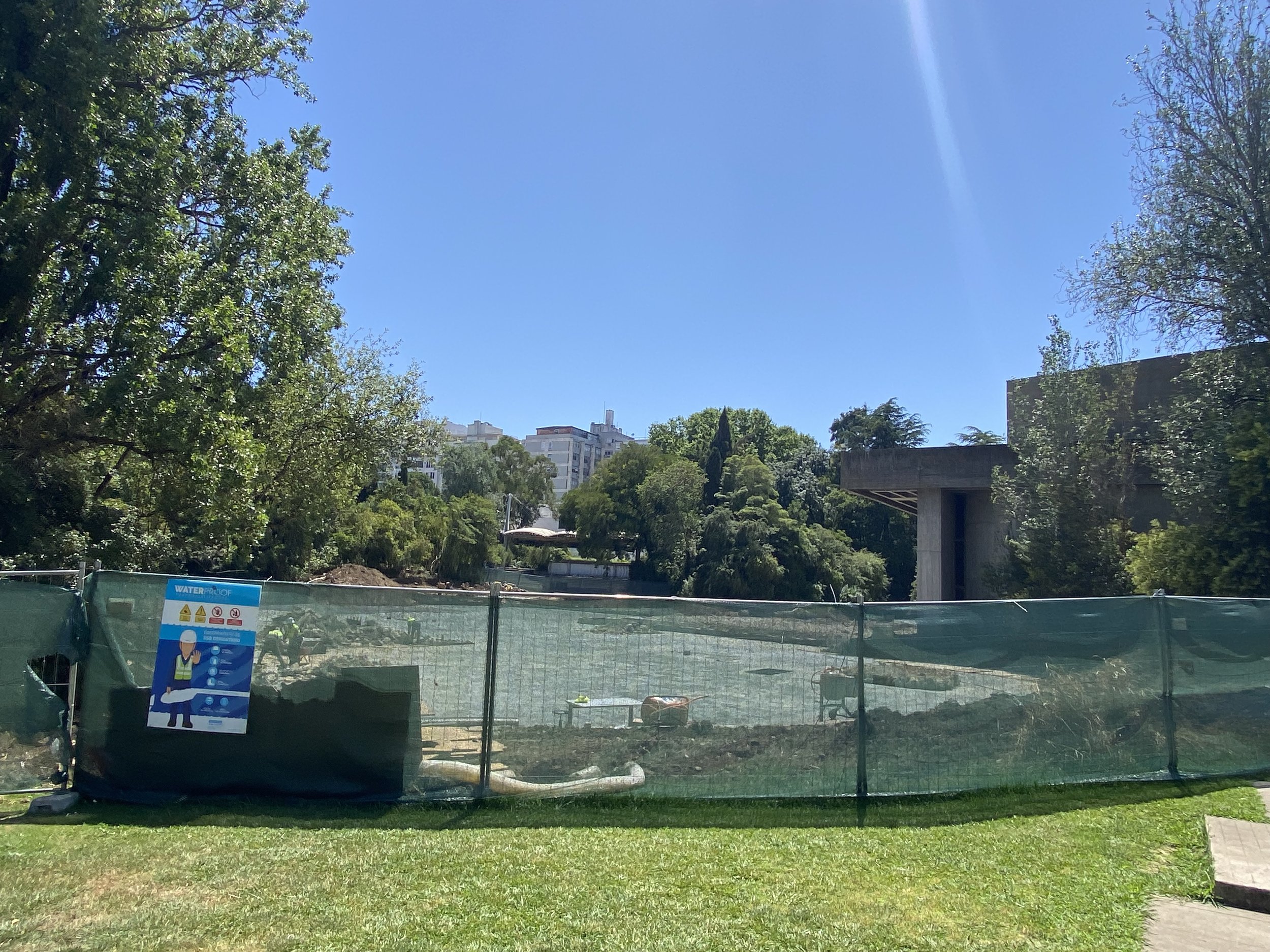
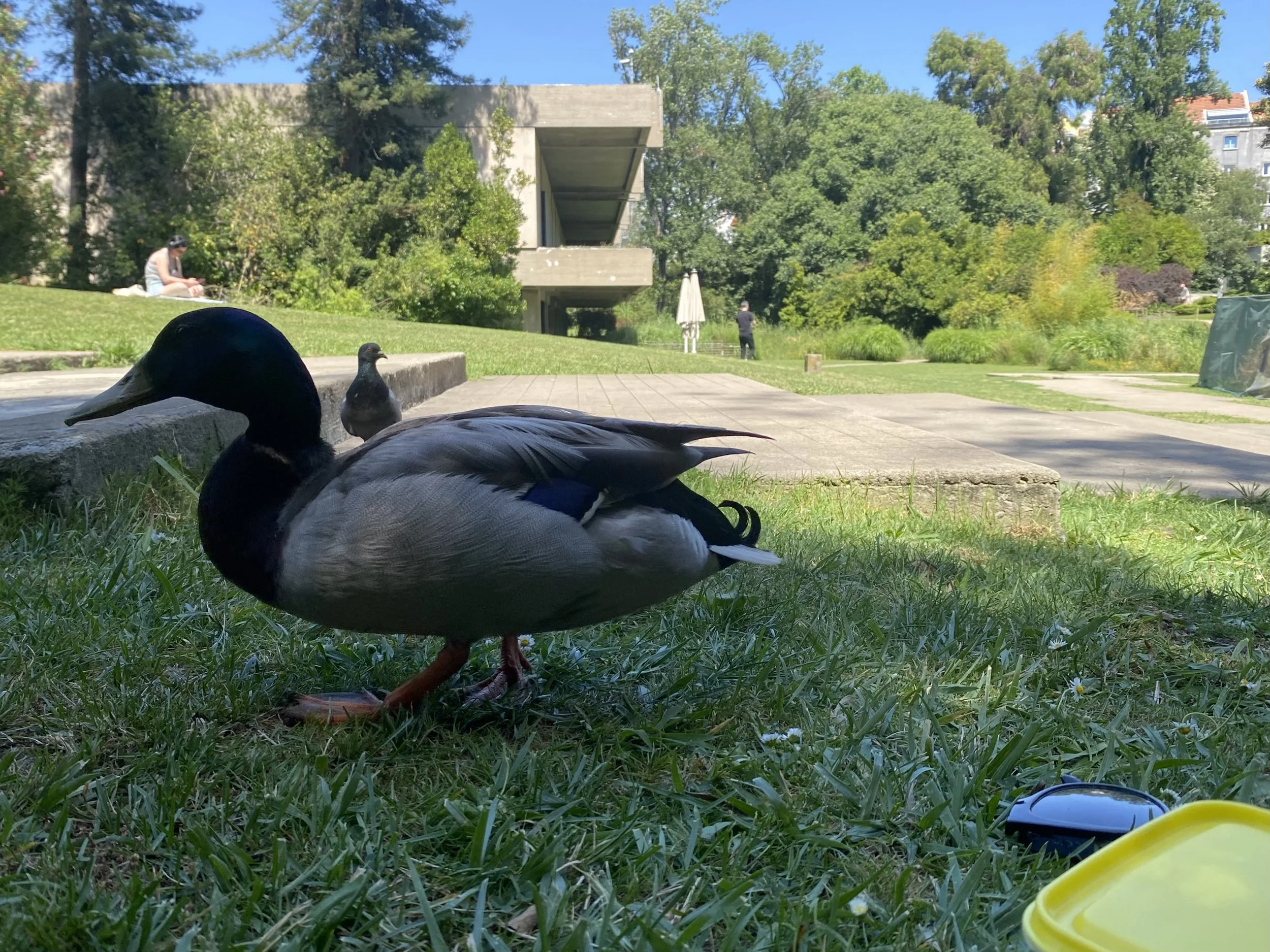
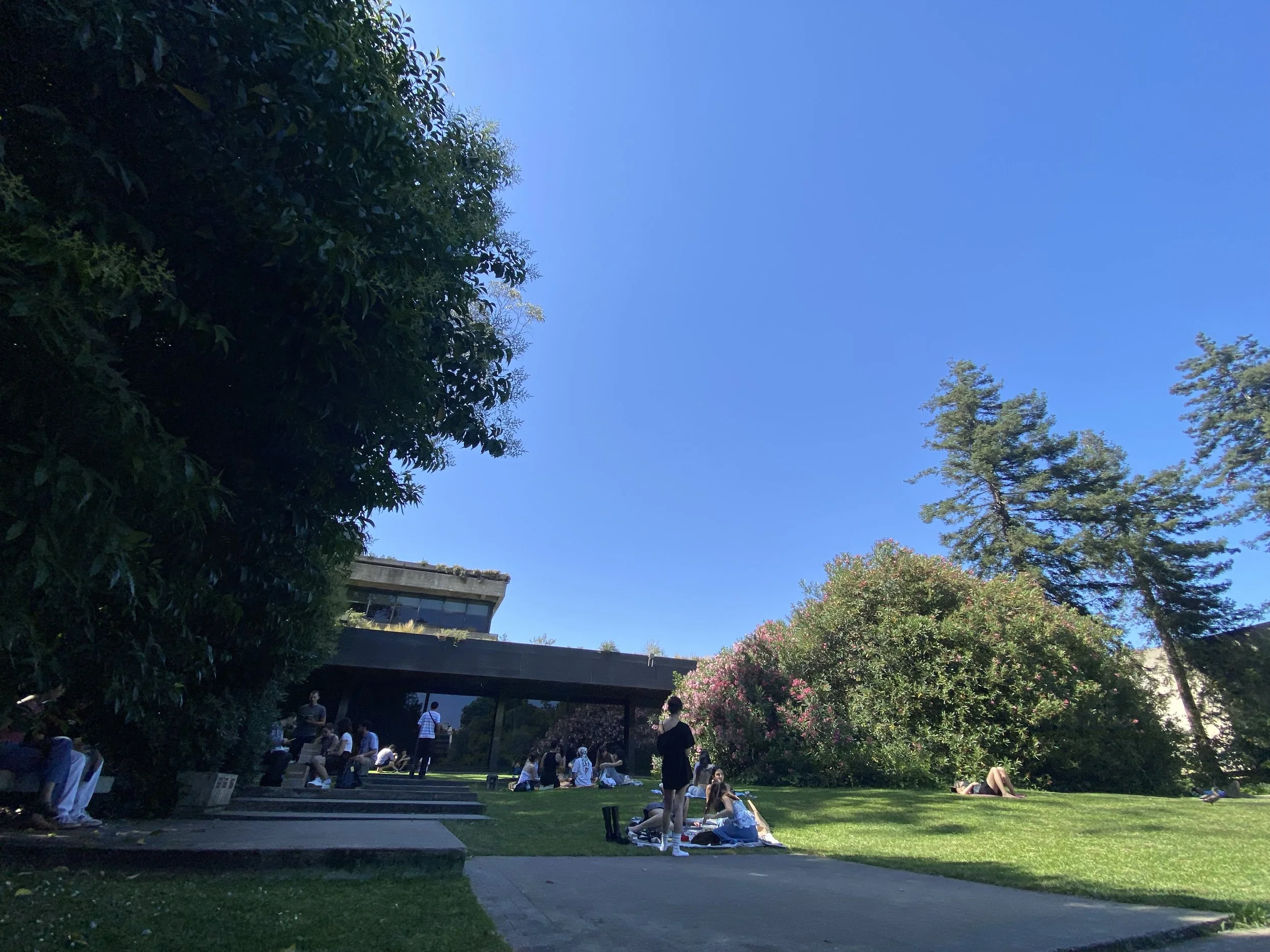
In the morning tour we walk the park,
yet on Sundays we can have lunch (excluded, yet àn assorted organic bowl is àt 10€, main menus similar and a coffee I believe 1,20€, various desserts and appetizer options) here at Mesa àt CAM (Modern Museum of Gulbenkian) or stop for a coffee after we visited the museum(s) for free (accessible for everyone every Sunday 14:00-18:00.)
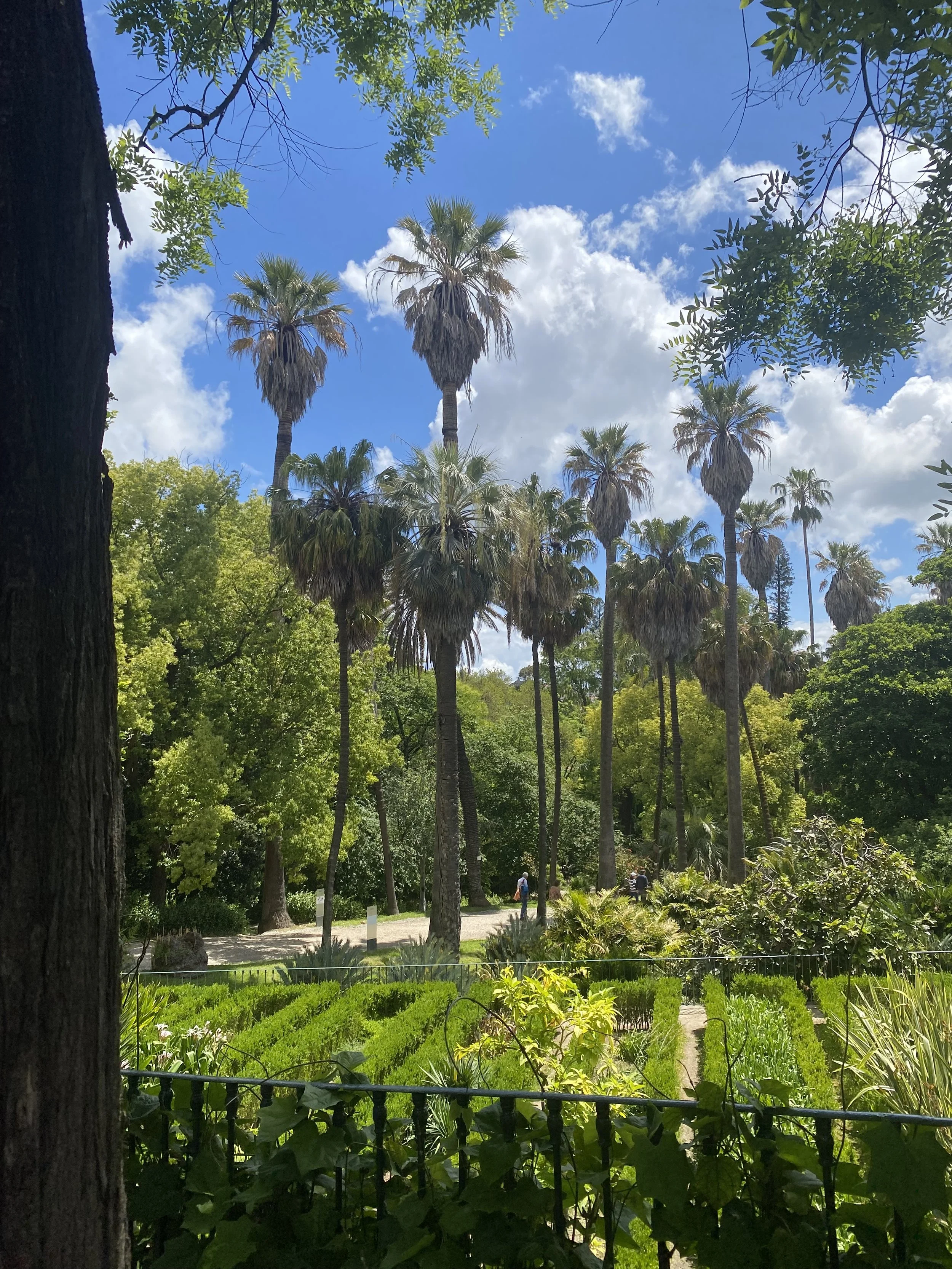
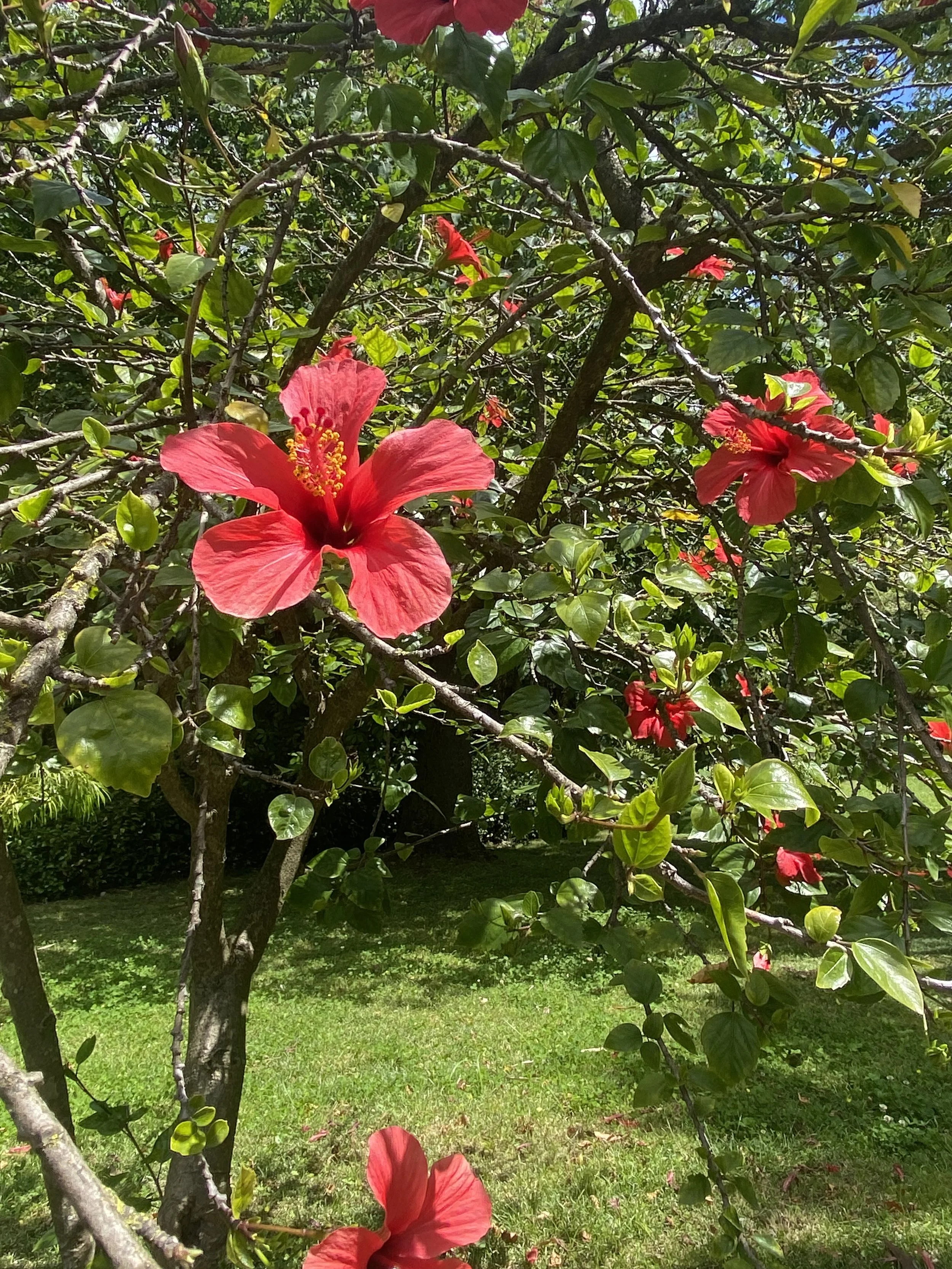
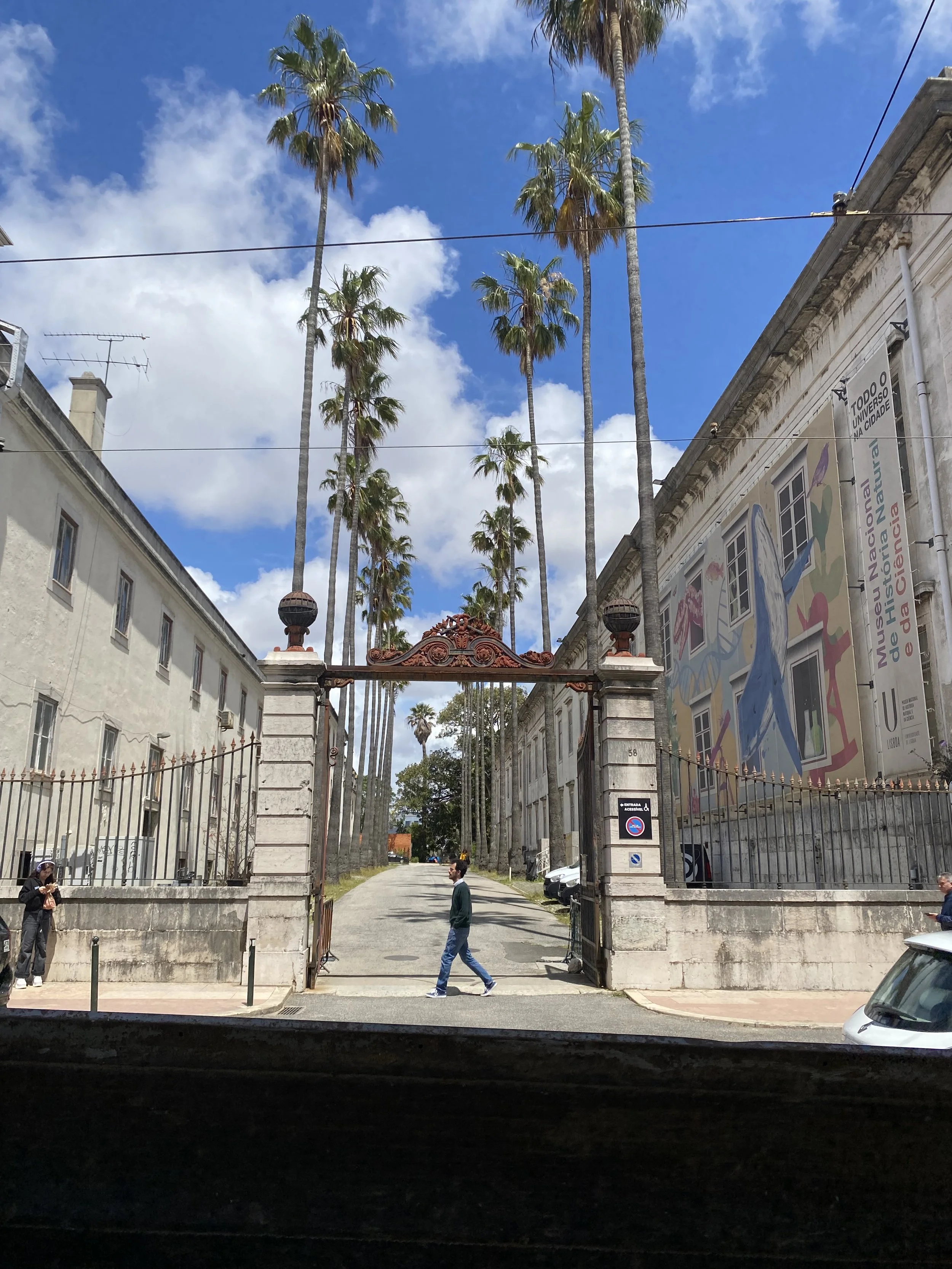
Botanical Garden Príncipe Real
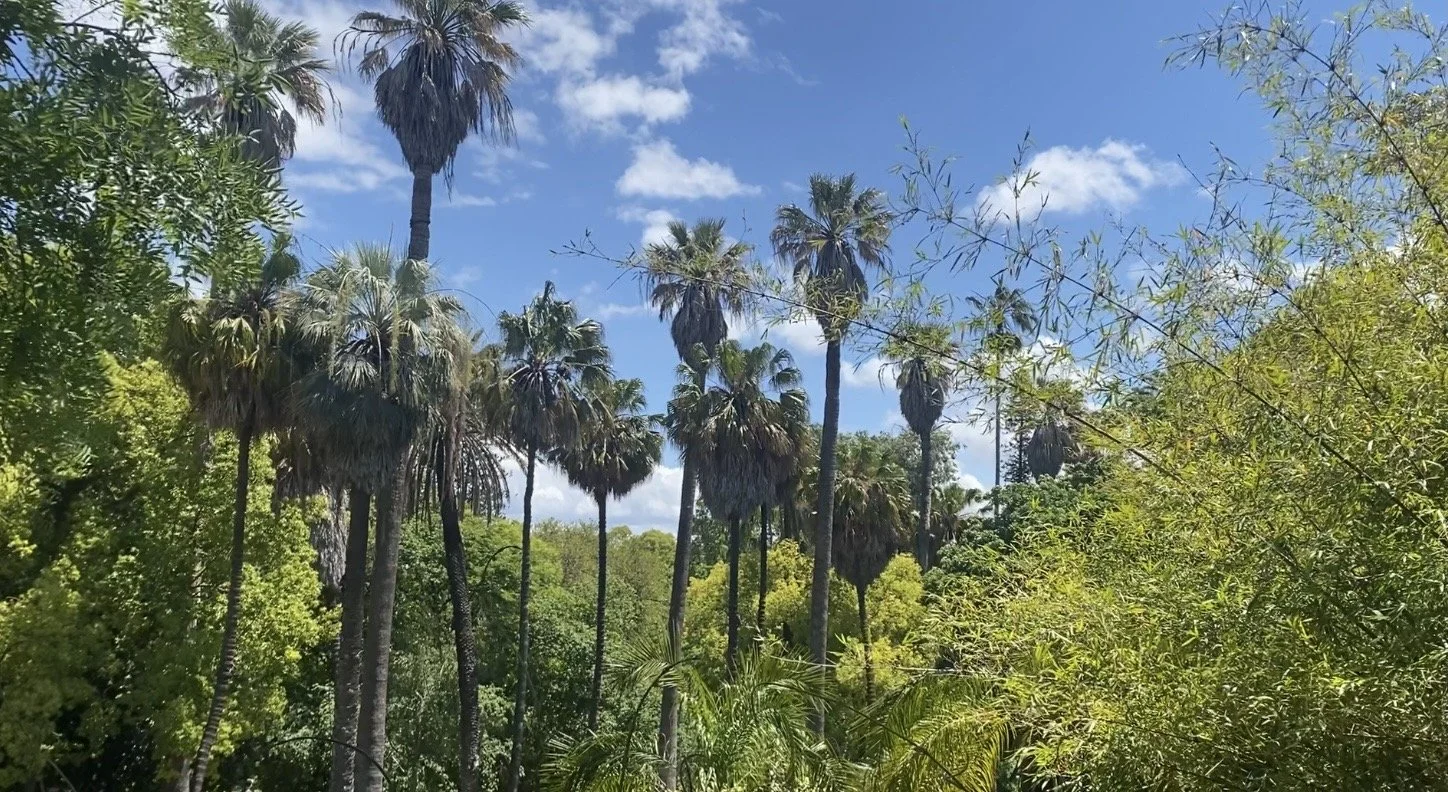
Príncipe Real Botanical Garden—
in the heart of Lisbon,
steps from Avenida,
hidden behind à regular entrance between (book) shops, cafes, restaurants—
free entrance on Sunday Mornings 10am - 1pm
(part of the Sunday tour)
Kiosque Adamastor
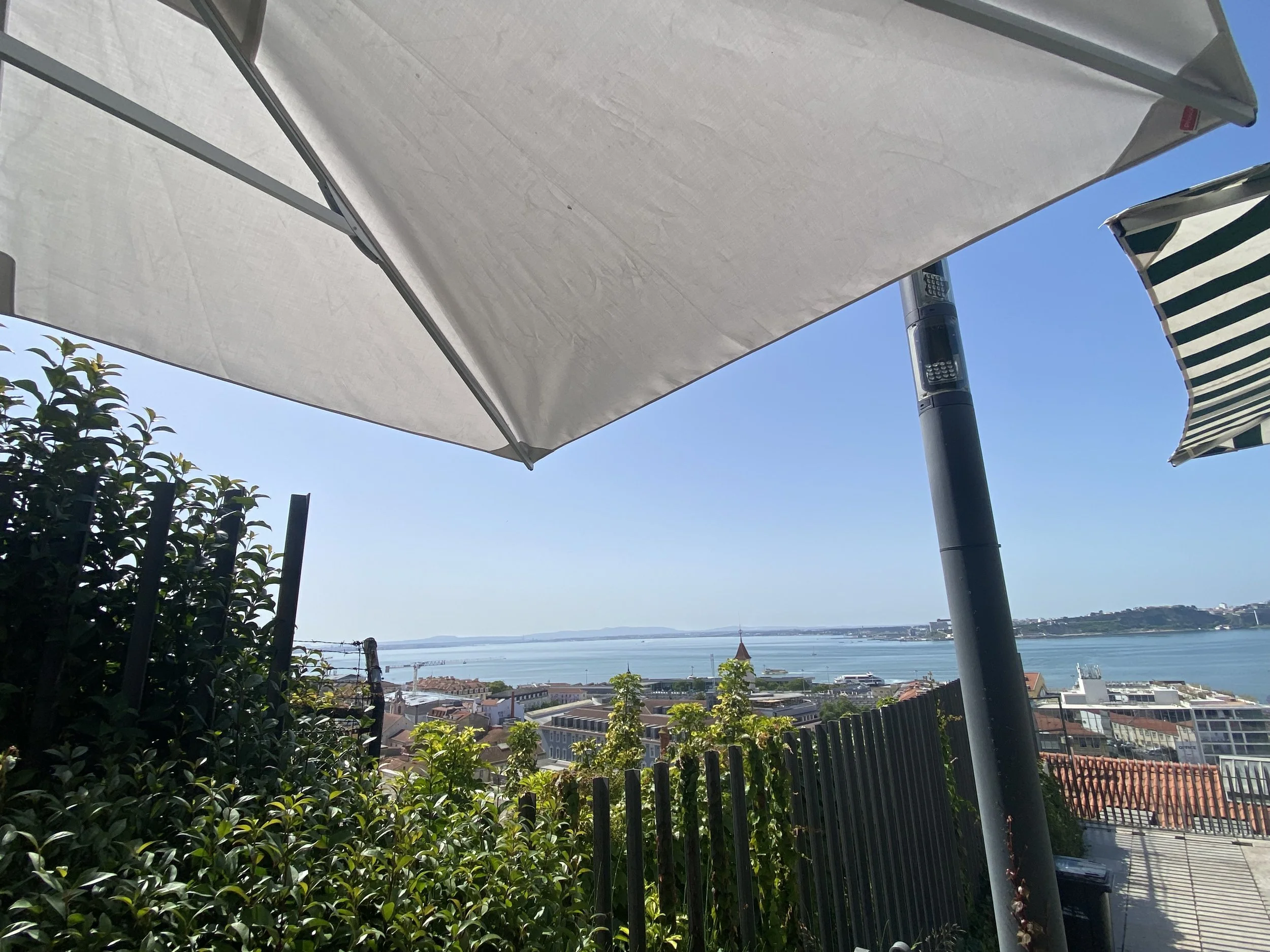
Insider tipp:
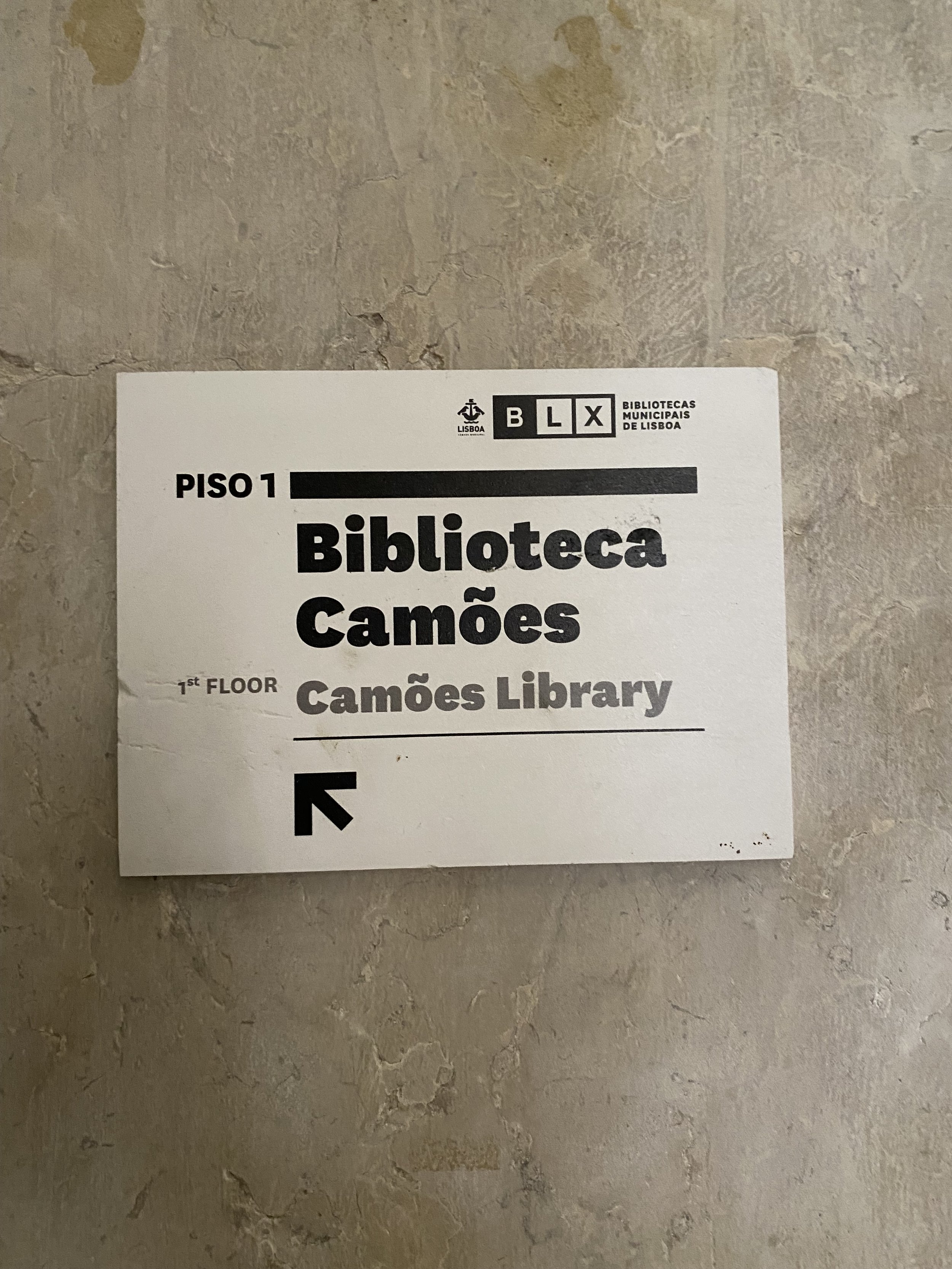
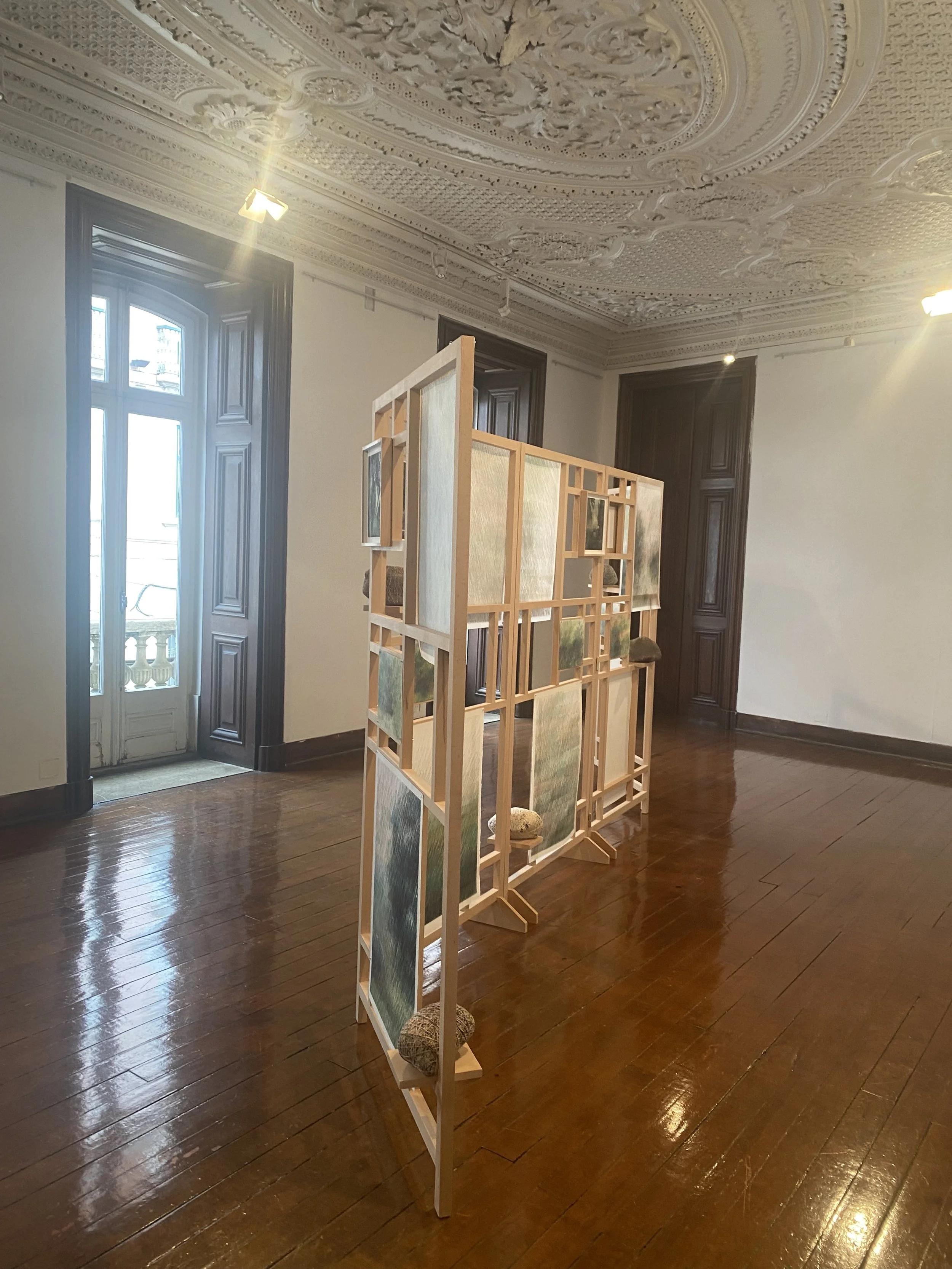
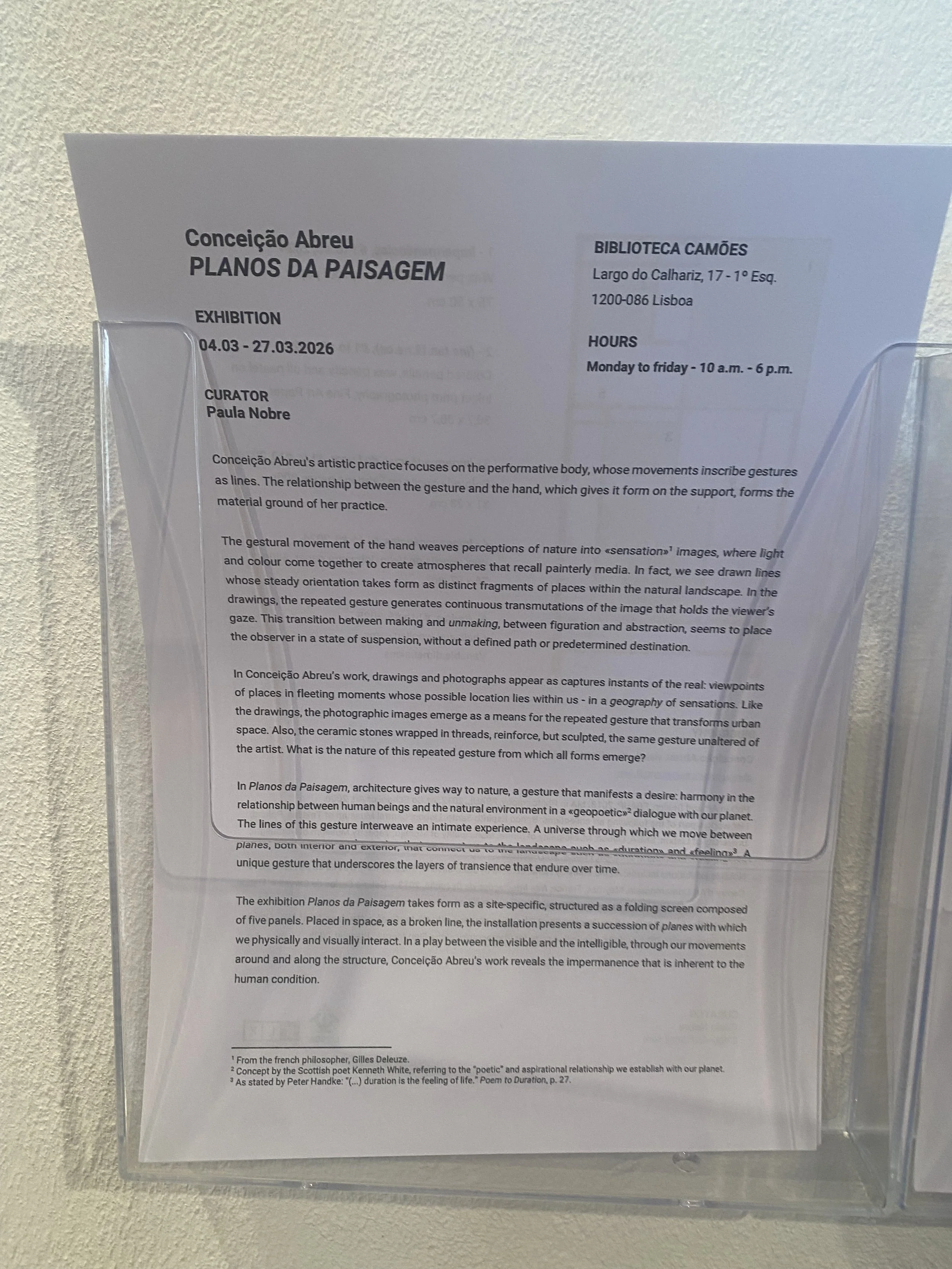
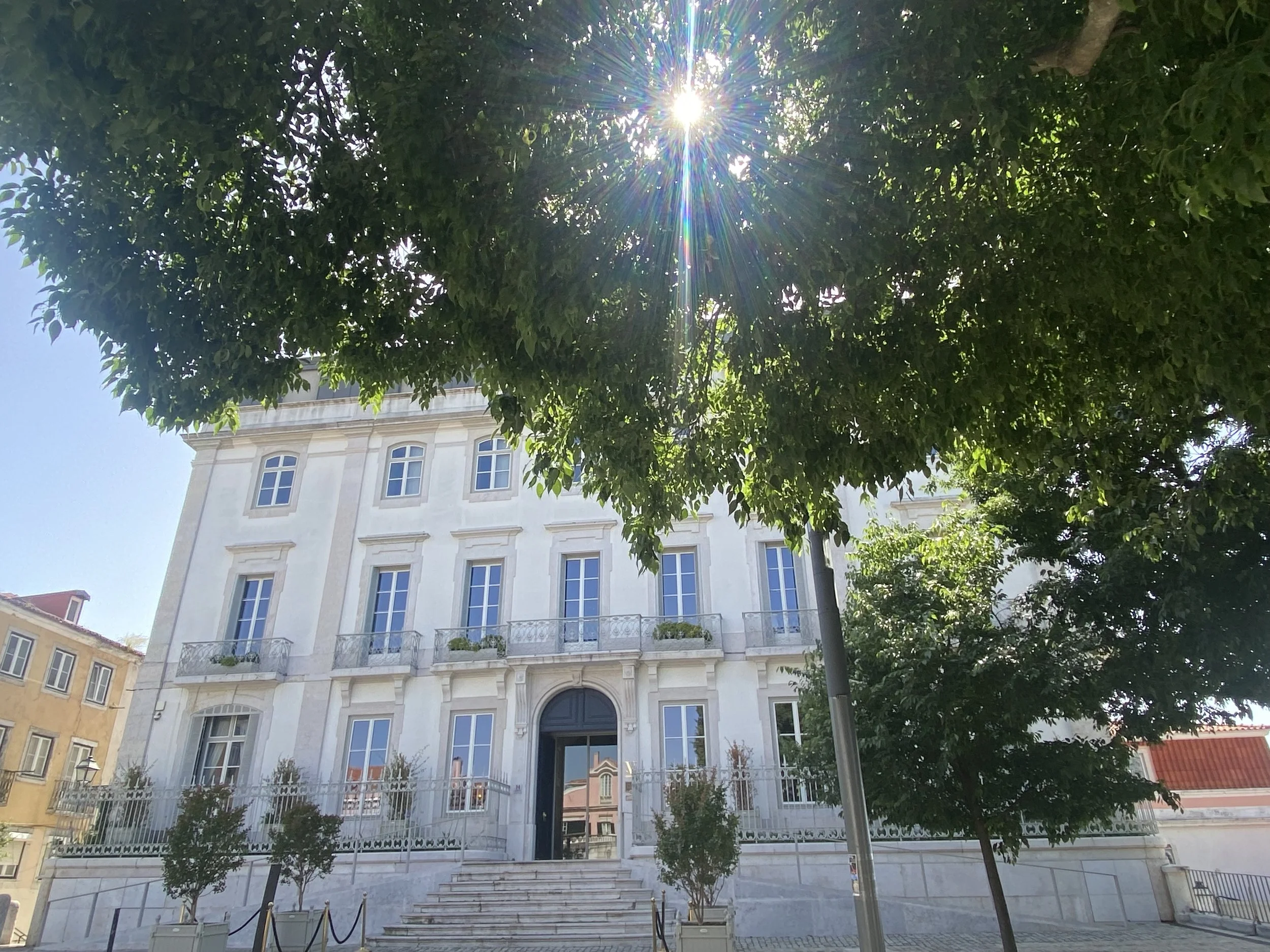
If you stroll down from Príncipe Real/ Miradouro/ Santa Casa Headquarter or alresdy move within Chiado on Fernando Pessoa’s footsteps, the moment you pass by the Library in Chiado, Bibliotec Camoes, dont rush, hold up àt the ‘My Auchan’ supermarket right before it, it’s not the prettiest sight— yet their Pecan Maple baked creation is an unexpected delight— of course not as delicate and organic as the artisanal craftsmanship down in Sao Bento if you’d continue walking— instead of turning left after the library, exploring theough the little alley thag barely gives away that à viewpoint is to be found, passing the Pharmacy museum spanning 7000 years of history, to get to Adamastor ‘s statue and his view over the city— yet it might be the best well spent 0,99€.
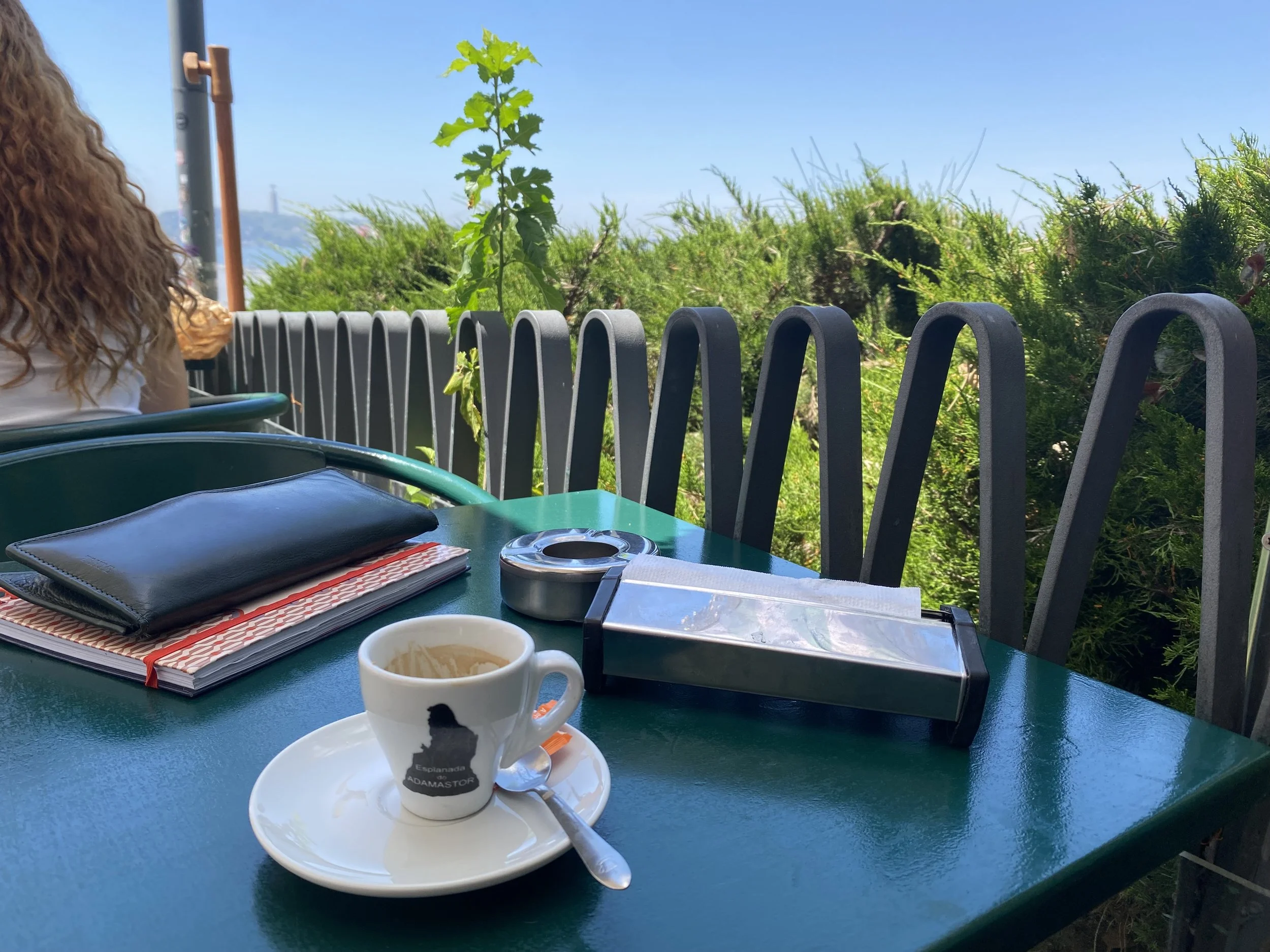
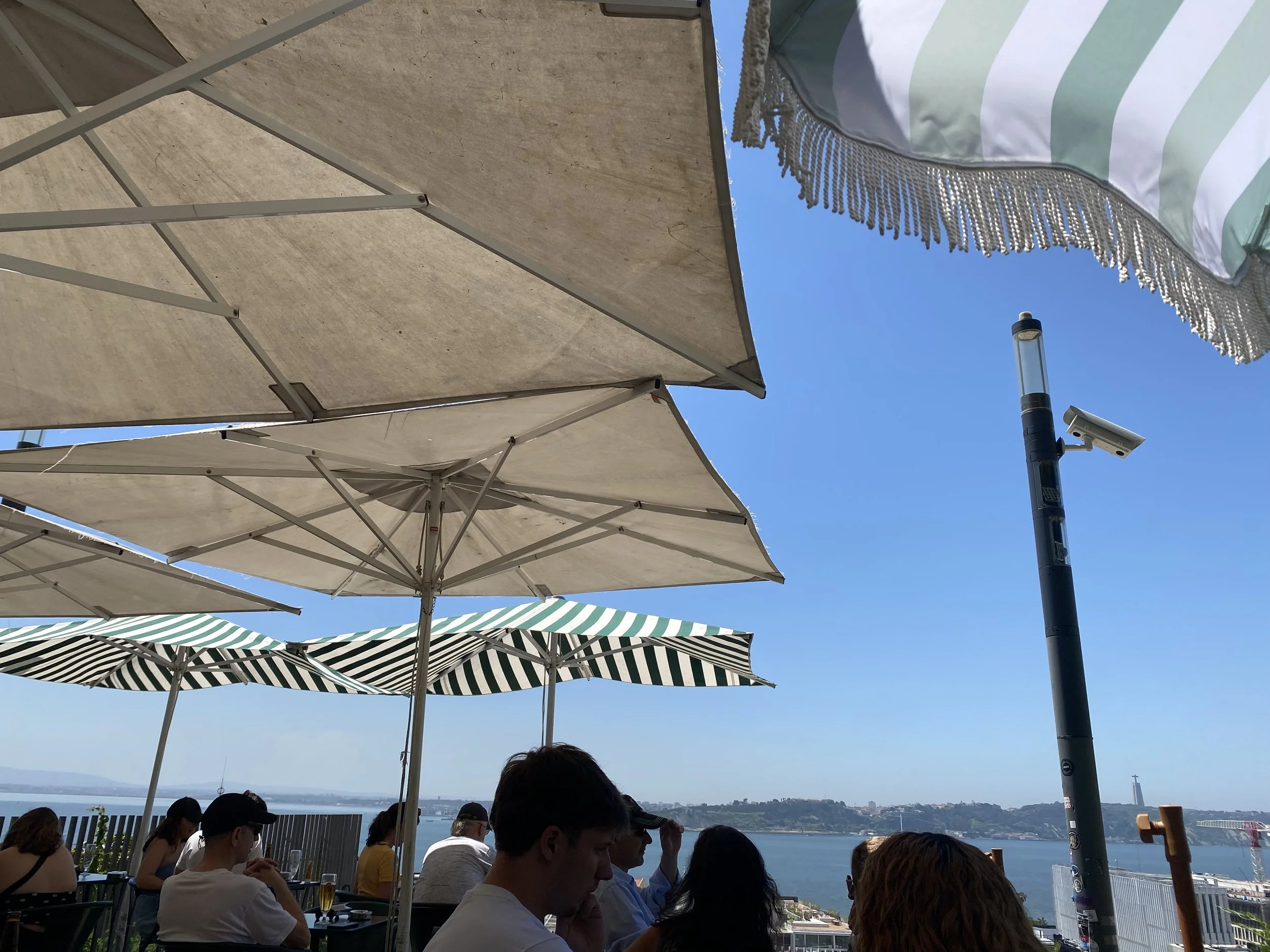
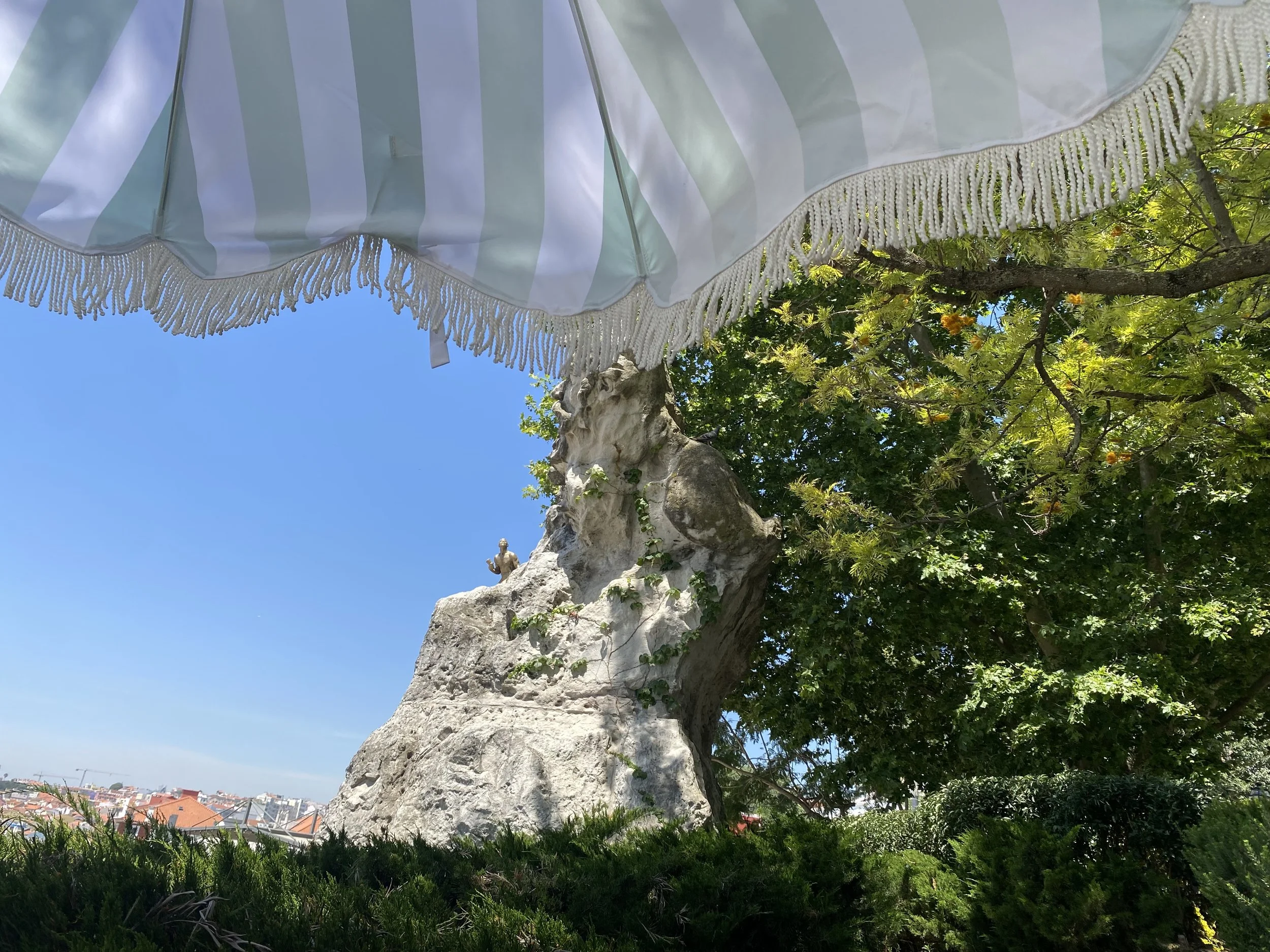
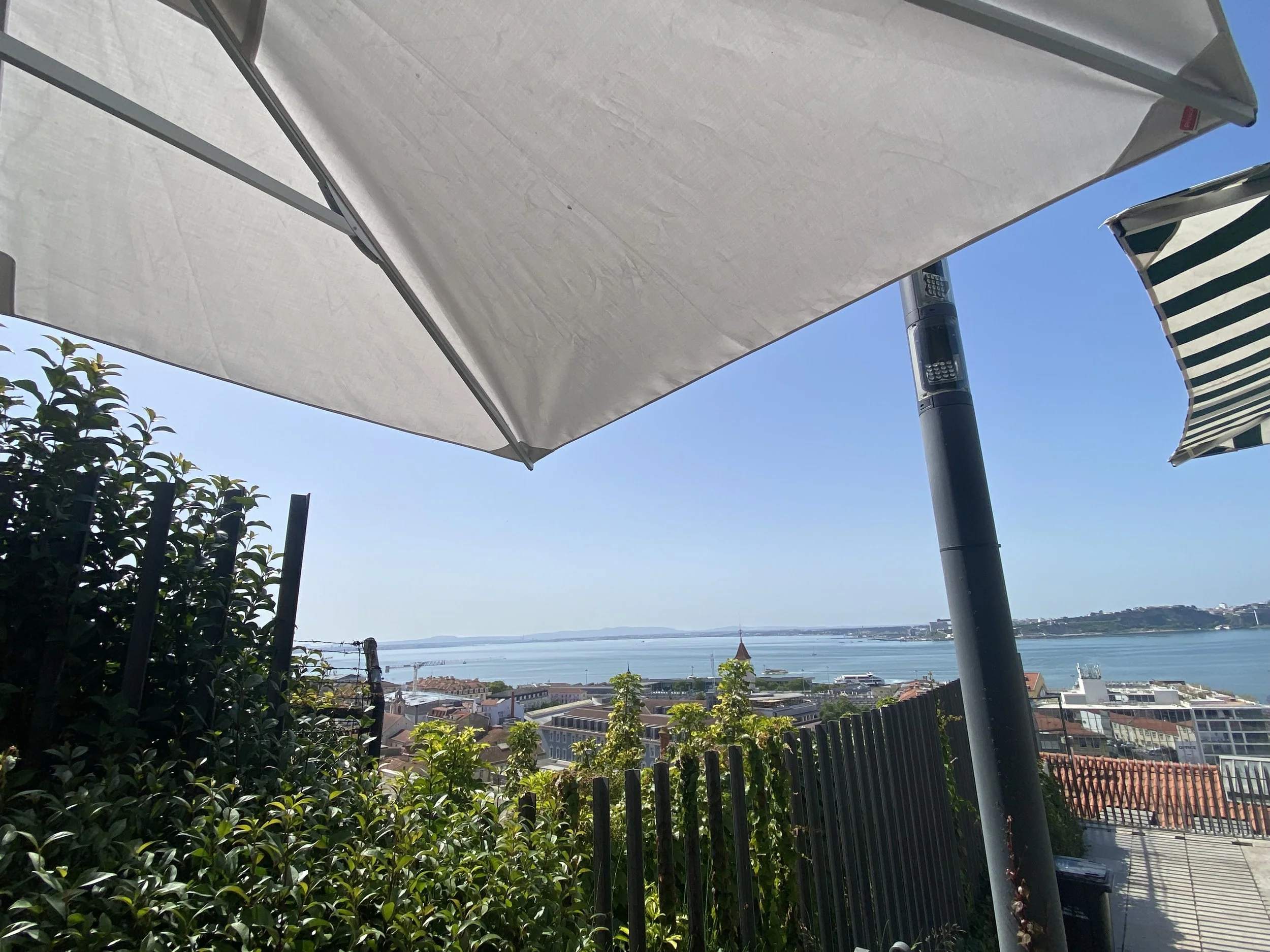
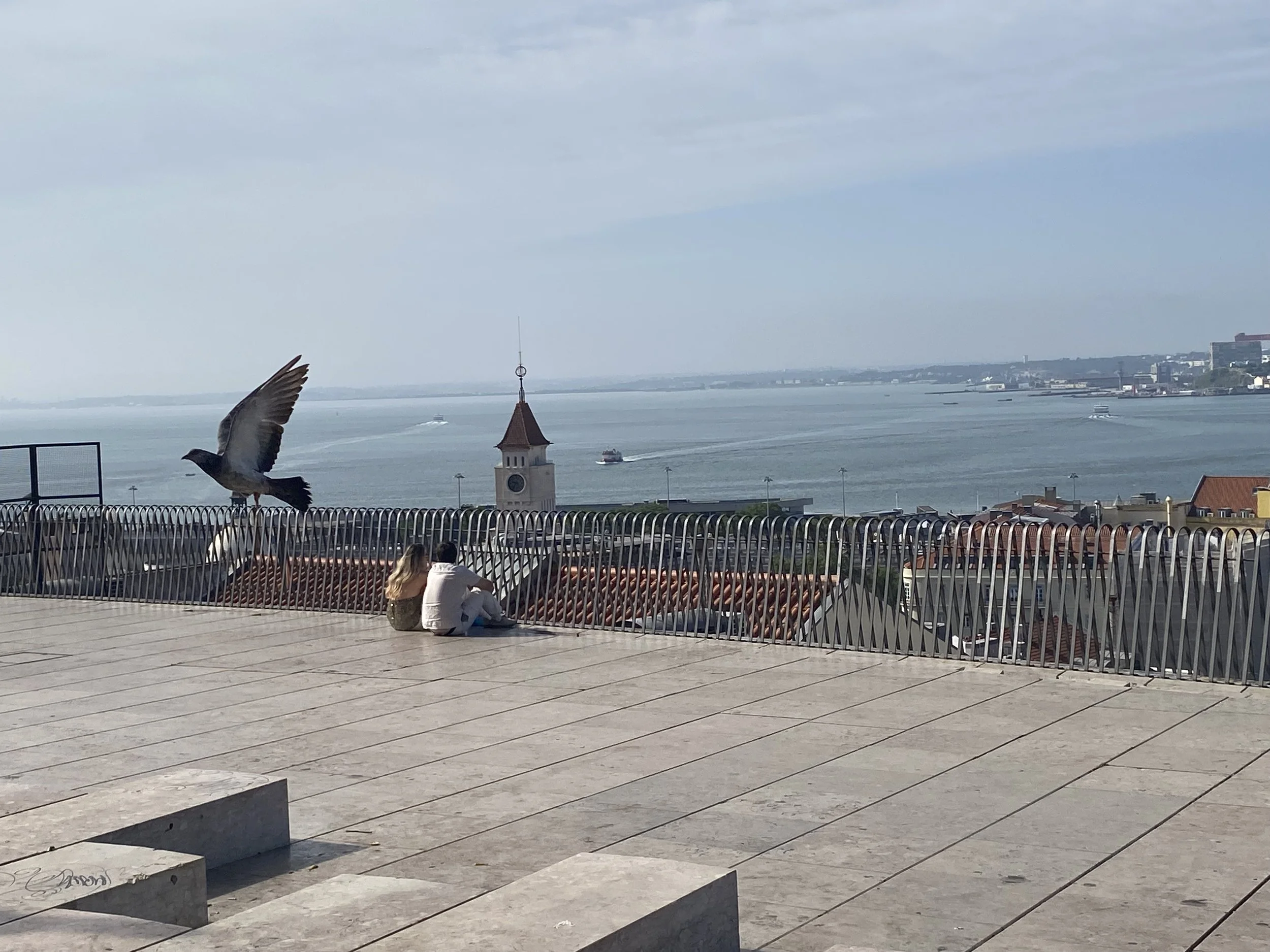
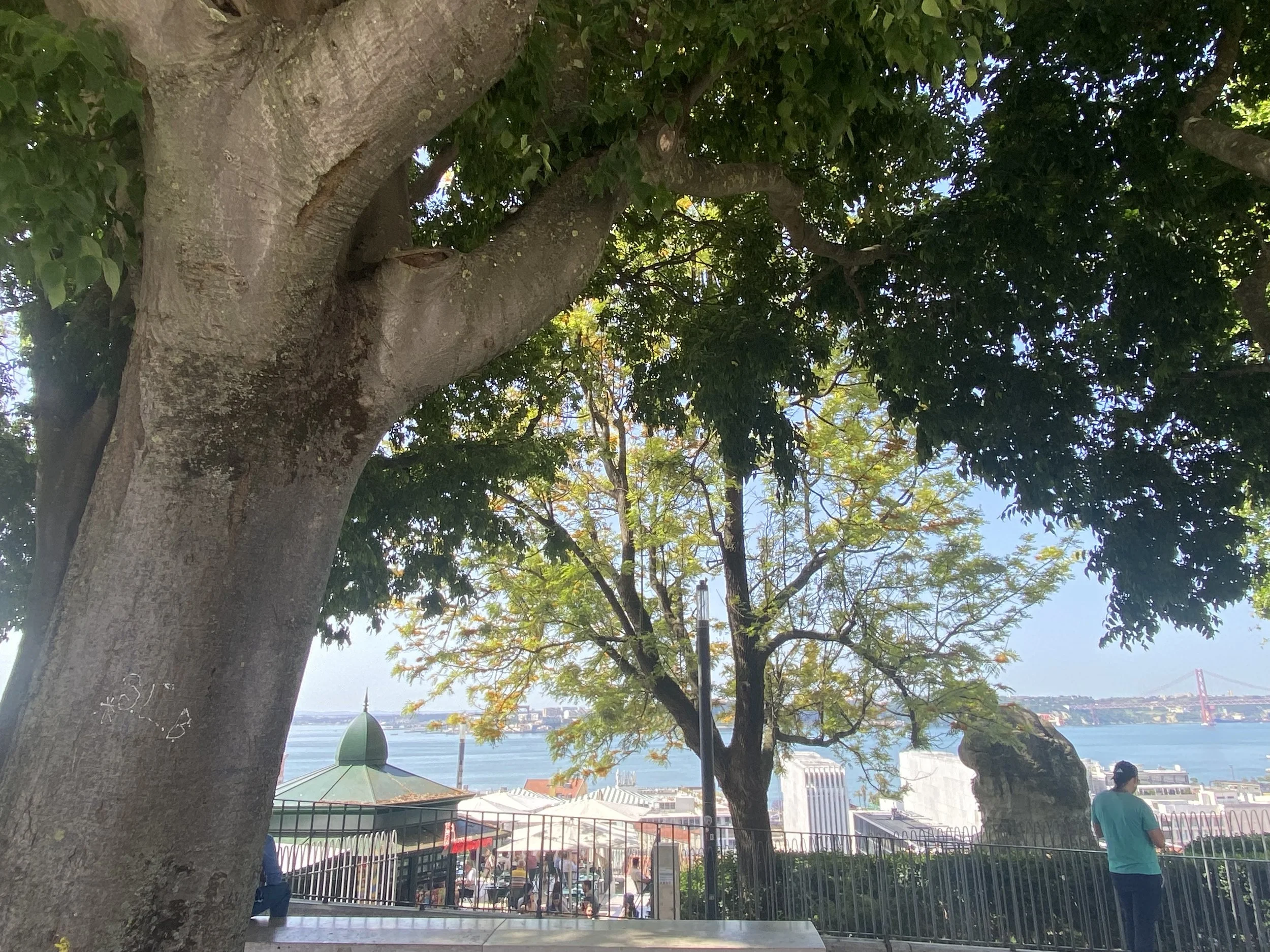
To then either be enjoyed on the public terrace, the five star hotel above the terrace , the restaurant below the terrace or simply àt Kiosque Adamastor overlooking the terrace under Mediterranean white Ànd green striped umbrellas paired with a mint tea— yes the mint there is fresh— whether for the tea or the nightly aperitivo— and comes in àn oldschool tea pot to keep it hot, and the pan roasted toast, just butter or the melted cheeses version— as if you’d belong to the family that runs the Kiosque. They might smile less than à tourist might expect, yet interactions are genuine and once they know you, they also know your order, bevause it’s the same familiar faces remembering your taste every day— always attentive to your every need quietly just doing before you ask while leaving you room to breathe and be, reliably—
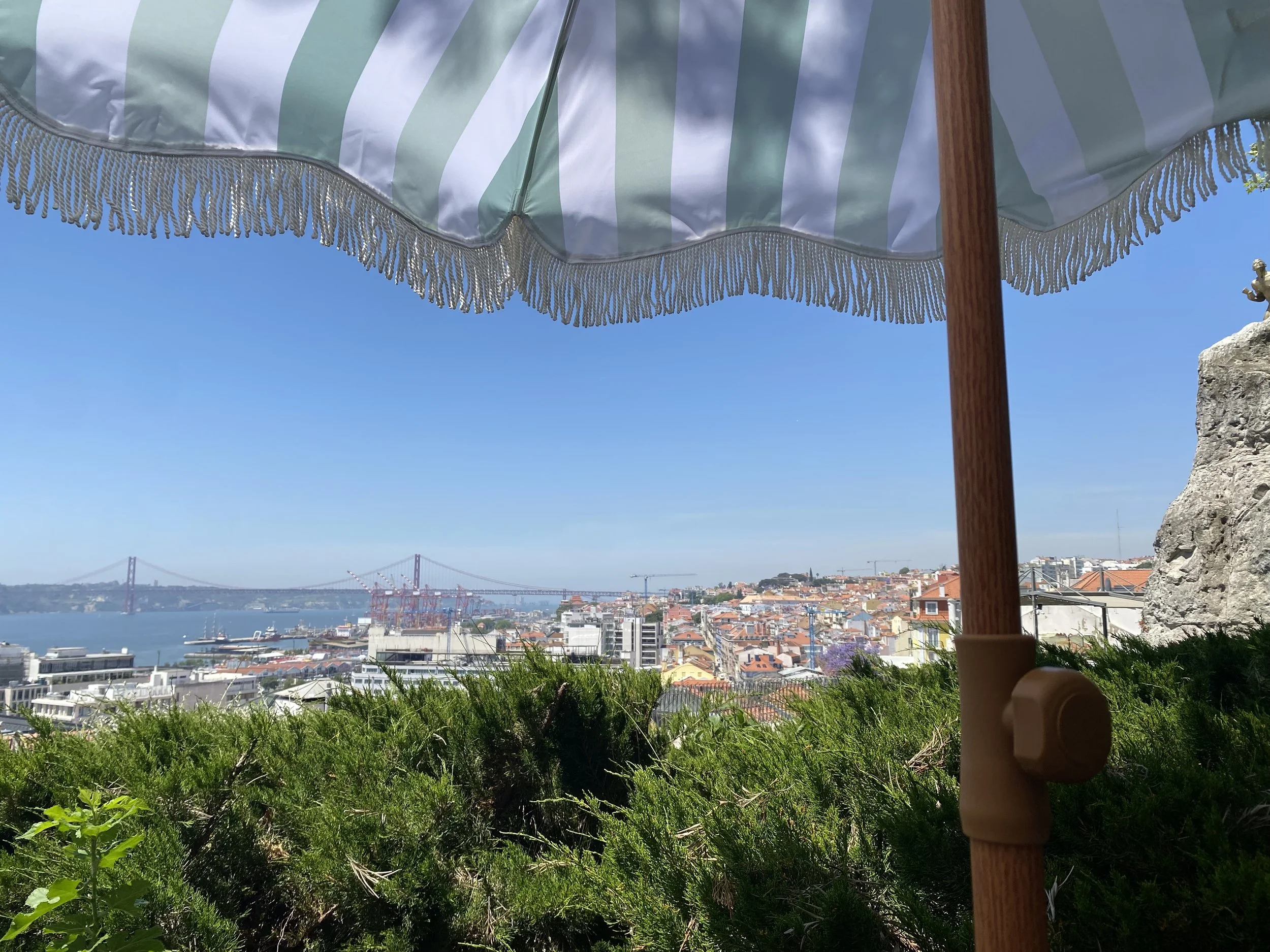
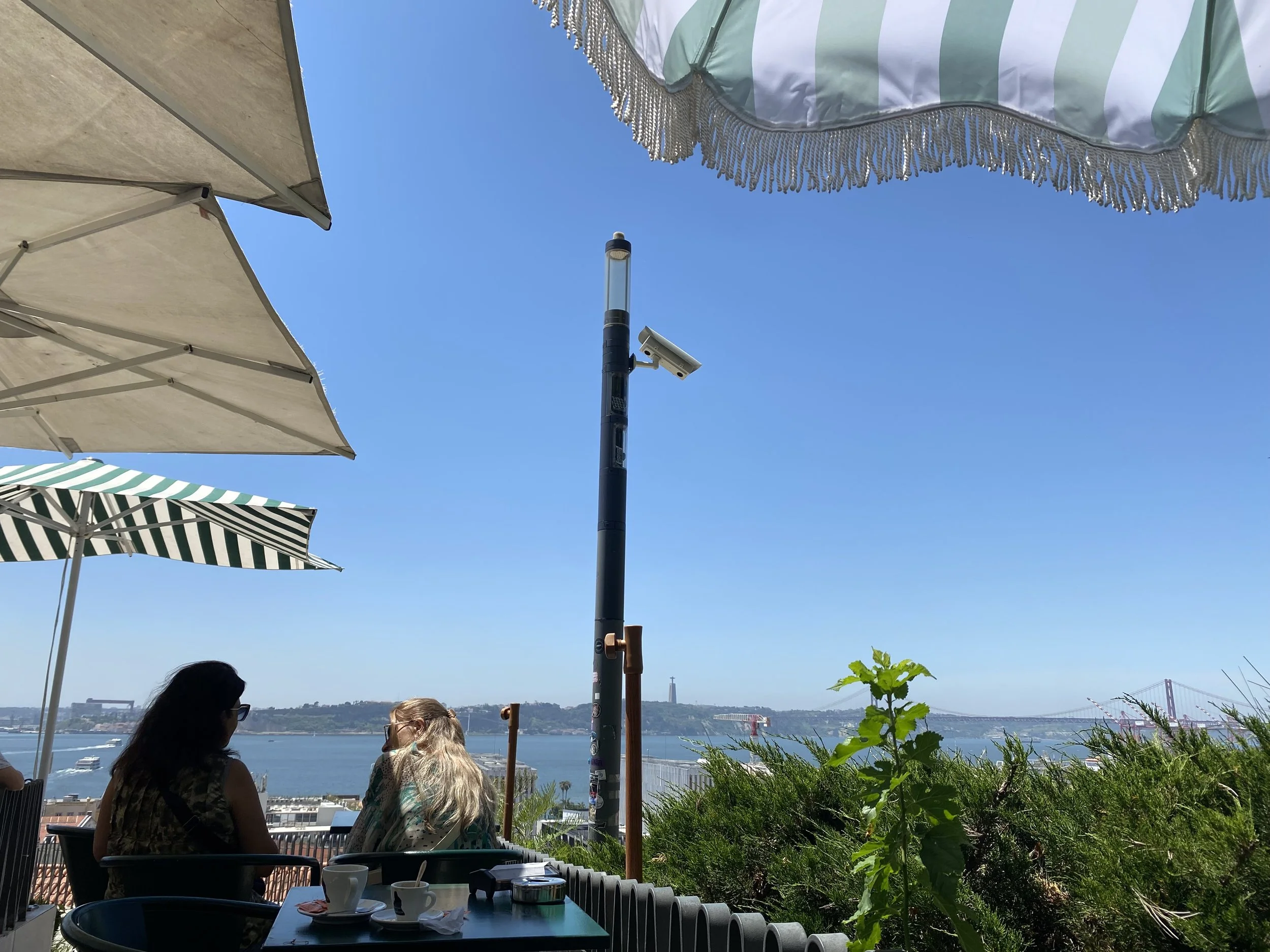
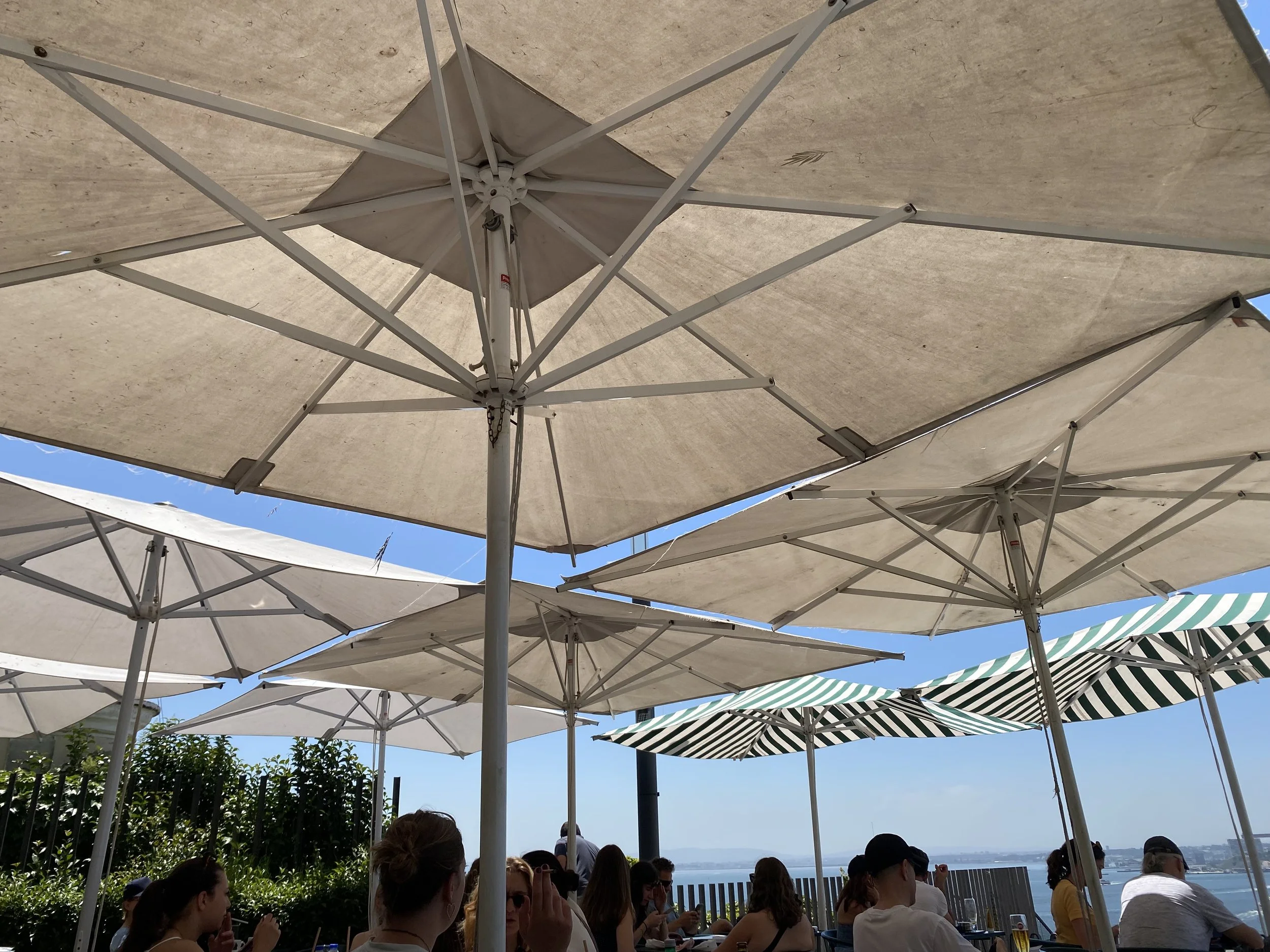
and that is worth
everything.
Same as the view and the calm breeze accompanying the morning softness, afternoon South of France flair and golden hour sunset postcard light— and even on cloudy days it has à spaciousness from the river looking towards the ocean that opens the mind and heart— over Lisbon
Every single day.