Lisbon— Europe’s most livable city
20th July 2026
via
The Lisbon Letter:
“Lisbon is one of the three best cities in the world to call home, measured by the things that actually make a place worth living in. The harder task, now that the whole world has been told, is keeping it that way for the people already here.”
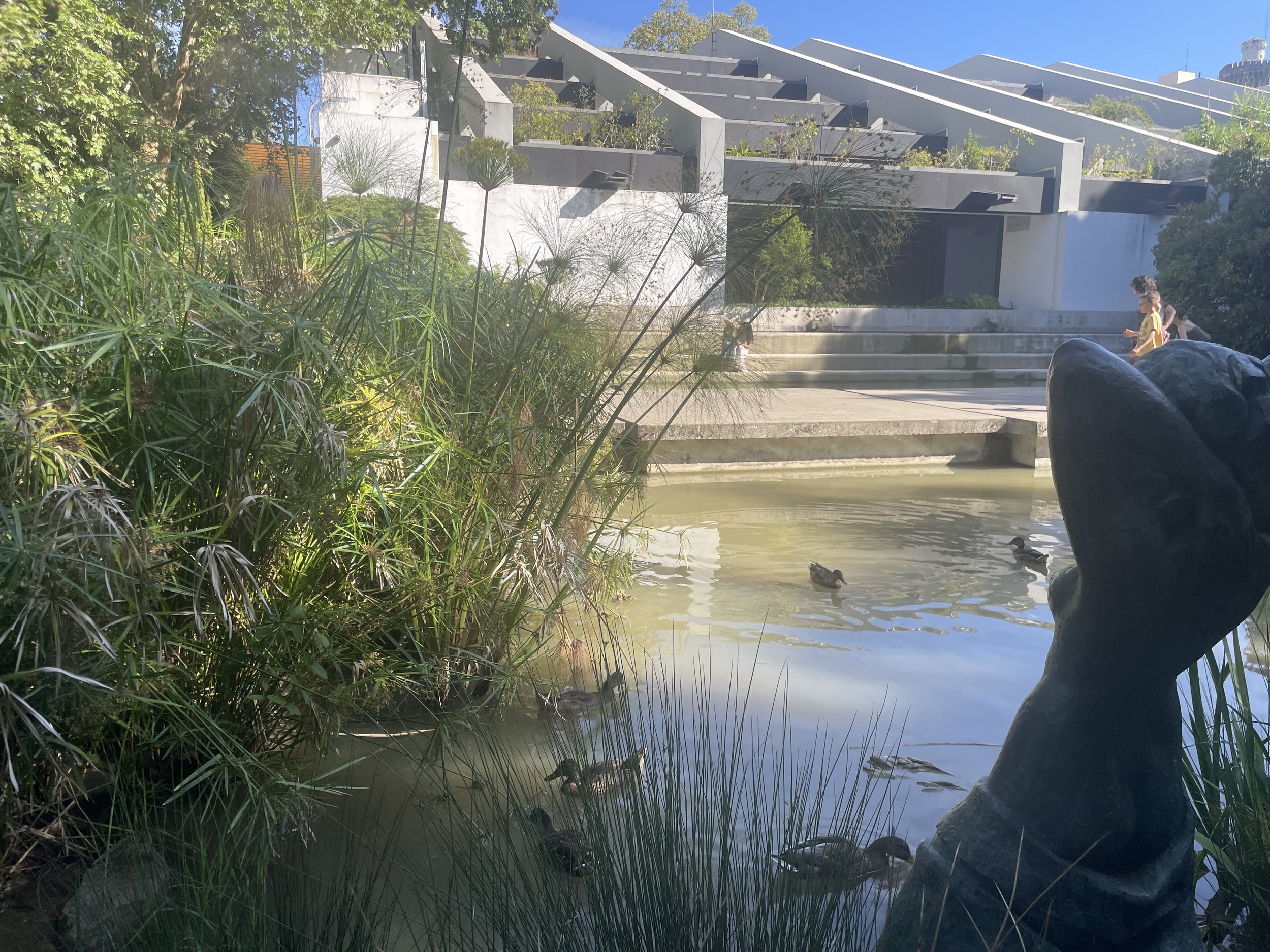
Park Gulbenkian— free entry to both museums for the 70th anniversary and the reopening ‘Anew’ of the original ‘old’ museum — 18th until 26th July 2026– park always free, open sunrise to sunset, ducks, ducklings, geese, tortoises and others included— also new La Mesa cafe and restaurant worth visiting with reasonable price in the elegant glass cube of the new CAM modern art museum— and the mensa and cafe and the other cafe both around the old ‘anew’ museum in the park have reopened— just like the lake— it’s time to visit now that the free summer concerts in the park and museums have reigned in a new chapter
Lisbon was named the third best city in the world to live in. Tokyo first, Copenhagen second, then us. The magazine that said it also warned that what makes Lisbon special is now under threat. It's Monday, 20 July. Twenty-five degrees. The World Cup is over and Spain are champions. Here's what you need to know.
🌬️ AIR QUALITY: 24 (Good).
🗞️ TOP STORY
LISBON IS THE THIRD MOST LIVABLE CITY IN THE WORLD. THE CATCH IS IN THE FINE PRINT.
Monocle, the British magazine that has run a global quality-of-life survey for nineteen years, has placed Lisbon third in the world for 2026. Only Tokyo and Copenhagen finished ahead. Behind Lisbon come Vienna, Sydney, Zurich, Madrid, Paris and Munich. London did not make the list at all. Nineteen years in, it is about as serious as a livability ranking gets.
The praise is specific, which is what makes it worth reading. Monocle credits nearly a decade of steady city governance: continued investment in the metro, trams and river ferries, the first new tram line in almost seventy years, and a fivefold rise in cycling trips between 2011 and 2021. It counts 2,806 hours of sunshine a year, a quarter of the city given over to green space, and an airport connected to 144 international destinations. But the survey is not really about infrastructure. It was built to measure the things other rankings ignore, whether a neighbourhood has real life in it, whether you can find a good meal and a drink after ten at night, whether a place has ambition and is also enjoyable to be in. Lisbon scored on all of it: the farmers' markets, the newsstands, the historic shops protected under the Lojas com História scheme, the reopened contemporary art museum at the Gulbenkian.
Then comes the paragraph that complicates the celebration. Monocle warns that Lisbon is at risk of becoming a victim of its own success, and it names housing as the single biggest threat to everything else it just praised. In the magazine's framing, the danger is that Lisbon becomes two cities in one, split between the people who can afford it and the people being pushed out of it. It points to the strain that a growing population places on services, and it lists the funicular accident and last year's nationwide blackout as tests of how much pressure the city's systems can take.
That is the uncomfortable knot at the centre of the ranking. The qualities that put Lisbon on the podium, the light, the safety, the walkability, the dinner you can still get at ten, are the same ones drawing enough demand to strain them. A high rent is the flip side of a desirable street. The honest version of the story holds both facts at once rather than choosing the flattering one, because everyone who lives here, whether their family has been in the neighbourhood for generations or they arrived last spring, is living inside the same tension.
It is not a reason for gloom. A city that has spent a decade governing itself well, investing in things like tram lines and ferries, has the tools to manage its own popularity if it chooses to use them. Monocle's warning is a warning, not an obituary. The open question is whether Lisbon spends the next decade protecting what got it here, or lets it get priced out one street at a time.
Bottom line: Lisbon is one of the three best cities in the world to call home, measured by the things that actually make a place worth living in. The harder task, now that the whole world has been told, is keeping it that way for the people already here.
⚡ QUICK HITS
The country you moved to is now outgrowing Germany. Southern Europe has rewritten the last decade's script. Portugal, Spain, Greece and Italy are now outpacing the old economic core, while Germany managed barely 0.9% growth and France and Italy drag on the eurozone average. Portugal's growth has run about 3.3 percentage points above the eurozone average since 2019, ahead even of Spain, helped by a services-led economy, falling public debt and European Union recovery funds peaking this year. The honest caveat is the one the central bank governor made a week ago: this is growth without much gain in productivity, which is why wages still lag the headlines. But as a bet on where to place your life, Portugal is looking like a good one.
That’s exactly why I am interested in solving— so we can do both enjoy beauty while catering to truth— preserving and stewarding what’s entrusted to us— or what we discovered— see more under Investor Seeking (scroll to get the link)